Sidcup is a well-established outer south-east London suburb sitting on the Bexley and Bromley borough boundaries — a DA14 and DA15 community of largely inter-war and post-war housing with generous garden sizes, good schools, and the kind of quiet residential character that attracts families looking for more space and less density than inner London offers. Artificial grass has become an increasingly common choice across Sidcup's residential streets, and for straightforward practical reasons. This guide covers what Sidcup homeowners should know before requesting quotes.

Ground Conditions in Sidcup
Sidcup occupies a relatively flat plateau on the southern edge of the London Clay belt, with some undulation across the residential areas. The underlying geology is London Clay through most of the DA14 and DA15 postcode area, producing the slow-draining garden conditions that affect the majority of south-east London. Some parts of Sidcup — particularly towards Foots Cray and the Cray valley — have Thames Gravel deposits that drain more freely, but for most residential gardens in the main Sidcup town area, London Clay conditions apply.
A compacted MOT Type 1 aggregate sub-base of at least 75mm is the correct specification for any Sidcup artificial grass installation. The relatively flat terrain means the sub-base cross-fall needs to be actively graded during installation to direct surface water to a clear outlet — confirm this drainage arrangement is specified in writing for any Sidcup garden that currently experiences waterlogging.
Sidcup Garden Types
Inter-war semis (Hatherley Road, Station Road, Burnt Oak Lane): The dominant housing type in Sidcup is the inter-war semi-detached property — 1920s and 1930s housing developed as Sidcup grew rapidly following the electrification of the suburban railway. These gardens are typically 40–65m² with side access via a gate alongside the house in a significant proportion of properties. Side access substantially simplifies installation logistics and is one reason why Sidcup inter-war gardens are among the more cost-efficient installations in outer south-east London.
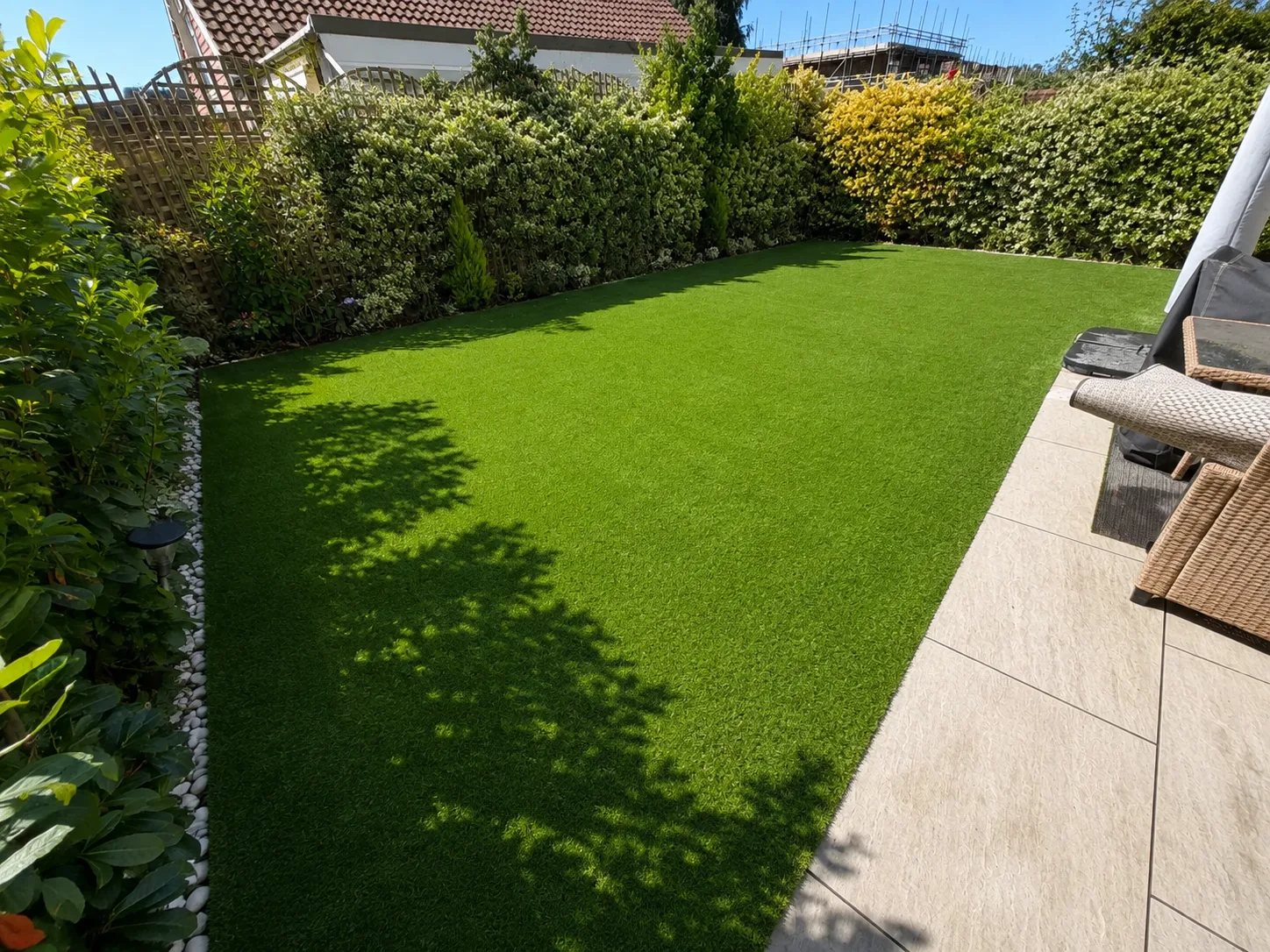
Post-war detached and semi-detached (Halfway Street, Days Lane, Longlands Road): Parts of Sidcup were developed or redeveloped in the post-war period with more generous detached and semi-detached properties. These gardens are often larger — 60–100m² — and typically have good side or rear access. For these larger plots, artificial grass delivers the most dramatic improvement in terms of maintenance burden eliminated: a 70–80m² Sidcup clay lawn requires considerable annual effort to keep presentable, which artificial grass removes entirely.
Victorian terraces (older core around Sidcup High Street): A smaller proportion of Sidcup's housing stock is Victorian terrace — predominantly in the older streets around the original town centre. These gardens are narrower and longer than the inter-war stock, with through-house access as the norm. Standard through-house access considerations apply.

Why Artificial Grass Makes Strong Sense in Sidcup
Larger gardens, bigger maintenance commitment: Sidcup's inter-war and post-war housing offers garden sizes that are genuinely generous by London standards. A 60m² garden on London Clay that stays presentable year-round requires real effort — weekly mowing through the growing season, fertilising, scarifying, overseeding, and accepting that it will still look poor between November and March despite all of that. Artificial grass removes the commitment entirely and keeps the garden looking excellent every day of the year.
Clay soil and winter usability: Sidcup gardens on London Clay become waterlogged and muddy in autumn and winter. For families with dogs or children, this means months of restricted garden access and tracked mud. Artificial grass on a properly drained sub-base drains within minutes of rain stopping and is fully usable every day, regardless of the season.
Cost efficiency on larger plots: Sidcup's larger garden sizes spread the fixed costs of installation — survey, access, minimum material deliveries — across more square metres, producing more competitive per-m² rates than equivalent gardens in inner London. The sub-base and laying cost per m² falls as garden area increases, making large Sidcup gardens genuinely good value to install.
Installation Costs for Sidcup Gardens
● Medium inter-war semi (35–55m²), side access: £1,650–£4,000 total
● Larger garden (55–80m²), side access: £2,600–£6,200 total
● Very large garden (80m²+), side access: £3,700–£8,000+ total
● Victorian terrace (20–35m²), through-house: £950–£2,400 total
Per-m² fully inclusive rates in Sidcup range from approximately £43–£55 (budget, complete sub-base) to £70–£100 (mid-range to premium). Side access in the majority of the inter-war and post-war housing stock keeps logistics costs lower than in through-house terrace areas of inner London. Larger garden sizes further reduce the effective per-m² rate.
Product Recommendations for Sidcup
Family gardens (standard): Mid-range artificial grass — dtex 11,000–14,000, pile height 30–37mm, lead-free infill — is the right specification for most Sidcup family gardens. Reliable performance for twelve to fifteen years under intensive daily use by children and dogs, year-round usability, no maintenance beyond occasional brushing.
Larger prestige gardens: For Sidcup's larger detached garden plots where appearance across a substantial area is important, a premium product (dtex 14,000+, 35–40mm pile, naturalistic
multi-tone) is worth the additional investment. The performance improvement over mid-range is marginal, but the appearance quality across a 70–90m² plot — visible from upper-floor windows and across the full garden — justifies the premium for homeowners where presentation matters.

Finding a Sidcup Installer
Sidcup is covered by south-east London installers working across Bexley and Bromley. The key criteria are consistent: survey before quoting, 75mm+ MOT Type 1 sub-base specified in writing including drainage cross-fall, product named and specified, access confirmed, waste removal included. A reliable artificial grass company serving Sidcup will survey your garden in person, account for the size, access, and drainage characteristics of your specific plot, and produce a fully itemised written quote that gives you a clear basis for comparison with any other quotes you receive.
Final Thoughts
Sidcup's combination of generous inter-war and post-war garden sizes, good side access, London Clay soil, and family demographics makes it one of outer south-east London's strongest markets for artificial grass. The larger gardens spread installation costs efficiently, the side access keeps logistics straightforward, and the maintenance burden that artificial grass eliminates is proportionally higher on a larger garden. A correctly specified installation in DA14 or DA15 is a fifteen-year improvement to the household's outdoor space with no ongoing cost or effort.