
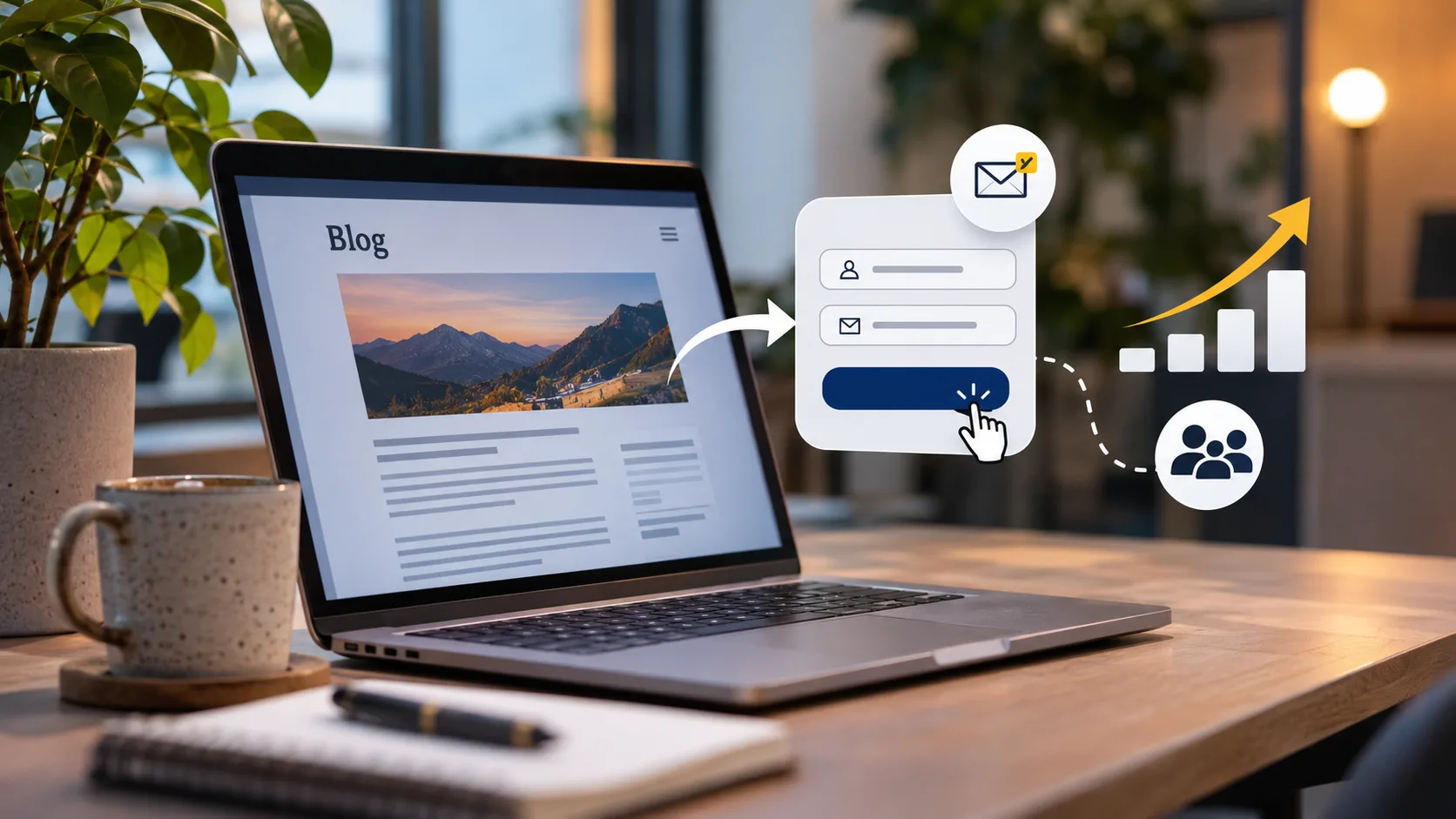
How to turn blog traffic into enquiries is the question to ask once your blog already brings readers. The readers are there. The enquiries are not. The gap is usually not the writing. It is the next step. This guide shows how to give every post one clear next step, so a reader who trusts your words can reach you.
Key facts
- A blog post that ends with no next step asks the reader to find you, and most readers will not do it.
- One clear offer on a post beats five links, because a reader who must choose often chooses nothing.
- The best moment to ask is right after the post has helped, when the reader already trusts what you said.
- A reply within one working day keeps an enquiry warm, while a late reply lets a ready buyer go elsewhere.
Why do blog readers leave without enquiring?
A reader leaves without enquiring because the post never tells them what to do next. They read the advice, they agree with it, and then they close the page. Nothing on the page asked them to stay in touch, and nothing gave them a reason to call.
The fix starts with one question for each post: what should a reader who found this post useful do next? The answer should be one action, written in plain words, near the end of the post. A reader who must search for your phone number or your form will usually give up and move on.
What should the next step on a post offer?
The next step should offer something the reader already wants, not a general invitation to get in touch. A post about choosing a service can offer a short call to talk through the choice. A post about fixing a problem can offer a free check of that problem.
Keep the offer close to the subject of the post. A reader who came for advice on one thing does not want an offer about something else. When the offer matches the post, the reader sees it as the next part of the help, not as a sales pitch.
Where should the call to action sit on the page?
The call to action should sit where the reader is when they decide, which is usually just after the most useful part of the post. Put one short call to action near the end, and one in a box beside the text where it can be seen without scrolling.
Do not fill the page with banners and pop-ups. A page that shouts at the reader drives the reader away. One calm call to action, in the right place, will bring more enquiries than five loud ones.
How do you turn a reader into a name you can follow up?
A reader becomes a name you can follow up when they leave a detail you can use, and the simplest detail is a phone number or an email address. Ask for one detail only, not a long form. A form with five fields will lose readers who would have filled in one.
Tell the reader what happens next, in the same sentence as the ask. Say that you will call within one working day, or that you will send the checklist at once. A reader who knows what happens next is far more likely to leave a detail.
How should you follow up a blog enquiry?
Follow up a blog enquiry fast, and start with the post the reader came from. A caller who mentions the post shows they read it, and the reader feels heard. Say what you will do, and when, and then do it on that day.
Keep a simple record of where each enquiry came from, using the post title as the label. After a month, look at which posts brought enquiries. Write more posts like those, and fix the call to action on the ones that did not.
Frequently asked questions
Why does my blog bring readers but no enquiries?
The usual reason is that no post gives the reader one clear next step. Add a single offer that matches each post, place it where the reader decides, and ask for one detail only.
How many calls to action should a blog post have?
One message, shown in two places at most: near the end of the post and in a box beside the text. More than that splits the reader's attention and brings fewer enquiries, not more.
What makes a good lead magnet for a small business blog?
A short, useful item that solves the exact problem the post describes, such as a checklist or a short call to talk it through. It should be ready at once.
How fast should I reply to a blog enquiry?
Within one working day at the latest, and sooner if you can. A reply that arrives while the reader still remembers the post keeps the conversation alive.
Bauer Bodoni turns blog readers into enquiries by giving every post one clear next step, one matching offer, and a fast follow-up. Talk to the team about your blog and your readers. For better information and a better understanding of this topic, follow this blog: Bauer Bodoni.