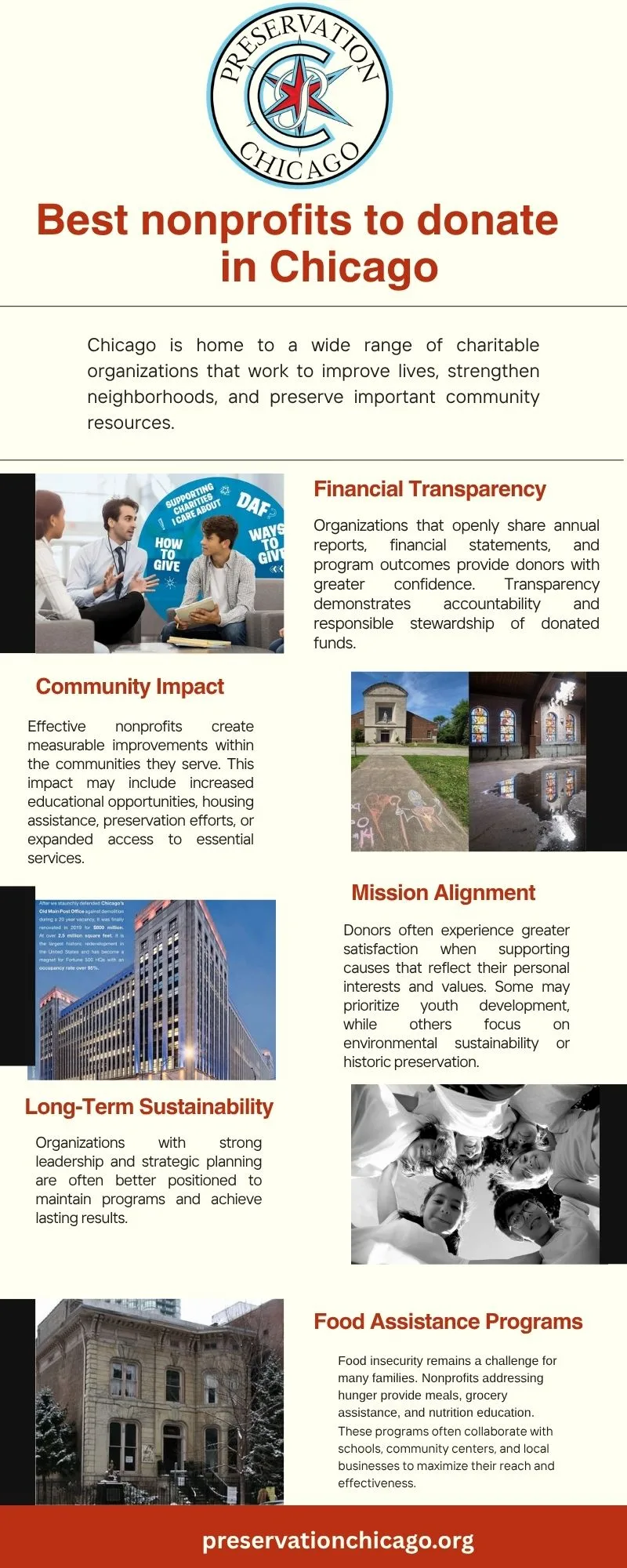
Choosing a charitable organization is an important decision for individuals who want to make a positive difference in their communities. The Best nonprofits to donate in Chicago include organizations working in areas such as education, housing, hunger relief, healthcare, environmental protection, and historic preservation. Each nonprofit has a different mission and approach to addressing community needs. Understanding how these organizations operate can help donors make informed decisions and select causes that reflect their personal values.
Chicago has a diverse nonprofit sector that supports individuals, families, neighborhoods, and cultural institutions. Some organizations focus on providing immediate assistance, while others work toward long-term improvements through education, research, advocacy, and community development. Before making a contribution, it is useful to understand the purpose of nonprofit organizations, how donations are managed, and what factors should be considered when evaluating a charitable organization.
What Are Nonprofit Organizations?
Nonprofit organizations are established to serve public, charitable, educational, cultural, or community purposes rather than generate profits for private owners or shareholders. Their revenue is generally used to maintain operations, support programs, employ staff, and provide services related to their missions. In the United States, many charitable organizations qualify for tax-exempt status under Section 501(c)(3) of the Internal Revenue Code.
Nonprofits operate in different sectors, including education, healthcare, housing, environmental conservation, food assistance, arts, and historic preservation. Their activities may involve distributing essential supplies, providing educational opportunities, protecting cultural landmarks, or supporting individuals experiencing financial difficulties. Understanding these different areas can help donors identify organizations whose work matches their interests.
Why Is Donating to Nonprofits Important?
Charitable donations provide financial support that helps organizations maintain services and respond to community challenges. Contributions from individuals, businesses, and foundations can support daily operations, fund specific projects, and help nonprofits plan future activities.
One important benefit of charitable giving is supporting local communities. Donations can help organizations provide food assistance, educational resources, housing support, and other essential services. Local nonprofits often understand the challenges affecting their neighborhoods and develop programs based on community needs.
Donations can also improve access to education and opportunities. Educational organizations may use contributions to support scholarships, mentoring programs, literacy initiatives, and career development activities. Similarly, healthcare-focused nonprofits may help fund research, awareness campaigns, and community health services.
Another important area is cultural and environmental protection. Charitable organizations working in these fields help preserve natural resources, historic buildings, architectural landmarks, and public spaces. Their work can protect important community assets and maintain connections between past and future generations.
Types of Nonprofits to Consider in Chicago
People exploring the Best nonprofits to donate in Chicago should first identify the causes they want to support. Different organizations address different challenges, so understanding their activities is an important part of responsible giving.
Hunger Relief and Food Assistance
Hunger relief organizations work to reduce food insecurity by distributing groceries, preparing meals, supporting food pantries, and coordinating food assistance programs. Donations may help purchase supplies, maintain distribution facilities, and support transportation services. These programs can provide essential assistance to families and individuals experiencing financial difficulties.
Housing and Homelessness Support
Housing-focused nonprofits work with individuals and families experiencing homelessness or housing instability. Their services may include emergency shelter, temporary accommodation, rental assistance, employment support, and housing-related guidance. Financial contributions can help organizations maintain facilities and provide resources to people who need assistance.
Education and Youth Development
Educational nonprofits focus on improving access to learning opportunities for children, teenagers, and adults. Their programs may include tutoring, scholarships, mentoring, literacy development, and career preparation. Donations can help provide learning materials, educational activities, and support for students from different backgrounds.
Environmental and Historic Preservation
Environmental organizations work to protect natural resources, promote sustainability, and improve public spaces. Historic preservation nonprofits focus on protecting buildings, architectural landmarks, cultural sites, and places with historical importance. Both areas contribute to long-term community development by protecting resources that benefit current and future generations.
How to Choose the Right Nonprofit Organization
Selecting a charitable organization requires more than recognizing its name or responding to a fundraising message. Donors should understand its mission, activities, financial information, and community impact before making a contribution.
Start by reviewing the organization's mission statement. It should clearly explain the purpose of the nonprofit, the communities it serves, and the activities it performs. A clear mission makes it easier to understand how donations support its work.
Financial transparency is another important consideration. Review the latest annual report, financial statements, and IRS Form 990 when available. These documents provide information about organizational revenue, expenses, governance, and activities. Donors can also check federal tax-exempt status through the IRS Tax Exempt Organization Search and review relevant registration information through the Illinois Attorney General's Office.
Community impact should also be considered. Look for information about programs completed, people served, neighborhoods reached, and progress toward organizational goals. These details help donors understand what the nonprofit has accomplished rather than relying entirely on fundraising statements.
Common Mistakes to Avoid When Donating
One common mistake is donating without researching the organization. A professional-looking website or emotional fundraising message does not automatically establish credibility. Always verify the organization's identity, mission, and charitable status before making a payment.
Another mistake is judging nonprofits only by their size. Large organizations may have extensive resources, but smaller community-based nonprofits can also address important local needs. The quality and relevance of their programs are more useful considerations than organization size alone.
Donors should also avoid judging effectiveness only by administrative expenses. Nonprofits need staff, facilities, technology, and fundraising resources to operate effectively. Financial information should be evaluated alongside program results, transparency, and the organization's overall mission.
Ignoring donation restrictions is another issue. Some contributions are designated for specific projects, while others support general operations. Understanding these conditions helps donors know how their money may be used.
Expert Tips for Responsible Charitable Giving
Before donating, identify the issues that matter most to you. Supporting causes that align with your interests can make charitable giving more meaningful and easier to maintain over time.
Research several organizations working in the same area rather than selecting the first option you find. Review their websites, recent activities, financial reports, and community involvement. Comparing this information can provide a clearer understanding of their work.
It is also helpful to ask questions about donation policies. Find out whether contributions support general operations or specific programs and whether the organization provides updates about funded activities.
Consider recurring donations if they fit your financial circumstances. Regular contributions can provide predictable funding that helps nonprofits plan their programs and manage ongoing expenses. However, one-time donations are also useful, particularly when supporting specific campaigns or urgent community needs.
Best Practices for Making Donations
Responsible charitable giving involves careful planning and regular evaluation. Set a realistic donation budget that does not interfere with essential personal expenses. Verify the nonprofit's official website and use secure payment channels when making online contributions.
Keep receipts, payment confirmations, and relevant donation records for personal documentation and applicable tax purposes. Review annual reports and organizational updates to understand how the nonprofit's work develops over time.
Avoid responding to high-pressure fundraising requests without verification. If a donation request arrives through an unfamiliar email, message, or social media account, contact the organization through its official communication channels before sending money.
These practices help donors make informed decisions and develop a consistent approach to charitable contributions.
People Also Ask About Nonprofit Donations
How can I find trustworthy nonprofits in Chicago?
Research organizations according to their missions, review financial reports, verify IRS tax-exempt status, and check relevant Illinois registration information before donating.
Are donations to Chicago nonprofits tax deductible?
Donations may qualify for tax deductions when made to eligible organizations recognized by the IRS. Tax treatment depends on the organization and applicable tax rules.
Can I donate a small amount to a nonprofit?
Yes. Many nonprofits accept contributions of different amounts. Small donations can help support programs, supplies, and operational expenses.
Should I donate to local or national nonprofits?
Both can make meaningful contributions. Local nonprofits often focus on neighborhood needs, while national organizations may operate programs across multiple locations. The choice depends on your priorities.
Frequently Asked Questions
1. What is the difference between a nonprofit and a charity?
A nonprofit operates for purposes other than distributing profits to private owners. A charity generally focuses on charitable activities, although not every nonprofit qualifies as a charitable organization.
2. Can I donate items instead of money?
Yes. Some organizations accept clothing, food, furniture, books, and household supplies. Check their donation guidelines before arranging a drop-off.
3. Are recurring donations useful?
Recurring contributions can provide predictable funding for ongoing programs. They may help nonprofits plan budgets and maintain services over time.
4. What is IRS Form 990?
IRS Form 990 is an annual information return filed by many tax-exempt organizations. It provides details about finances, governance, leadership, and organizational activities.
5. How can I avoid nonprofit donation scams?
Verify the organization's identity, check its charitable status, use official donation channels, and avoid suspicious payment requests or high-pressure fundraising messages.
6. Can businesses donate to nonprofit organizations?
Yes. Businesses can provide financial contributions, supplies, sponsorships, and employee volunteering opportunities to support charitable activities.
7. How often should I review a nonprofit before donating again?
Reviewing annual reports, financial information, and recent program updates at least once a year is a useful practice. Additional research may be appropriate when an organization's mission or activities change.
Charitable giving supports important community needs, including food assistance, education, housing, environmental protection, and historic preservation. Choosing an appropriate organization requires understanding its mission, reviewing financial transparency, verifying registration, and evaluating its activities.
When researching the Best Nonprofits to donate in Chicago, donors should focus on organizations that align with their values and demonstrate meaningful community involvement. Careful research, realistic budgeting, and consistent giving can help individuals make informed contributions that support long-term community development.
For information about historic preservation, architectural heritage, and community conservation initiatives, Preservation Chicago is an organization to explore.