
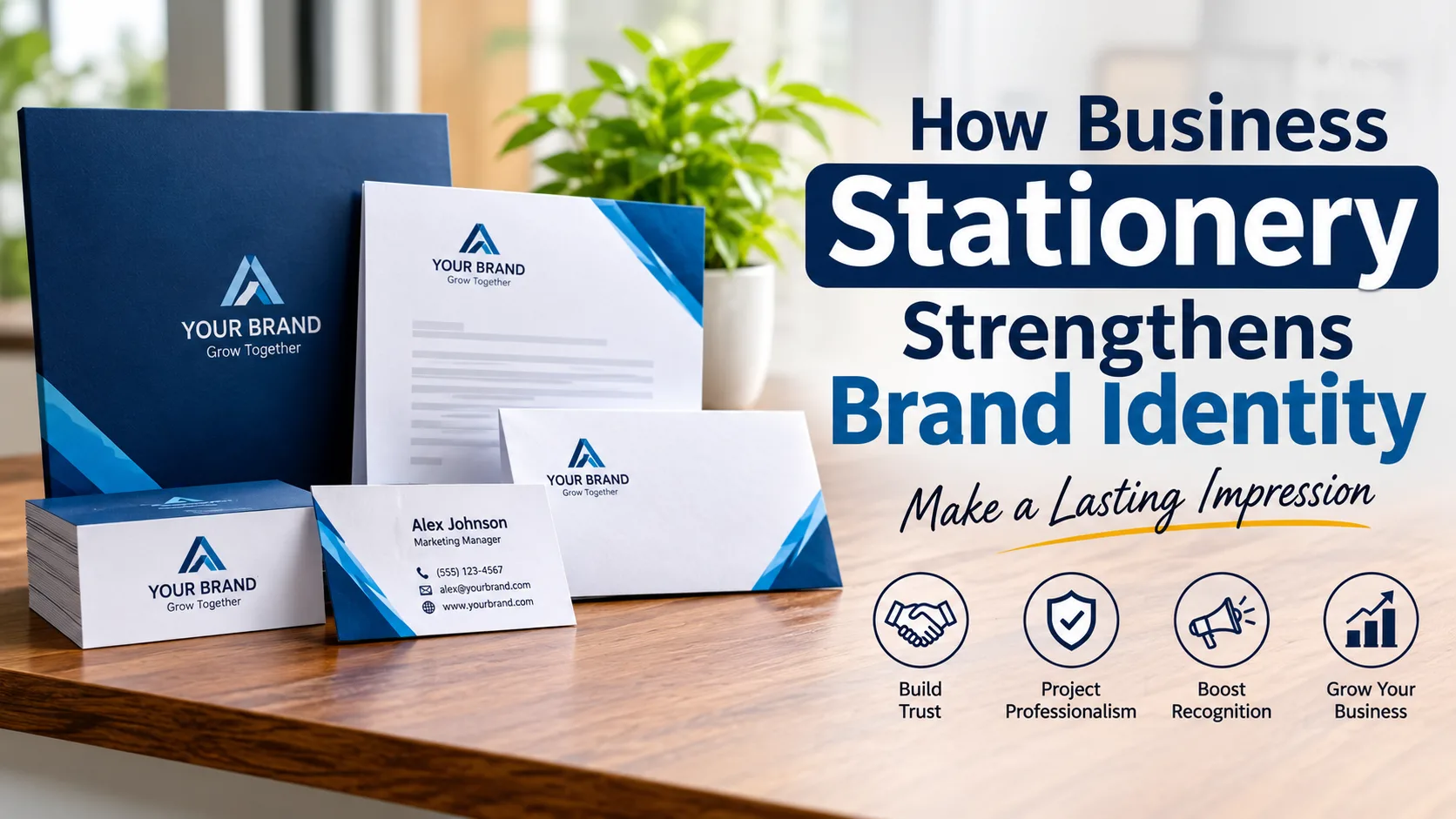
A strong brand identity is built through more than a recognizable logo or an attractive website. Every interaction a customer has with a business contributes to how they perceive it. From receiving a proposal to exchanging contact information at a networking event, small details can influence whether a company appears organized, professional, and trustworthy.
While digital communication has become central to modern business, printed materials continue to serve an important purpose. Business cards, letterheads, envelopes, and presentation folders provide physical ways to communicate a company's identity. When these materials work together, they create a consistent experience that customers can recognize and remember.
Understanding how to use business stationery effectively can help businesses strengthen their professional image and make everyday interactions more meaningful.
What Is Business Stationery and How Does It Support Branding?
Business stationery refers to printed materials used for professional communication, business correspondence, and brand representation. It commonly includes business cards, letterheads, envelopes, notepads, and presentation folders.
Unlike general promotional materials, stationery is often used during routine business activities. This makes it an important part of the customer experience rather than something reserved exclusively for advertising.
For example, a customer might first discover a company through its website, receive a printed proposal during a meeting, and later contact a representative using a business card. When each interaction carries the same visual identity, the company becomes easier to recognize.
Effective stationery should serve two purposes: communicate useful information and reinforce the company's professional identity.
Why Consistency Matters Across Printed Business Materials
Brand consistency means presenting the same recognizable visual identity across different communication channels. This includes using coordinated colors, typography, logo placement, and messaging.
Inconsistent branding can make a business appear less organized. For example, if a company's website uses one color scheme while its invoices, business cards, and letterheads use completely different styles, customers may struggle to associate these materials with the same organization.
A consistent approach helps establish familiarity over time.
Businesses can maintain consistency by following a few practical guidelines:
- Use a consistent logo: Maintain the same approved logo across stationery and marketing materials.
- Follow brand colors: Select a primary and secondary color palette and apply it consistently.
- Maintain typography: Use complementary fonts that remain readable in both digital and printed formats.
- Standardize contact details: Ensure business names, phone numbers, addresses, and website information are accurate.
- Create reusable templates: Establish standard layouts for recurring business documents.
These practices help create a recognizable identity without requiring complicated branding strategies.
How Business Stationery Supports Different Stages of the Customer Journey
Printed materials can contribute to several stages of a business relationship, from the first introduction to ongoing customer communication.
1. Making a Professional First Impression
First impressions often happen during meetings, consultations, networking events, and business introductions.
A professionally produced business card gives potential customers an easy way to remember a company and its representatives. It also provides essential contact information in a convenient format.
Businesses investing in custom business card printing services should consider how the card represents their brand, the quality of the material, and whether the information is easy to read.
The goal is not simply to create an attractive card. It is to provide something useful that supports future communication.
2. Building Confidence During Business Discussions
When companies present proposals, service information, or project documents, presentation matters.
A branded folder containing organized documents can make information easier to review. Similarly, professionally formatted letterheads can give quotations, formal letters, and business correspondence a consistent appearance.
These details do not replace the quality of a company's products or services, but they can support a more organized customer experience.
3. Maintaining Relationships After the Meeting
Communication does not end when a meeting finishes. Businesses continue interacting with customers through follow-up letters, invoices, announcements, and other correspondence.
Branded stationery helps maintain visual consistency throughout these interactions. It also makes important documents easier to associate with the organization that sent them.
Choosing the Right Printed Materials for Your Business
Not every company needs an extensive stationery collection. The right selection depends on the nature of the business, how frequently it communicates with customers, and the materials required for everyday operations.
Here are four useful options to consider.
Business Cards: Suitable for professionals, sales representatives, entrepreneurs, and companies that regularly meet potential customers. They make exchanging contact information simple and convenient.
Letterheads: Useful for formal correspondence, quotations, proposals, and official business documents. A consistent letterhead helps establish a recognizable document format.
Printed Envelopes: Appropriate for companies that regularly send invoices, letters, statements, or customer announcements through the mail.
Presentation Folders: Helpful for organizing proposals, service information, contracts, and promotional documents during client meetings or presentations.
Before ordering, businesses should consider how frequently each item will be used. Prioritizing practical requirements can help control printing expenses while ensuring that essential communication materials are available.
What Should Businesses Consider Before Ordering Printed Stationery?
Selecting the right printing specifications involves more than choosing a design. Material quality, readability, production requirements, and intended use all influence the final result.
Consider the following factors before placing an order:
Paper stock and thickness: Different paper stocks provide different levels of rigidity and feel. Select a material appropriate for the intended application and expected handling.
Printing and finishing options: Color printing, coatings, and other finishing choices can influence the appearance and presentation of printed materials. The right selection depends on the company's brand and budget.
Artwork preparation: Ensure that logos, images, and text are suitable for professional printing. Check dimensions, resolution, bleed, and other production requirements before approving the artwork.
Proofreading: Review every detail, including contact information, spelling, website addresses, and names. Correcting errors before production can prevent unnecessary reprints.
Quantity planning: Consider expected usage, storage space, and the possibility of future changes to contact information or branding. Ordering an appropriate quantity helps reduce waste.
Working with a knowledgeable printing provider can make these decisions easier, particularly when businesses need several types of branded materials.
Connecting Printed Branding With Digital Communication
Printed and digital marketing should support the same brand identity rather than operate independently.
For instance, a business card can include a website address or QR code that directs customers to an online portfolio or contact page. A printed presentation folder can contain information that encourages potential clients to explore the company's digital services.
This connection creates a more consistent experience across different communication channels.
Businesses should also ensure that digital contact information remains accurate. An outdated phone number or inactive website address on printed stationery can create unnecessary confusion.
Reviewing printed materials periodically helps keep branding and business information up to date.
Building a Professional Identity That Customers Remember
Strong branding develops through consistent experiences, not isolated marketing activities. Printed stationery provides businesses with practical tools for maintaining that consistency during everyday communication.
From exchanging business cards to presenting proposals and sending formal correspondence, each material has a specific purpose. Choosing the right products, maintaining consistent branding, and paying attention to print quality can help businesses communicate more professionally.
Companies looking to strengthen their printed identity can explore professional business card printing options as part of their broader stationery requirements.
For additional practical guidance on creating business cards that communicate effectively, see these business card design recommendations.
Ultimately, successful business stationery is not about printing more materials. It is about choosing the right ones and using them consistently to support clear communication, customer relationships, and a recognizable brand identity.