
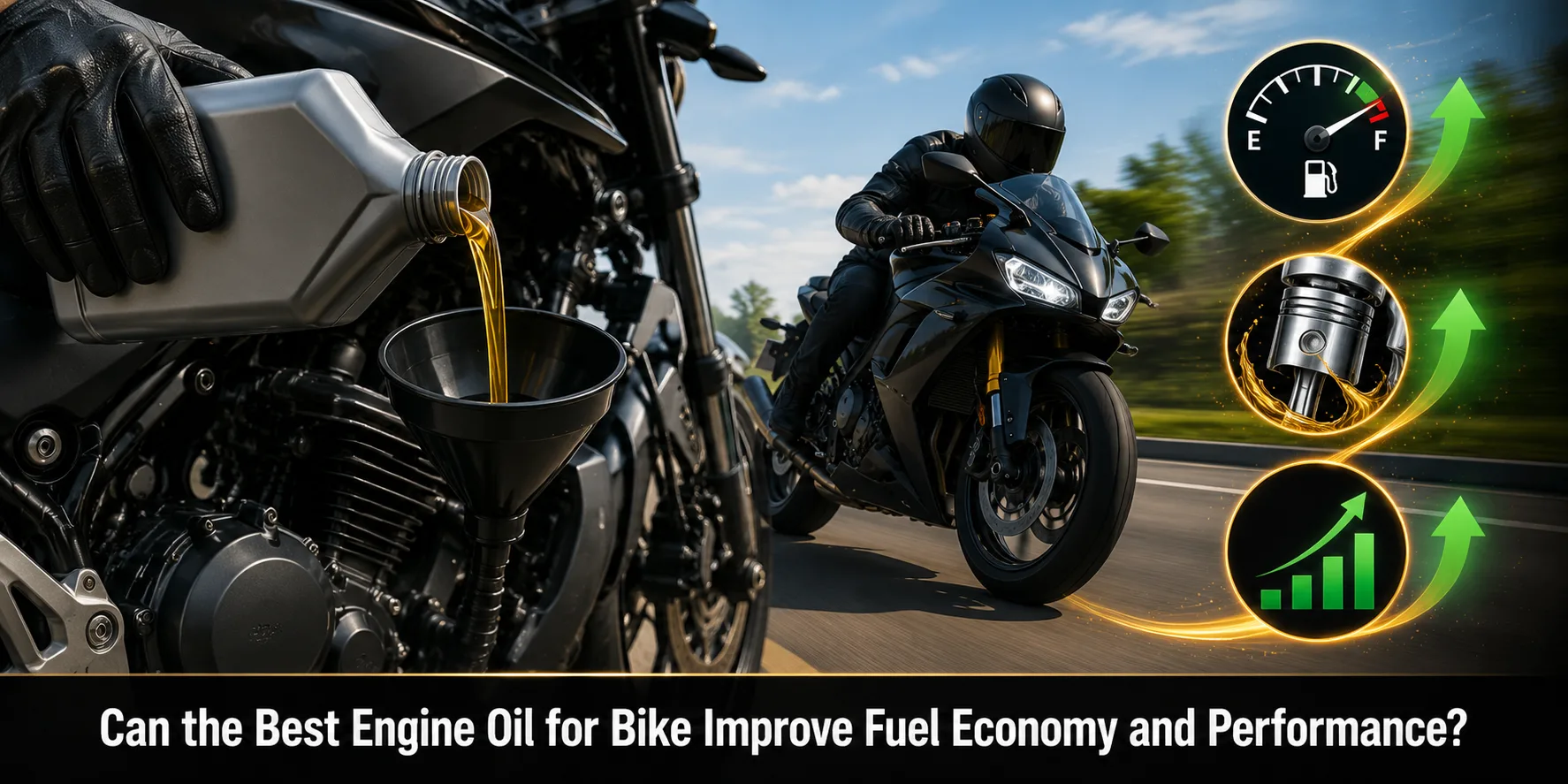
Every bike rider wants two things from their motorcycle: smooth performance and better mileage. While factors such as riding habits, traffic conditions, and regular maintenance all play a role, the engine oil you choose can also influence how your bike performs on the road.
Many riders think of engine oil as a basic maintenance requirement. In reality, it is one of the hardest-working fluids in your motorcycle. The best engine oil for bike engines helps reduce friction, manage heat, protect internal components, and support efficient engine operation. When your engine runs more efficiently, it can positively impact both fuel economy and riding performance.
Understanding the Role of Engine Oil in Your Bike
Every time you start your motorcycle, hundreds of engine components begin moving at high speed. Pistons, crankshafts, gears, and bearings all generate friction as they operate.
Engine oil forms a protective layer between these moving parts. This reduces direct metal-to-metal contact and allows components to move smoothly. At the same time, the oil helps carry away heat and prevents harmful deposits from building up inside the engine.
Without proper lubrication, friction increases, temperatures rise, and engine efficiency starts to decline.
The Relationship Between Engine Oil and Fuel Economy
Fuel economy depends on how efficiently your engine converts fuel into power. When internal friction is high, the engine must work harder to produce the same performance. This additional effort can lead to higher fuel consumption.
The best engine oil for bike applications helps reduce this friction and allows engine components to move more freely. As a result, less energy is wasted inside the engine, which supports more efficient fuel usage.
This doesn't mean changing your engine oil will instantly transform your mileage. However, using the right oil can help your motorcycle maintain its designed efficiency, especially if you ride regularly or cover long distances.
How Engine Oil Influences Bike Performance
Most riders associate bike performance with engine capacity, power figures, or riding conditions. Here’s how pouring the right engine oil in your bike can be beneficial.
Reduces Energy Loss Inside the Engine
Every engine loses a portion of its power to internal friction. When moving components encounter greater resistance, the engine must work harder to generate the same output. Quality engine oil reduces this friction, allowing more of the generated power to be used for propulsion rather than overcoming internal losses.
Helps the Engine Perform Consistently at Higher Temperatures
Engine temperatures rise naturally during long rides, heavy traffic, and frequent acceleration. As temperatures increase, lubrication quality becomes critical. Engine oil that maintains its protective properties under heat helps the engine continue operating efficiently without a noticeable drop in performance.
Supports Smoother Power Delivery Across Different Riding Conditions
Performance is not only about peak power figures. Riders also expect predictable acceleration and smooth power delivery. Proper lubrication helps engine components move freely under varying loads, allowing the motorcycle to deliver power more consistently whether riding in city traffic or on open highways.
Enhances Gearbox and Clutch Operation
In many motorcycles, the engine, gearbox, and wet clutch share the same lubricant. The condition of the oil can therefore influence shift quality and clutch performance. Effective lubrication helps reduce friction between transmission components, contributing to smoother gear engagement and more controlled power transfer.
What to Look for When Selecting Engine Oil?
Check box the following list when purchasing an engine oil for your bike:
Select the Recommended Viscosity Grade
Viscosity determines how easily the oil flows at different temperatures. Common grades such as 10W30, 10W40, 15W50, and 20W50 are designed for different operating conditions and engine requirements. Using the recommended grade helps maintain proper lubrication, allowing the engine to operate efficiently under both cold-start and normal riding conditions.
Check Industry Certifications
Engine oil certifications provide an indication of performance standards and compatibility. Specifications such as API and JASO help riders identify oils that meet established requirements for engine protection and performance. For motorcycles equipped with wet clutches, JASO MA or MA2 specifications are commonly recommended.
Follow the Manufacturer's Recommendation
Choosing a higher-priced oil does not automatically guarantee better performance. The most effective option is usually the one that matches the manufacturer's specifications. When the correct grade and certification are used, the engine receives the level of protection and lubrication it was designed to operate with.
Final Thoughts
If you are a rider looking to get the best out of your motorcycle, engine oil should be viewed as more than a routine service item. The right oil helps the engine operate under proper conditions by reducing internal friction, managing heat, and protecting critical components from wear.
At the same time, selecting a premium product alone is not enough. Using the recommended viscosity grade, checking the required specifications, and following the manufacturer's service intervals are equally important.
It is only after considering these factors that an engine oil can be the ‘best engine oil for bike’.