Water pressure is one of the most important things to consider when selecting pipes for a plumbing system. Whether you are installing a water supply line in a residential building, commercial property, or agricultural project, you need pipes that can handle daily pressure without frequent leakage or damage. This is where UPVC pipes become a practical choice.
But can they really withstand high water pressure? The answer is yes, provided you select the correct pressure-rated pipes, compatible fittings, and follow proper installation practices. Let's understand what makes these pipes suitable for pressure-based water supply applications and what you should check before purchasing them.
1. Understanding the Pressure-Handling Capacity of UPVC Pipes
UPVC (Unplasticized Polyvinyl Chloride) is a rigid plastic material commonly used in water supply and plumbing systems. Unlike ordinary PVC, it does not contain plasticizers, which helps it maintain its stiffness and structural strength.
One of the main reasons people choose UPVC pipes is their ability to handle water pressure when manufactured according to the required specifications. Their pressure performance depends on factors such as pipe diameter, wall thickness, material quality, and manufacturing standards.
However, not every UPVC pipe is designed for high-pressure applications. A pipe suitable for a household water connection may not be appropriate for a high-pressure pumping system. Therefore, always check the pressure rating before selecting a product.
2. How Much Water Pressure Can UPVC Pipes Handle?
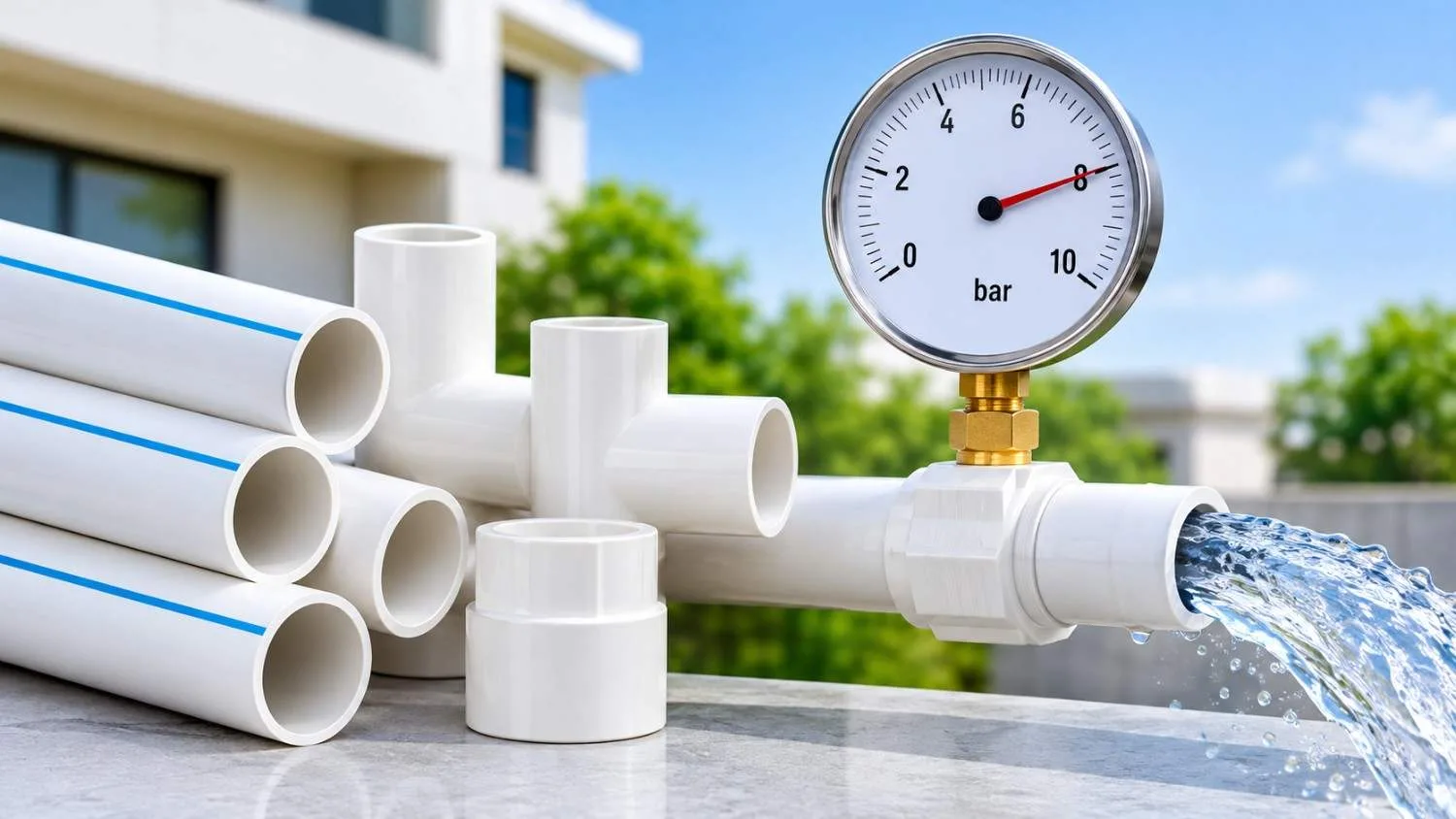
The pressure capacity of a pipe depends on its pressure class, commonly represented by PN ratings. PN indicates the nominal pressure rating in bar under specified reference conditions. For example, PN 6 generally indicates a nominal pressure rating of 6 bar, while PN 10 indicates 10 bar.
According to the Bureau of Indian Standards (BIS), IS 4985:2021 specifies different working pressure classes for unplasticized PVC pipes used in water supply applications. These include pressure classes ranging from 0.25 MPa to 1.25 MPa in its classification.
BIS+1
| Pipe Class | Nominal Working Pressure |
| Class 1 | 2.5 bar |
| Class 2 | 4 bar |
| Class 3 | 6 bar |
| Class 4 | 8 bar |
| Class 5 | 10 bar |
| Class 6 | 12.5 bar |
These figures are nominal classifications, not a guarantee that every pipe can safely operate at these pressures under all conditions. Temperature, service life, installation quality, and manufacturer specifications also matter.
3. Why UPVC Pipes Are Suitable for Water Supply Systems
There are several reasons why UPVC is widely used in plumbing and water distribution applications. Its combination of strength, durability, and resistance to corrosion makes it a useful alternative to traditional metal piping in suitable applications.
Unlike metal pipes, UPVC does not rust when exposed to water. This helps maintain the internal passage and reduces problems associated with corrosion. Its relatively smooth inner surface also supports efficient water flow by reducing friction.
Another advantage is its comparatively lightweight construction. Installers can handle and transport these pipes more easily, which can make plumbing projects more convenient.
However, choosing the best UPVC pipes still requires checking their specifications and suitability for the intended application.
4. Common Causes of Pressure-Related Pipe Damage
Even good-quality pipes can develop problems if they are selected or installed incorrectly. One common mistake is choosing a low-pressure pipe for a system that requires a higher pressure rating. This can increase the risk of cracks, leakage, and premature failure.
Another issue is water hammer. It occurs when flowing water suddenly stops or changes direction, creating a pressure surge inside the pipeline. These sudden changes can put additional stress on pipes, joints, and fittings.
Poorly prepared joints, incompatible fittings, excessive bending, and inadequate support can also affect the performance of a plumbing system.
To reduce these risks, use compatible components and consult a qualified plumber when designing high-pressure water supply lines.
5. How to Choose the Best UPVC Pipes & Fittings
Selecting the right products is just as important as understanding their pressure capacity. Start by identifying the required water pressure, pipe diameter, and application. Then compare products based on manufacturing quality, pressure classification, and relevant certifications.
If you are searching for the best UPVC pipes & fittings, consider the following points:
- Pressure rating: Select a pipe that meets the operating pressure requirements.
- Material quality: Check the product specifications and manufacturing consistency.
- BIS compliance: Look for applicable standards and valid certification details.
- Compatible fittings: Ensure fittings and joints are suitable for the selected piping system.
- Manufacturer information: Check product markings, batch details, and technical documentation.
You should also compare the UPVC pipe price list before purchasing. Prices can vary according to diameter, wall thickness, pressure class, quantity, and manufacturer. Instead of selecting the cheapest option, compare price with product specifications and long-term suitability.
For buyers looking for the best UPVC pipes in India, choosing a reliable supplier with clear product information can make the purchasing process easier.
6. Tips for Safe UPVC Pipe Installation
Correct installation plays a major role in maintaining pipeline safety. Even a pressure-rated pipe may fail if its joints are poorly prepared or its fittings are unsuitable.
Before installation, inspect pipes for visible cracks, damage, or manufacturing defects. Use the recommended joining method and compatible solvent cement or sealing components, depending on the pipe design. Allow joints to cure according to the manufacturer's instructions before introducing water pressure.
Avoid applying unnecessary force during fitting and provide proper support to prevent sagging or movement. In systems with pressure fluctuations, suitable pressure-control measures may also be necessary.
StarmaX Pipes and Fittings is a brand to explore when comparing plumbing products for water supply applications. Buyers should review the available product specifications, sizes, and pressure-related details before choosing products for their projects.
Conclusion
So, can UPVC pipes and fittings handle high water pressure safely? Yes, they can when the selected products have the correct pressure rating and are installed according to manufacturer recommendations.
The key is not simply buying a strong-looking pipe. You need to consider pressure class, material quality, compatible fittings, and installation conditions. By checking these details and comparing reliable products, you can build a durable and dependable water supply system.
Frequently Asked Questions (FAQs)
1. Are UPVC pipes suitable for high-pressure water supply?
Yes. Pressure-rated UPVC pipes can handle high-pressure water supply applications when their pressure class matches the system requirements. Proper installation and compatible fittings are equally important for preventing leakage and damage.
2. What is the maximum pressure UPVC pipes can withstand?
It depends on the pipe's pressure class and specifications. Under IS 4985:2021, the classified working pressure ranges from 0.25 MPa to 1.25 MPa for specified water supply pipe classes.
3. Do UPVC pipes crack under high water pressure?
Good-quality UPVC pipes are designed to withstand their specified working pressure. However, excessive pressure, sudden pressure surges, incorrect installation, and physical damage can cause cracks or leakage.
4. How can I choose the best UPVC pipes in India?
Check the pressure rating, applicable BIS standards, material quality, pipe dimensions, manufacturer details, and fitting compatibility. Always select products according to your plumbing system's requirements.
5. Does the UPVC pipe price list depend on pressure rating?
Yes. UPVC pipe prices can vary according to pressure class, diameter, wall thickness, manufacturing quality, and supplier. Comparing technical specifications alongside prices helps you make a better purchasing decision.