
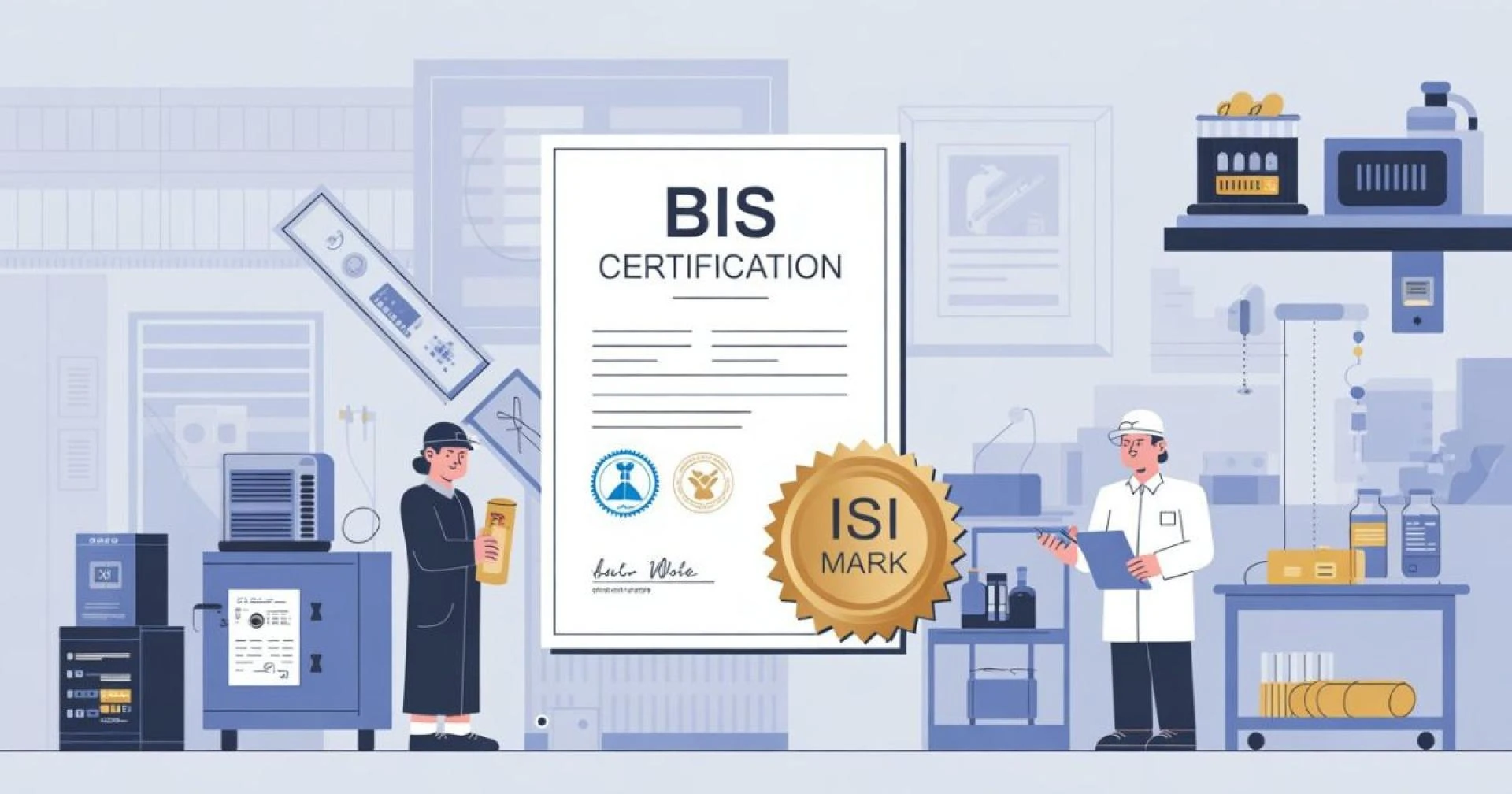
Maintaining consistent product quality & safety is not just about customer satisfaction; it’s also about following strict national standards. In India, BIS Certification ensures that every product meets the benchmark of safety, reliability & quality before it reaches the market. For businesses manufacturing or importing goods, understanding BIS norms is essential for both compliance & credibility.
This comprehensive guide from Om Garuda Group explains what BIS Certification is, its process, benefits, and how companies can obtain it efficiently through professional support.
What is BIS Certification?
BIS Certification refers to approval provided by the Bureau of Indian Standards (BIS), India’s national standards body established under the BIS Act, 2016. It ensures that a product conforms to Indian Standards (IS) related to safety, performance & reliability.
Products under the BIS scheme carry the ISI mark, a symbol recognized across India as a mark of quality assurance. For electronic & IT products, BIS issues certification under the Compulsory Registration Scheme (CRS).
In simple terms, BIS Certification acts as a quality passport, allowing only safe, standardized products to enter the Indian market.
Why BIS Certification Matters
Businesses often underestimate the impact of BIS Certification, but it plays a major role in product acceptance, especially among consumers who associate the ISI mark with trust.
Here’s why it’s important:
- Ensures the product meets Indian quality & safety standards
- Builds consumer confidence & strengthens brand reputation
- Reduces chances of product recalls or bans due to non-compliance
- Helps businesses expand across regulated sectors in India
- Facilitates smooth import & export processes
For companies importing electrical appliances, electronics, or steel products, BIS Registration is not optional; it’s mandatory under the Indian Government’s Quality Control Orders (QCOs).
Who Needs BIS Certification in India?
Manufacturers, importers & brand owners dealing in certain categories of products must apply for BIS Certification before distribution or sale.
Industries that commonly require BIS approval include:
- Electrical & Electronic Appliances
- Steel & Cement Products
- Household Goods (Cookware, Pressure Cookers, etc.)
- Chemicals & Industrial Products
- Automotive Parts
- IT & Communication Devices
Foreign manufacturers also need to obtain BIS Registration under the Foreign Manufacturers Certification Scheme (FMCS) before selling products in India.
Types of BIS Certification Schemes
BIS operates through several certification schemes, depending on product type & compliance requirements.
1. ISI Mark Scheme
Applicable for domestic manufacturers producing products under Indian Standards. Once approved, products can display the ISI mark.
2. Compulsory Registration Scheme (CRS)
Mandatory for electronic & IT equipment. Manufacturers must register under this scheme before marketing or importing products.
3. Foreign Manufacturers Certification Scheme (FMCS)
Designed for overseas manufacturers exporting products to India. The factory undergoes on-site inspection before certification.
4. ECO Mark Scheme
For environmentally friendly products that meet BIS quality standards & eco-safety parameters.
5. Hallmarking Scheme
Specific to gold & silver jewellery, verifying purity and quality as per BIS standards.
Each scheme follows a different process & documentation set, but the goal remains consistent; ensuring safe, standardized products.
Step-by-Step Process for BIS Certification
Getting BIS Certification involves detailed documentation, testing & audit procedures. Below is a clear step-by-step breakdown:
Step 1: Identify Applicable Indian Standard (IS)
Every product category falls under a specific IS code. Determining the correct standard is the first step toward compliance.
Step 2: Application Submission
The manufacturer or authorized representative must fill out the BIS application form and attach necessary documents such as factory license, product details & quality control plan.
Step 3: Product Testing
Samples are sent to a BIS-approved laboratory for testing as per relevant IS standards. Test reports form the basis of certification.
Step 4: Factory Inspection (If Required)
BIS officers conduct an on-site audit to evaluate production facilities, quality control processes & testing capabilities.
Step 5: Review & Grant of License
After verifying all documents and test results, BIS issues the certification license or registration number.
Step 6: Use of BIS Mark
Once certified, manufacturers can affix the BIS or ISI mark on their product packaging & marketing materials.
Documents Required for BIS Certification
The documentation process may vary depending on the scheme, but the general requirements include:
- Manufacturing license or registration certificate
- Product test report from BIS-recognized lab
- Factory layout & quality control documents
- List of machinery & equipment
- Raw material & process details
- Authorization letter (for foreign manufacturers)
- Brand ownership or trademark certificate
Ensuring accurate documentation reduces approval time & prevents delays during inspection.
Understanding BIS Registration for Electronics
Electronic items like mobile phones, LED lights, power banks & IT devices come under the Compulsory Registration Scheme (CRS).
Under this scheme:
- Manufacturers must apply for BIS Registration instead of the ISI mark.
- Each product model must be tested & registered separately.
- The process is fully digital through the BIS online portal.
Products without BIS Registration are barred from sale or import in India. Hence, compliance with CRS norms is mandatory for all electronic brands.
Timeline for BIS Certification
The timeline depends on the product type & complexity.
Generally:
- ISI Mark Certification: 30–45 working days
- BIS Registration (CRS): 15–25 working days
- FMCS for Foreign Manufacturers: 60–90 working days
Working with experts like Om Garuda Group ensures faster document preparation, lab coordination & follow-up with BIS officials to minimize waiting periods.
Cost of BIS Certification in India
The total cost varies based on product category, testing fees & BIS license fees. Typical expenses include:
- Application & inspection fee
- Lab testing charges
- License fee & marking fee (based on annual production)
- Consultant or liaison charges
Though the cost might seem high initially, the long-term benefits in terms of trust, legal compliance & market access far outweigh the expense.
Validity and Renewal
A BIS license remains valid for 2 years (extendable up to 5 years). Renewal requires submission of updated test reports & payment of renewal fees.
For BIS Registration, the validity period is also 2 years, and renewal can be initiated online before expiry.
Common Challenges During BIS Certification
Businesses often face issues such as:
- Incorrect IS code selection
- Incomplete test reports
- Non-compliance during factory inspection
- Miscommunication with BIS officials
Partnering with a reliable consultant simplifies these processes. Om Garuda Group provides end-to-end support, from identifying applicable standards to obtaining the final license, ensuring smooth certification with zero rejections.
Benefits of Partnering with Om Garuda Group
Om Garuda Group has years of experience assisting Indian & foreign manufacturers with BIS Certification & BIS Registration.
Our expertise covers:
- Guidance on applicable Indian Standards
- Documentation & online application support
- Coordination with BIS-approved laboratories
- Handling factory inspections & audits
- Assistance in renewal & post-certification compliance
Clients trust Om Garuda Group for transparent service, timely delivery & complete compliance support.
Products Covered Under BIS Certification
A wide range of products currently fall under mandatory BIS certification, including:
- Cement & Steel Products
- Electrical Wires, Switches & Fittings
- Household Appliances (Refrigerators, Fans, Geysers)
- LED Lights & Electronic Gadgets
- Automotive Tyres & Tubes
- Food Containers & Plastic Items
The BIS website regularly updates the list of products under compulsory registration & quality control orders. Manufacturers must stay updated to avoid penalties.
Penalties for Non-Compliance
Selling or importing non-certified products can result in:
- Product seizure or recall
- Legal penalties & monetary fines
- Suspension of business operations
- Permanent ban on product category
Therefore, obtaining BIS Certification is not just a legal requirement; it’s a sign of responsible manufacturing & customer commitment.
Conclusion
BIS Certification is a critical aspect of ensuring that products meet the high standards of safety, quality & performance expected by Indian consumers. For manufacturers & importers, compliance builds trust, enhances credibility & opens doors to new market opportunities.
At Om Garuda Group, we specialize in guiding businesses through every step of the BIS Registration and certification journey, making the process transparent, efficient & hassle-free.
Ready to get your product BIS certified?
👉 Contact Om Garuda Group today & ensure your brand stands for quality that India trusts!
Original Source: https://omgarudagroup.livejournal.com/1147.html