In industrial packaging and protective case design, Custom EVA foam has become a critical component rather than an optional accessory. Businesses dealing with sensitive equipment, precision instruments, electronics, and high-value components quickly learn that poor packaging causes more damage than rough handling. The real challenge is not impact alone, but vibration, repeated movement, pressure points, and long-term storage stress.
This is where engineered EVA foam packaging plays a decisive role. When designed correctly, EVA foam absorbs shock, controls movement, and protects products consistently throughout their lifecycle. When designed poorly, it becomes nothing more than decorative cushioning.
Understanding EVA Foam Beyond the Basics
EVA (Ethylene Vinyl Acetate) foam is often described as soft, flexible, and lightweight. While this is true, such surface-level descriptions do not explain why EVA foam is widely used in custom foam packaging and protective foam packaging.
From an engineering perspective, EVA foam offers controlled energy absorption during impact, elastic recovery after compression, stable performance across repeated use cycles, and clean, non-abrasive contact with delicate surfaces. These properties make EVA foam ideal for applications where products are handled frequently, such as tool kits, professional equipment cases, electronics packaging, and service kits.
However, EVA foam only performs as intended when it is custom fabricated to suit the product it protects.
Why Custom EVA Foam Matters More Than Generic Foam
Generic foam sheets are designed for convenience, not performance. They rarely account for product weight distribution, centre of gravity, or handling orientation. As a result, products shift inside cases, stress points develop, and damage occurs over time.
Custom EVA foam eliminates these risks by creating cavities that match the product’s exact geometry. This ensures uniform load distribution, reduced internal movement, protection against vibration and micro-impacts, and longer service life for both product and packaging.
This is why industries increasingly rely on experienced Foam Converters who understand material behaviour rather than suppliers who simply sell foam by thickness.
EVA Foam vs XLPE Foam in Practical Applications
A common question in packaging design is whether to use EVA foam or XLPE foam. Both materials are valuable, but their performance differs significantly depending on use case.
EVA foam is preferred for multi-use protective cases, products requiring soft yet resilient support, equipment accessed frequently, and custom foam inserts for cases and tool kits. XLPE foam is better suited for heavy industrial components, long-term compression resistance, harsh transport environments, and rugged XLPE foam packaging solutions.
In many real-world applications, the most effective solution combines both materials. EVA foam provides surface protection and cushioning, while XLPE foam adds structural support. This layered approach is common in advanced foam conversion projects.
The Role of Foam Conversion in Protective Packaging
Foam Conversion is the process that transforms raw foam into a functional protective system. It includes material selection, design planning, precision cutting, and quality validation.
A professional foam conversion process typically involves selecting foam density based on product weight and fragility, designing cavities to eliminate pressure points, optimising layouts to maintain consistency across batches, and testing fit and performance before scaling production.
This level of detail is what distinguishes engineered customised foam solutions from basic foam packing inserts.
Applications Where Custom EVA Foam Excels
Electronics and Instruments
Electronic components are vulnerable to vibration, static, and movement. Custom EVA foam packaging stabilises components and reduces damage during transport and storage.
Camera, Lens, and Media Equipment
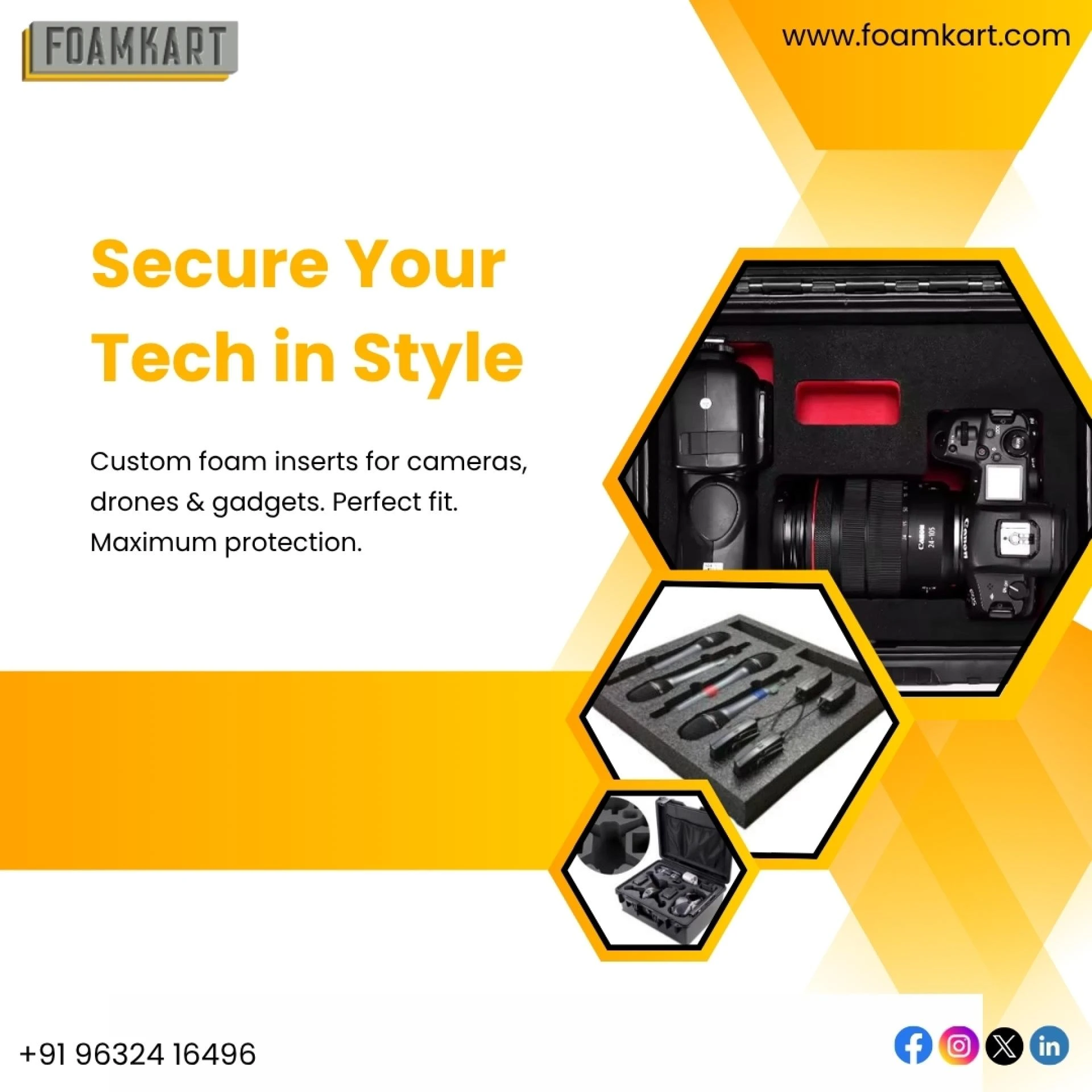
Professional equipment requires scratch-free, precision-fit protection. EVA foam inserts ensure lenses, cameras, and accessories remain secure without abrasion.
Drones and Aviation Components
Weight balance and impact resistance are critical. EVA foam offers lightweight protection without compromising structural integrity.
Defence and Tactical Equipment
Durability and reliability are non-negotiable. Custom EVA foam combined with XLPE layers is commonly used for rugged field applications.
Custom Hard Cases and Tool Kits
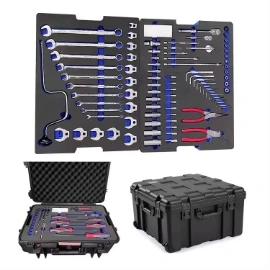
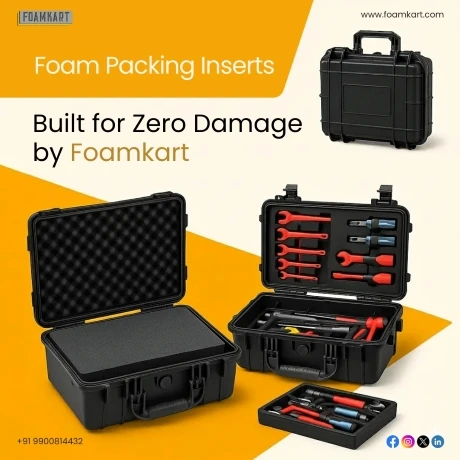
For service engineers and field technicians, custom hard case interiors made from EVA foam provide organisation, protection, and professional presentation.
Across all these applications, performance depends on design accuracy, not just material choice.
Why Experience Matters in Foam Fabrication
Foam behaves differently under varying loads, temperatures, and usage cycles. Over time, repeated compression can change how foam performs if density and structure are poorly selected.
Experienced Foam Converters understand how foam reacts to long-term compression, how cavity design affects stress concentration, how material thickness influences shock absorption, and how real-world handling differs from lab assumptions. This knowledge comes from years of problem-solving, not from catalog specifications.
The Importance of Location in Manufacturing
Bangalore has emerged as a major hub for technology, manufacturing, and product development in India. For custom foam fabrication, proximity to OEMs and product designers enables faster iteration, better communication, and tighter quality control.
Local manufacturing also allows foam solutions to be designed around actual logistics conditions in India, including road transport, climate variation, and storage environments.
Custom EVA Foam as a Long-Term Investment
Businesses often evaluate packaging based on unit cost alone. However, experienced manufacturers understand that packaging failures cost far more than initial savings.
Properly engineered custom EVA foam packaging reduces product damage and returns, improves professional presentation, extends product lifespan, and enhances customer confidence. In many cases, the cost of custom foam is offset by reduced replacement, repair, and warranty expenses.
Choosing the Right Foam Partner
Selecting a foam supplier is not just a procurement decision; it is a risk management decision. The right partner will ask technical questions, evaluate real-world conditions, and propose solutions based on performance rather than convenience.
Key indicators of a reliable foam conversion partner include proven experience across industries, understanding of EVA and XLPE foam behaviour, ability to scale production consistently, and a strong focus on engineering rather than shortcuts.
Contact Us
Custom EVA foam is not about aesthetics or trend-driven packaging. It is about controlled protection, reliability, and long-term performance. When engineered correctly, EVA foam works quietly in the background, absorbing shocks, preventing movement, and preserving product integrity through repeated use.
As industries continue to demand higher standards of protection and presentation, the role of precision foam fabrication will only grow. Businesses that invest in engineered foam solutions today position themselves for fewer failures, better customer satisfaction, and stronger brand trust tomorrow.
Call Us: +91 9900814432
Book Appointment: https://www.foamkart.com/
Learn More About Us: https://www.foamkart.com/about/
Browse All Products: https://foamkart.com/products/
Follow our journey: Facebook | Instagram | X (Twitter) | Pinterest
More Products
Custom foam products|Foam packaging solutions|Customized foam fabrication|Custom Hard Case