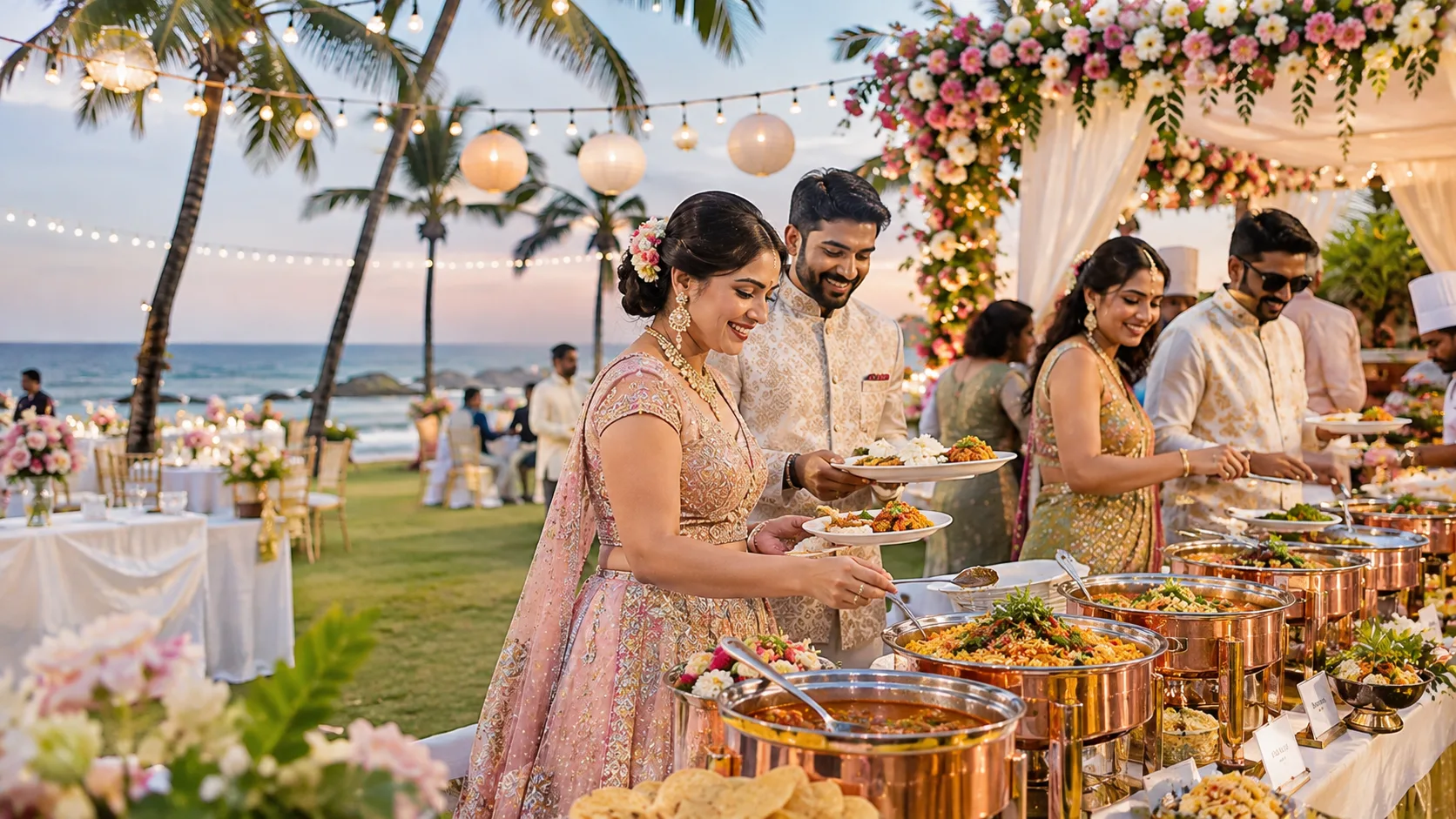
A destination wedding in Sri Lanka offers a chance to serve food that guests talk about long after they fly home. Indian families expect variety, generous portions and familiar flavours, while many guests also enjoy tasting something new. Balancing both takes planning, especially when relatives have different diets, ages and habits. This guide explains how to build menus for each function, handle dietary needs, include local dishes and keep service smooth during busy days.
Start With Your Guest Profile
Before thinking about dishes, understand who is coming. Note how many guests are vegetarian, Jain, vegan or have allergies, and how many are children or elders. Check regional preferences too. A South Indian family may expect rice-based meals at every sitting, while a Punjabi family may look for rotis and rich gravies.
Collect this information with your RSVPs rather than later. Early data lets the catering team plan quantities and avoid last-minute shortages.
Match the Menu to Each Function
Different functions call for different food. Welcome gatherings work well with light snacks, mocktails and easy finger food, since guests may be tired from travel. Mehendi and haldi suit chaat counters, fresh juices and simple lunches. The sangeet usually calls for a fuller dinner with starters, live counters and desserts, while the wedding day needs a hearty meal before the ceremony and a celebratory dinner afterwards.
Think about timing as well. Heavy meals right before dancing or long rituals can leave guests sluggish, so keep portions lighter when energy matters.
Offer Regional Indian Options
Indian weddings bring together many food traditions. North Indian, South Indian, Gujarati, Marwari, Bengali and Jain menus each have distinct needs, and one buffet rarely satisfies everyone. Decide which cuisines matter most for your families and give each a proper counter rather than a single token dish.
Ask the chef about experience cooking at scale for Indian guests. Spice levels, tempering styles and the quality of breads and rice all show whether a kitchen understands this cuisine.
Handle Dietary Rules Carefully
Strict diets need more than a label on a plate. Jain meals avoid root vegetables and sometimes need separate utensils and preparation areas. Vegetarian and vegan guests should be served from dishes kept apart from meat. Allergy information must reach the kitchen in writing, naming each guest and each ingredient to avoid.
Assign one person on your side to answer dietary questions during the event. Guests with serious allergies should be able to speak with the chef without feeling awkward.
Add Sri Lankan Flavours
Sri Lankan food shares spices and techniques with Indian cooking, yet it has its own character. Coconut sambol, hoppers, string hoppers, curries made with goraka and sweet treats such as wattalappam are popular examples. Placing a few of these at the welcome dinner or a breakfast spread gives guests a gentle introduction without replacing familiar food.
Label each dish clearly and mark vegetarian options. Guests unfamiliar with local cooking usually try more when they know what is in the dish.
Plan Live Counters and Late-Night Food
Live counters add energy to any evening. Dosa stations, chaat, pasta, grills and dessert counters let guests choose fresh portions and break up long queues. Keep the number of counters proportionate to your guest count, since too few create crowds and too many stretch staff thin.
Late-night snacks are a welcome touch after a sangeet or reception. Simple items like sliders, tea, coffee, sandwiches or hot samosas are easy to serve and appreciated by tired guests.
Take Care of Children and Elders
Children often prefer plain, familiar food. Include a few mild dishes such as pasta, rice, fries or simple rotis. Elders may need softer textures, less oil and less spice, so ask the kitchen to prepare a few lighter options.
Seat elders near the food, or offer to serve them at the table, so they do not stand in long queues. Fresh water, fruit and warm drinks should always be easy to find.
Insist on a Tasting
Never finalise a menu on a description alone. A tasting lets you judge flavour, portion size, presentation and spice level. Bring one or two family members whose opinion matters, and take notes on each dish. If you cannot attend in person, ask for a detailed video call and photographs, though a real tasting is always better.
Think About Food Safety and Climate
Warm weather means food must be stored and served safely. Ask how hot dishes are kept hot and cold dishes kept cool, particularly at outdoor events. Remind guests to drink bottled or filtered water and to take care with raw items if they have sensitive stomachs. Good hygiene practices are standard in professional kitchens, but a simple conversation about them gives you confidence.
Quick Answers
What should you decide first?
Know your guests' dietary needs, then choose cuisines to match.
Can Jain meals be arranged?
Yes, with clear instructions and separate preparation.
Should you include Sri Lankan dishes?
A few clearly labelled dishes add charm without replacing familiar food.
Is a tasting necessary?
Yes, it is the best way to judge flavour and quality.
Final Thoughts
Good wedding food balances comfort and discovery. Learn what your guests need, match each menu to its function, respect dietary rules and taste everything before you commit. When food is thoughtful and well served, it becomes one of the warmest memories of the celebration.