
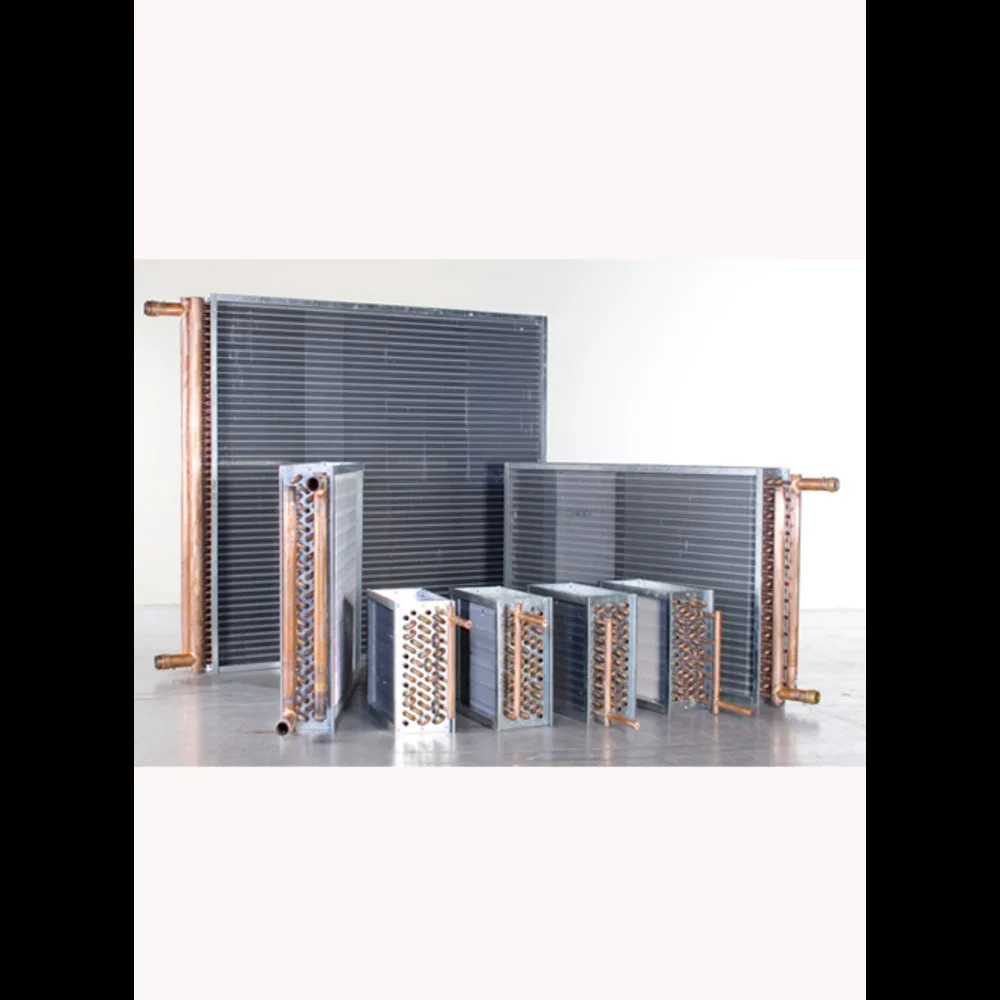
DX Coils
DX Coils are essential heat exchange components used in air conditioning, refrigeration, cold storage, process cooling, and industrial HVAC systems. Designed for direct expansion refrigeration, these coils allow refrigerant to evaporate inside tubes while air passes across finned surfaces, removing heat efficiently. Their construction affects cooling capacity, efficiency, service life, and reliability. DX Coils are commonly manufactured with copper tubes and aluminium fins, although stainless steel and other materials may be selected for demanding environments. For projects requiring dependable thermal performance, buyers look for experienced DX Coils Manufacturers, reliable DX Coils Suppliers, and established DX Coils Exporters capable of supplying standard and customized designs.

DX Coils Manufacturers and Suppliers
Katariyaa Coils Pvt. Ltd. manufactures and supplies ls for commercial, industrial, refrigeration, and air-conditioning requirements. A DX coil, or direct expansion coil, functions as the evaporating section of a refrigeration circuit. Liquid refrigerant absorbs heat from surrounding air and changes into vapour. The coil transfers heat between refrigerant and air. Tube arrangement, fin spacing, circuiting, face area, and airflow influence cooling output.
As experienced DX Coils Manufacturers in India, Katariyaa Coils Pvt. Ltd. supports customers seeking coils for air handling units, packaged air conditioners, refrigeration equipment, cold rooms, display systems, and process cooling. Customers searching for Dx Coils Suppliers in India consider material quality, accuracy, testing, delivery, and technical support.
Material Composition and Mechanical Properties
Copper is widely selected for DX coil tubes because of high thermal conductivity, formability, and refrigeration performance. Aluminium is frequently used for fins because it is lightweight and provides effective heat transfer. Depending on the application, copper fins, stainless steel components, protective coatings, and specialized materials may also be considered.
Mechanical performance depends on wall thickness, material strength, joint quality, expansion, fin attachment, and pressure. Tubes must withstand refrigerant pressure, thermal cycling, vibration, and handling without leakage or deformation. Manufactured coils provide dimensional stability, reliable joints, and resistance to repeated heating and cooling cycles.
Chemical Properties, Corrosion Resistance and Grade Benefits
Copper provides useful corrosion resistance in many HVAC and refrigeration environments, while aluminium offers a favourable combination of low weight and surface durability. Chemical composition is selected according to tube, fin, frame, and service requirements. In humid, coastal, chemical, or polluted environments, protective coatings can extend service life.
Appropriate material grades provide reliable heat transfer, durability, reduced maintenance, and stable performance. Selection should consider refrigerant compatibility, moisture exposure, cleaning chemicals, operating temperature, and installation conditions. Correctly selected and manufactured DX Coils resist oxidation, corrosion, and service-related deterioration.
International Standards and Specifications
DX coil manufacturing may involve international material, dimensional, pressure, fabrication, and testing standards according to project requirements. ASTM standards are commonly referenced for copper and aluminium materials, while ASME requirements may be considered for pressure-related engineering and quality practices. EN standards provide European specifications, DIN standards are widely referenced in German engineering documentation, and JIS standards are used for Japanese industrial requirements.
Terminology also varies between countries. International HVAC documentation may call the product a Direct Expansion Coil, DX Cooling Coil, Refrigerant Coil, Evaporator Coil, or Direct Expansion Evaporator. European projects may specify EN requirements, German projects can refer to DIN documentation, and Japanese procurement documents may use JIS references. The applicable standard should be confirmed against the drawing, refrigerant, pressure class, material grade, and specification.
Pipe Types and Sizes
DX coils are commonly produced with copper tubes in different outside diameters, wall thicknesses, lengths, and circuit arrangements. Common tube options include 3/8 inch, 1/2 inch, 5/8 inch, and other sizes. Tubes may be plain or internally enhanced to improve heat transfer. Fin spacing is selected according to airflow, moisture conditions, dust loading, and cleaning requirements.
Coil dimensions can be customized for face area, depth, rows, circuits, headers, connections, and frames. Correct pipe size and circuit arrangement help control refrigerant distribution and pressure drop, so selection should follow system conditions.
Industrial Applications of DX Coils
DX Coils are widely used where direct refrigerant expansion is required for efficient air cooling. They are installed in air conditioning units, AHU systems, refrigeration equipment, cold rooms, process cooling systems, commercial refrigeration, food storage facilities, pharmaceutical environments, and industrial HVAC installations. They are suitable for applications requiring controlled air temperature and dependable heat removal.
In manufacturing facilities, DX coils support stable process cooling, while commercial buildings use them for indoor comfort. Refrigeration and cold-storage installations rely on these coils for low-temperature control and protection of sensitive products. Their versatility suits standard equipment and customized industrial systems.
Features and Advantages
Advantages include efficient heat transfer, compact construction, dependable refrigerant circulation, customizable dimensions, and broad cooling-system suitability. Copper tubes and aluminium fins provide an effective balance between thermal performance, weight, and durability.
Important features may include:
- High thermal conductivity and efficient cooling performance.
- Multiple tube, fin, row, and circuit configurations.
- Custom sizes for equipment and space limitations.
- Options for enhanced heat transfer and corrosion protection.
Pressure and temperature resistance are determined by material grade, tube wall thickness, refrigerant, design pressure, operating temperature, joints, and manufacturing quality. A properly engineered coil can handle repeated pressure and temperature changes during normal refrigeration operation. Testing and correct system design are essential for safe and reliable performance.
Manufacturing Process and Testing Methods
DX coil manufacturing begins with material inspection and preparation. Copper tubes are cut, formed, and arranged according to the approved design. Aluminium fins are produced with the required profile and spacing, after which tubes and fins are assembled to create the heat transfer surface. Tube expansion improves tube-fin contact, while headers and connections follow the circuit arrangement. Frames and supports are installed as required.
Quality control can include dimensional inspection, visual examination, tube and joint checks, pressure testing, leakage testing, and cleanliness verification. Additional tests may include pressure holding, vacuum integrity, or performance validation. These checks confirm that the finished coil meets drawing requirements and is ready for installation.
DX Coils Stockists and Exporters
Katariyaa Coils Pvt. Ltd. supports DX Coils supply for domestic and international requirements. As DX Coils Exporters in India, the company can prepare products for project-based procurement and overseas orders while considering packaging, documentation, dimensions, and customer specifications. DX Coils Stockists and purchasing teams can benefit from consistent manufacturing and planned supply for replacement, maintenance, OEM, and new equipment requirements.
Customers seeking DX Coils Exporters in India may require different tube sizes, fin materials, coil depths, connections, and corrosion protection. Export supply therefore requires coordination of specifications, inspection, packaging, and delivery schedules.
Why Choose Katariyaa Coils Pvt. Ltd.
Katariyaa Coils Pvt. Ltd. focuses on supplying DX Coils with dependable construction, application-oriented design, and consistent manufacturing quality. Buyers can discuss required cooling capacity, dimensions, materials, refrigerant conditions, operating pressure, temperature range, airflow, and installation limitations to develop a suitable coil specification.
An experienced supplier helps reduce selection errors, improve equipment reliability, and maintain consistent cooling performance. For replacement coils, OEM equipment, industrial HVAC projects, refrigeration systems, or export orders, the right DX coil supports efficient heat transfer and long-term value. Customization, quality control, technical understanding, and supply support make Katariyaa Coils Pvt. Ltd. a practical choice.
Contact Us
+91-9820511832
+91-9833471118
[email protected]
[email protected]
https://www.katariyaacoils.com/
Parmar Techno Centre, Phase II, Gala No. 36, Pelhar Village, Nr Vasai Phata, Vasai (E), 401208