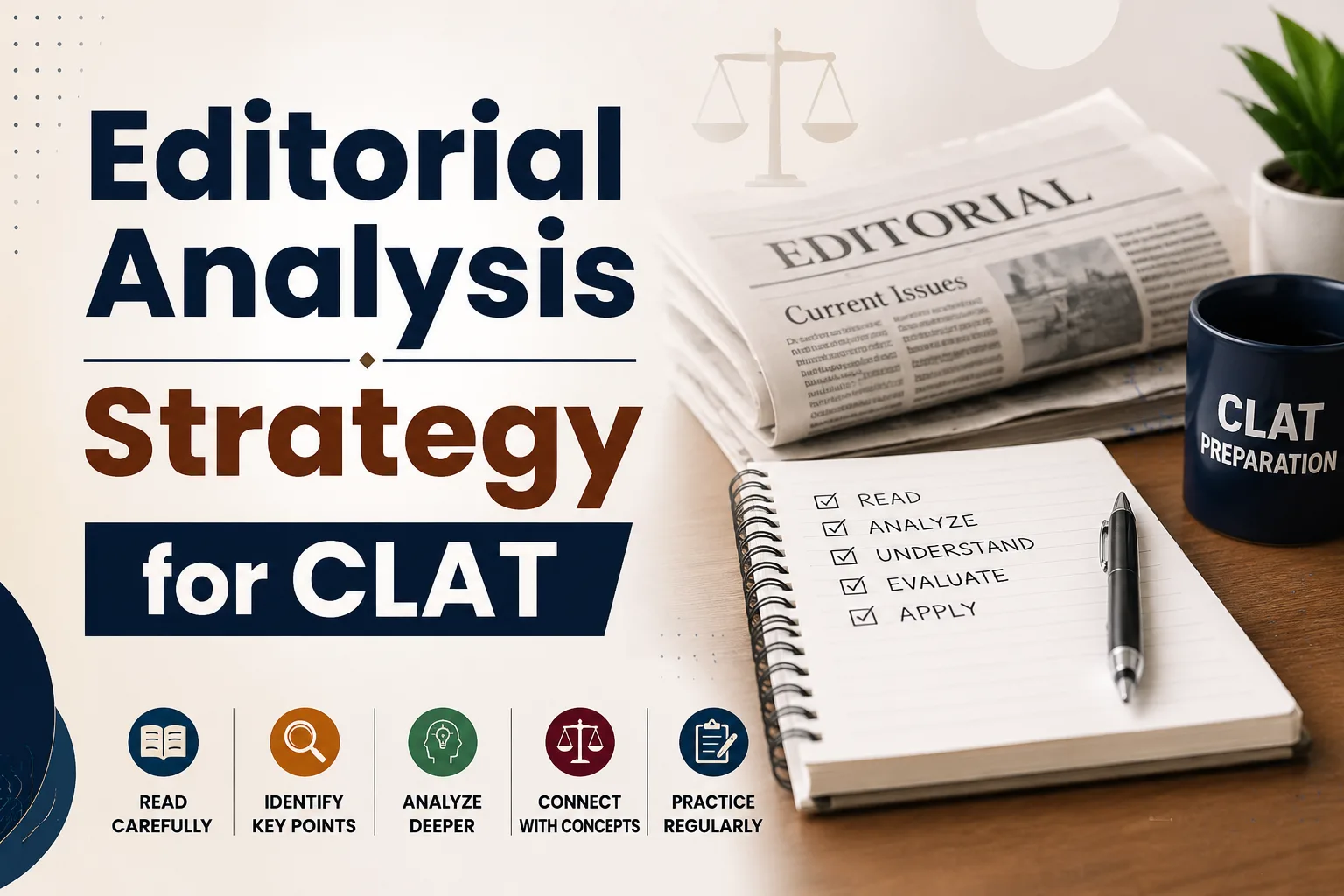
Preparing for CLAT is not just about reading newspapers; it is about understanding and analyzing important issues. Editorial pages of reputed newspapers provide insights into legal, political, economic, and social matters that are highly relevant for the Current Affairs and General Knowledge section of CLAT. A proper editorial analysis strategy can help aspirants improve their comprehension, critical thinking, and legal reasoning skills.
Why Editorial Analysis is Important for CLAT
Editorials discuss current national and international issues in depth. Unlike news reports, editorials provide opinions, arguments, and interpretations of events. Since CLAT frequently includes passage-based questions related to current affairs, students who regularly analyze editorials develop a better understanding of complex topics.
Benefits of editorial analysis include:
- Improved reading comprehension skills.
- Better vocabulary and language proficiency.
- Enhanced critical thinking ability.
- Stronger understanding of legal and constitutional issues.
- Improved performance in passage-based questions.
How to Select the Right Editorials
Not every editorial is relevant for CLAT preparation. Focus on topics such as:
- Supreme Court judgments.
- Constitutional amendments.
- Government policies.
- International relations.
- Environmental issues.
- Economic reforms.
- Human rights and social justice.
Avoid editorials that are highly political or based on personal opinions without educational value.
Step-by-Step Editorial Analysis Strategy
1. Read the Editorial Carefully
Start by reading the editorial without taking notes. Understand the central issue being discussed and identify the main argument presented by the author.
Ask yourself:
- What is the topic?
- Why is it important?
- What is the author's viewpoint?
2. Identify Key Facts
While reading for the second time, highlight important facts such as:
- Government schemes.
- Court rulings.
- Constitutional provisions.
- International organizations.
- Important dates and events.
These facts can directly help in CLAT current affairs preparation.
3. Note Down Important Vocabulary
Editorials often contain advanced vocabulary. Maintain a separate notebook for:
- New words.
- Meanings.
- Synonyms.
- Usage examples.
This practice improves both the English Language and Reading Comprehension sections of CLAT.
4. Analyze Different Perspectives
One of the best ways to improve legal reasoning is by understanding multiple viewpoints. Consider:
- Arguments supporting the issue.
- Arguments opposing the issue.
- Possible legal implications.
This balanced approach helps develop analytical thinking skills required in CLAT.
5. Create Short Notes
After reading an editorial, prepare concise notes containing:
- Topic name.
- Key facts.
- Major arguments.
- Relevant legal provisions.
- Conclusion.
These notes become valuable revision material before the examination.
Weekly Revision Strategy
Dedicate one day every week to revise editorial notes. Group topics under categories such as:
- Law and Judiciary
- Economy
- International Affairs
- Environment
- Social Issues
Weekly revision strengthens retention and helps connect current events with legal concepts.
How Coaching Can Help
Many students struggle to identify important editorials and extract relevant information. Guidance from experienced mentors can simplify this process. Students searching for quality clat coaching in kolkata often look for institutes that provide daily current affairs discussions, editorial analysis sessions, and structured note-making techniques. A good coaching program can help aspirants focus on exam-relevant content and improve analytical skills effectively.
Conclusion
Editorial analysis is a powerful tool for CLAT preparation. By reading quality editorials daily, identifying key facts, learning new vocabulary, and making concise notes, students can significantly improve their current affairs preparation. Consistency is the key. Even 30–45 minutes of editorial analysis every day can make a substantial difference in CLAT performance and help aspirants stay ahead in their preparation journey.