Modern warehouses need reliable equipment to manage daily material handling activities. Businesses must move heavy goods, organise stock, and complete loading tasks on time. Electric forklifts have become a popular choice for these operations. They offer smooth performance and support efficient workplace activities.
Across South Africa, many warehouses, manufacturing facilities, and distribution centres are looking for better material handling solutions. Electric forklifts provide an effective option for businesses that want to improve productivity and reduce workplace emissions. They operate using rechargeable batteries instead of traditional fuel engines.
With modern features and easy operation, electric forklifts can help businesses manage their daily activities. Choosing the right equipment can also support long-term warehouse performance.
Table of Contents
- Understanding Electric Forklifts
- Benefits of Electric Forklifts in Warehouses
- Improving Warehouse Productivity
- Applications Across Different Industries
- Important Factors When Choosing Electric Forklifts
- Safety and Maintenance Tips
- Conclusion
1. Understanding Electric Forklifts
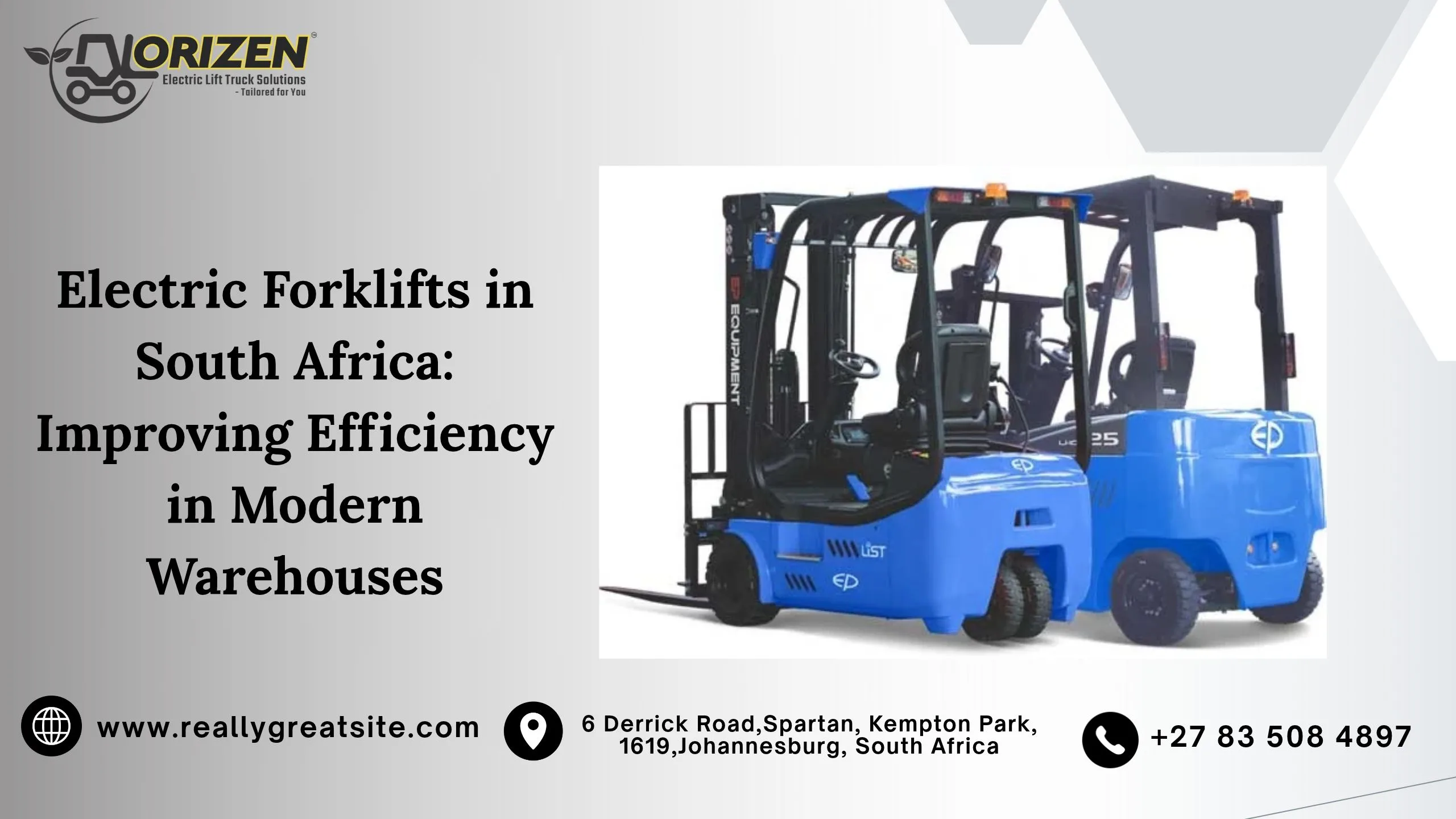
Electric forklifts use rechargeable battery systems to lift, transport, and move heavy materials. They are designed to lift, carry, and move goods across different workplace environments. These machines are commonly used in warehouses, factories, retail facilities, and distribution centres.
Unlike diesel or LPG forklifts, electric models do not produce exhaust emissions during operation. This makes them suitable for indoor workplaces where air quality is important.
Modern electric forklifts are available in different models and load capacities. Businesses can choose suitable equipment based on their lifting requirements, working space, and daily operations. Some models also feature advanced controls, comfortable operator seats, and efficient battery systems.
2. Benefits of Electric Forklifts in Warehouses
Electric forklifts offer several advantages for businesses across South Africa. Their features make them useful for modern warehouse operations.
No Exhaust Emissions During Operation: Electric forklifts do not release exhaust gases while working. This makes them a suitable option for indoor material handling activities.
Quiet Performance: These machines operate with less noise than many fuel-powered forklifts. A quieter working environment can improve comfort for employees.
Lower Maintenance Requirements: Electric forklifts generally have fewer moving engine components. They do not require engine oil changes or fuel filter replacements. This can simplify routine maintenance.
Smooth Operation: Electric models provide controlled acceleration and handling. This helps operators move goods more comfortably.
Energy Efficiency: Electric forklifts use battery power to complete lifting and transportation tasks. Efficient energy use can support better warehouse management.
These benefits make electric forklifts a practical choice for businesses looking to improve their material handling systems.
3. Improving Warehouse Productivity
Warehouse productivity depends on how quickly and safely goods move from one location to another. Electric forklifts help employees complete different tasks with less manual effort.
They can transport heavy pallets, move products between storage areas, and support loading and unloading activities. Their smooth handling also helps operators work in organised warehouse spaces.
Battery-powered forklifts are useful for businesses with regular indoor operations. Depending on the battery type and charging system, operators can recharge equipment during planned breaks. This helps reduce unnecessary interruptions.
Electric forklifts are also available in compact designs. These models can move through narrow aisles and smaller storage areas. Businesses can use them to manage available warehouse space more effectively.
By selecting suitable equipment, companies can improve workflow and manage daily material handling activities with greater efficiency.
4. Applications Across Different Industries
Electric forklifts are used in several industries throughout South Africa. Their flexible design makes them suitable for different material handling requirements.
Warehousing: They help move pallets, organise inventory, and transport products between storage locations.
Manufacturing: Factories use electric forklifts to move raw materials, production supplies, and finished goods.
Retail and Wholesale: These machines support stock movement, product storage, and loading activities.
Food and Beverage: Electric forklifts can be useful in indoor storage facilities where clean working conditions are important.
Logistics and Distribution: Distribution centres use them to handle incoming and outgoing goods. They also help manage regular loading and unloading operations.
Their indoor performance and reduced operating noise make them useful for many workplace environments.
5. Important Factors When Choosing Electric Forklifts
Selecting the right electric forklift is important for achieving reliable performance. Businesses should understand their operational needs before choosing a model.
First, consider the weight of the goods that need to be lifted. The forklift must have a suitable load capacity for the intended work.
Next, check the required lifting height. Warehouses with tall storage racks may need forklifts with suitable mast configurations.
Battery performance is another important factor. Consider the expected working hours, charging time, and battery capacity. Choose a battery system that matches your daily operating requirements.
Also, consider the warehouse layout. Compact forklifts may be more suitable for narrow aisles, while larger models can support heavier material handling tasks.
Finally, check the availability of spare parts, technical support, and maintenance services. A reliable supplier can help businesses select suitable equipment.
6. Safety and Maintenance Tips
Proper forklift maintenance and safe operating practices are important for every warehouse. Regular inspections help identify problems before they affect daily operations.
Follow these simple safety and maintenance practices:
- Inspect tyres, forks, brakes, and steering before starting work.
- Check the battery and charging connections regularly.
- Always keep the lifted load within the forklift's approved weight limit.
- Make sure goods are properly positioned before lifting.
- Ensure warehouse floors remain tidy, clear, and safe for forklift movement.
- Train operators to follow workplace safety procedures.
- Park the forklift in a designated area after use.
- Follow the manufacturer's maintenance recommendations.
Operators should also maintain a safe speed and avoid sudden movements. Proper training and regular equipment checks help create a safer working environment.
Conclusion
Electric forklifts are a useful solution for modern warehouses across South Africa. They offer quiet operation, smooth handling, and no exhaust emissions during use. These features help businesses improve daily material handling activities.
Choosing the right forklift is important. Consider your warehouse space, lifting needs, and battery requirements before making a decision.
With suitable equipment, businesses can improve productivity. They can also create cleaner and more organised workplaces.
Orizen Group supports businesses looking for effective material handling solutions. Investing in the right electric forklift can help your warehouse achieve better performance and meet future operational needs.