Air sealing and crawl space insulation work together by blocking unwanted air movement and slowing heat transfer between a home and the space below it. For homeowners in Troy, NC, this combination can help reduce drafts, improve floor comfort, and support better home energy efficiency. Results depend on the home's existing insulation, moisture conditions, construction, and the areas being treated.
Air sealing closes gaps around plumbing, wiring, floor joints, and other openings. Crawl space insulation helps reduce heat loss through the floor or foundation walls. This guide explains how these methods work together, which insulation options may suit different homes, how local weather affects performance, and what homeowners should check before starting a project.
Why Air Sealing and Crawl Space Insulation Matter
A crawl space can affect indoor comfort when outdoor air enters through gaps or heat escapes through an inadequately insulated floor. Insulation alone may not stop drafts if air can still move through openings.
The U.S. Department of Energy's guidance on insulating floors over unconditioned spaces explains that insulation should work with a continuous air barrier. Sealing gaps before installing insulation helps create a more complete thermal boundary.
How the Two Methods Work Together
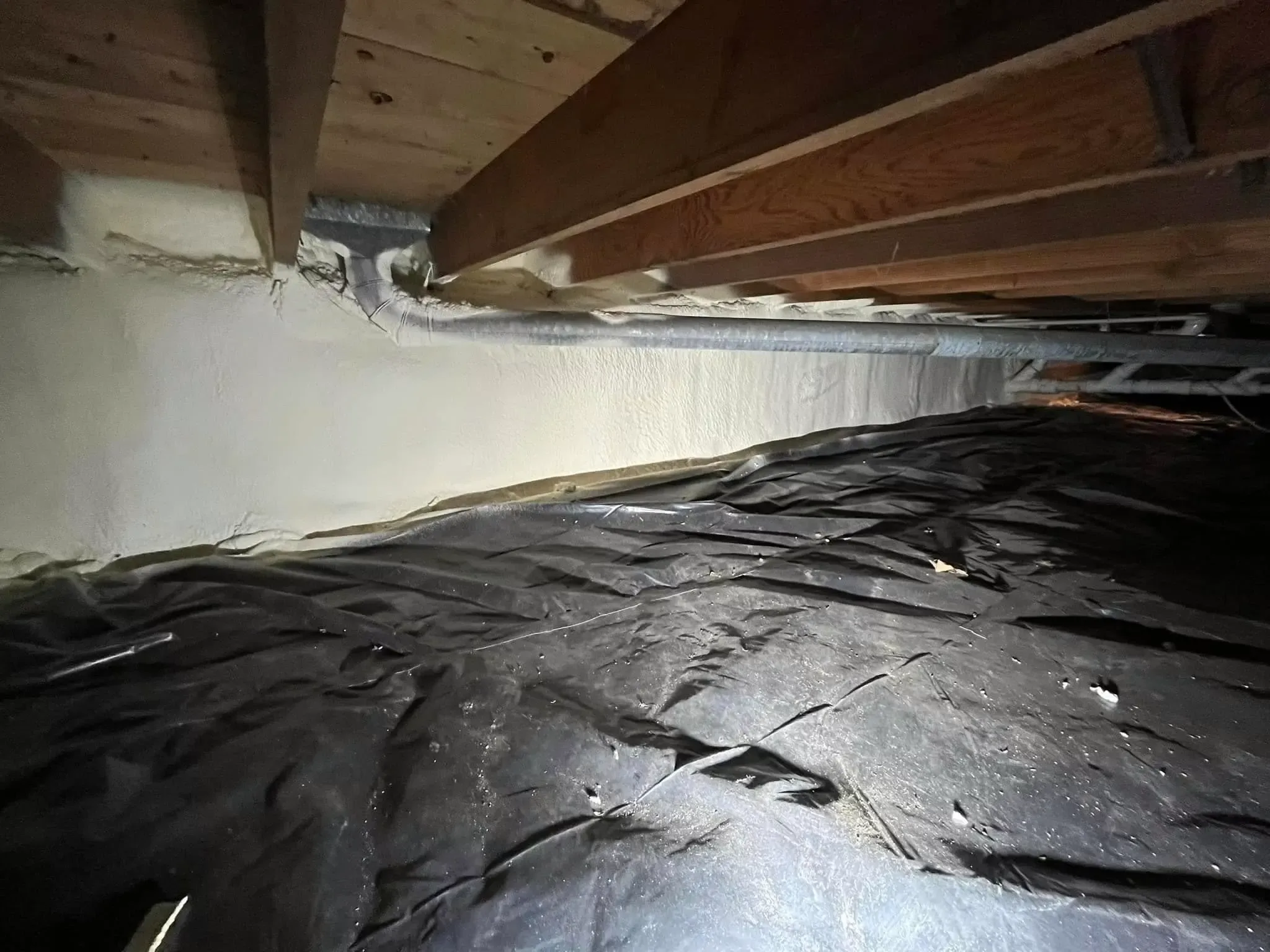
- Air sealing: Closes openings around pipes, cables, floor penetrations, and suitable foundation joints. This limits unwanted air movement between the crawl space and living areas.
- Crawl space insulation: Slows heat transfer through the floor system or foundation walls, depending on the crawl space design.
- Moisture control: Addresses ground moisture, drainage, and condensation risks that can affect insulation and wood framing.
The correct approach depends on whether the crawl space will remain vented or be converted into a properly sealed and managed space.

Key Benefits for Troy, NC Homes
Combining air sealing with suitable insulation can address several common problems. The benefits depend on the condition of the building and the quality of the installation.
- More comfortable floors: Insulation and air sealing can reduce cold drafts and heat loss through floors above an unconditioned crawl space.
- Less wasted heating and cooling: Reducing air leakage helps conditioned air stay inside the home's thermal boundary.
- Better control of outdoor air: Sealing suitable gaps can limit the entry of humid air, dust, and insects through unintended openings.
- Support for moisture management: A planned system can reduce some sources of moisture-related trouble when paired with proper drainage and ground vapor control.
These improvements are not guaranteed to produce a specific utility-bill reduction. Whole-home air leakage, heating and cooling equipment, insulation levels, and occupant habits all affect energy use.
Comparing Crawl Space Insulation and Air-Sealing Options
Different materials serve different purposes. The best choice depends on the crawl space layout, moisture exposure, access, and whether the floor or foundation walls form the home's thermal boundary.

The U.S. Department of Energy's crawl space and floor-insulation resources explain why air sealing and insulation should be planned together rather than treated as interchangeable tasks.
Pros and Cons of Combining Both Services
Air sealing and insulation can be a useful upgrade, but the work needs to match the crawl space's actual conditions.
Advantages
- Addresses both air leakage and heat transfer instead of relying on insulation alone.
- Can improve comfort and help reduce energy waste when the existing thermal boundary is inadequate.
- Allows a contractor to identify gaps, damaged insulation, and moisture concerns before new materials are installed.
Potential Drawbacks
- The project may need additional repairs if standing water, drainage issues, mold, or damaged framing are present.
- Spray foam can be difficult to remove or modify later, so placement should be planned carefully.
- Sealing a crawl space without a suitable moisture-control and ventilation or drying strategy can create new problems.
Common Crawl Space Problems and Practical Solutions
Troy homes can face humid weather, heavy rain, and seasonal temperature changes. Inspecting the crawl space helps identify problems before insulation begins.
Drafts and Cold Floors
Gaps around pipes, wiring, and floor joints can cause drafts. Sealing these openings and repairing damaged insulation can improve comfort. Follow the North Carolina Residential Code for applicable requirements.
Damp Soil or Musty Odors
Exposed soil, poor drainage, plumbing leaks, and condensation can cause moisture problems. Correcting these sources before insulation helps protect the home. The EPA's moisture-control guidance explains how to reduce mold risks.
Gaps Around Pipes and Wiring
Seal openings with suitable materials to limit unwanted air movement. Fiberglass insulation alone does not stop air leaks.
How Weather Affects Installation and Performance
Humid weather and heavy rain can increase crawl space moisture. Before installation, check for water entry and damp materials, and ensure conditions meet the insulation manufacturer's requirements. Installation timing depends on site conditions, not a single preferred season.
Understanding R-Value and Air Leakage
R-value measures how well an insulation material resists heat flow. In general, a higher R-value means greater resistance to heat transfer at the stated thickness.
However, R-value does not measure how well a home is sealed against air leaks. A floor can have insulation and still feel drafty if gaps remain around pipes, wiring, or framing joints. The insulation type, installed thickness, fit, and location all affect performance.
The appropriate R-value depends on the home, the insulation location, and applicable code requirements. North Carolina's residential energy-efficiency code provides requirements for insulation and building-envelope performance. The applicable code edition and local requirements should be confirmed for the project.

Why Consider Spray Foam Pro?
They provide residential spray foam, open-cell and closed-cell spray foam, crawl space insulation, wall insulation, fiberglass insulation, and other residential and commercial insulation services.
For a Troy-area property, the company can be contacted to discuss crawl space conditions and potential insulation needs. Homeowners should ask for an assessment that covers air leakage, existing insulation, moisture sources, the proposed thermal boundary, and the materials to be used. A clear estimate should explain the work included and any repairs needed before installation.
Conclusion
Air sealing and crawl space insulation address different but connected sources of energy loss. Sealing gaps helps control unwanted air movement, while insulation slows heat transfer. In Troy, NC, the most effective plan also considers drainage, ground moisture, the crawl space design, and local code requirements.
An inspection can help determine whether the home needs targeted air sealing, replacement insulation, spray foam, or broader moisture-control work.
Schedule a Crawl Space Assessment
Homeowners looking into air sealing and crawl space insulation in Troy, NC, can contact Spray Foam Pro to discuss their property and request service information.
- Email: sales@sprayfoamprollc.com
- Phone: (910) 606-6247
FAQs
Does crawl space insulation stop drafts by itself?
Not always. Insulation slows heat transfer, but gaps around pipes, wiring, and floor joints may still allow air to move. Sealing those openings helps the insulation perform as intended.
Should air sealing be done before installing crawl space insulation?
Usually, suitable air leaks should be sealed before or as part of the insulation work. The contractor should first check for water entry, damp materials, and other conditions that could affect installation.
Can spray foam help control crawl space moisture?
Spray foam can provide insulation and air control in suitable locations, but it does not fix every moisture source. Drainage problems, plumbing leaks, and ground moisture may require separate solutions.
Is fiberglass or spray foam better for crawl space insulation?
Fiberglass suits properly fitted floor cavities, while spray foam provides insulation and air control. The best choice depends on the crawl space design and moisture conditions.
Author & Reviewer
Author: I’m Jacob Wilberg, and I have been in the insulation business for three years. I started by earning my certification through SPI and later worked for a large company in Raleigh. Over time, I saw jobs being sold incorrectly, which led to warranty problems for homeowners. I decided to start my own company to provide better experiences and avoid the issues I had seen with big-box stores. My company was established on August 10, 2025. I also recently earned my Master Insulation Installer certification through PCP, reinforcing my commitment to proper installation.
Reviewer: Maria Lopez reviewed the article and brought 12 years of insulation industry experience to improve the guidance. Practical tips were added, and the content was made clearer and more useful for contractors working in the field every day.