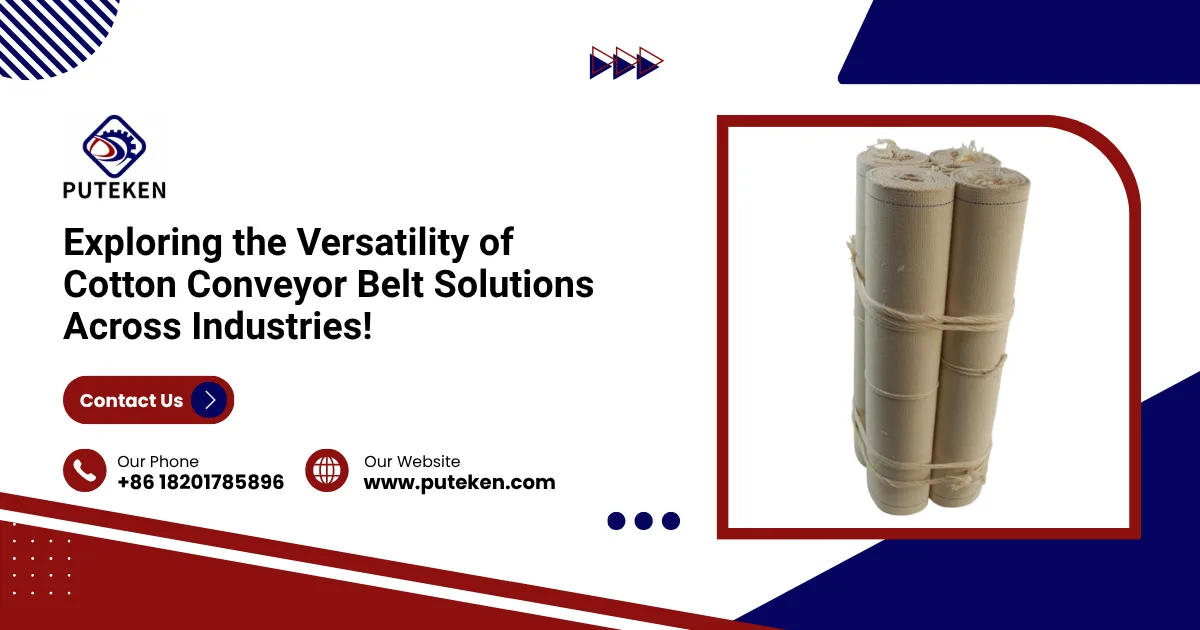
Conveyor belts serve as the vital veins of countless industries, ensuring the seamless transport of materials and products to keep operations running efficiently. Among the various types of conveyor belts available, the cotton conveyor belt stands out for its unique combination of flexibility, strength, and adaptability. Remarkably versatile, cotton conveyor belts have earned their place across diverse industrial landscapes, providing reliable performance in environments where other belts might fall short.
1. Why Cotton Conveyor Belts Remain Relevant Today
While synthetic belts dominate much of the conveyor market due to their modern manufacturing and material science advancements, cotton conveyor belts offer irreplaceable benefits that synthetic materials sometimes cannot match. For instance, cotton has natural breathability and flexibility that make it highly suitable for applications involving heat exposure or where cushioning is required to protect delicate products.
Moreover, cotton is renewable and biodegradable, which aligns well with today’s growing emphasis on sustainability. When combined with synthetic fibers or treated for enhanced performance, cotton conveyor belt can also achieve impressive durability, chemical resistance, and moisture management.
Therefore, despite the prevalence of synthetic alternatives, cotton conveyor belts continue to be a strategic choice for manufacturers who value balance between performance, cost-efficiency, and environmental responsibility.
2. What Are Cotton Conveyor Belts?
A cotton conveyor belt is a belt primarily woven or fabric-made from cotton fibers, often combined with synthetic fibers for added strength and specific performance characteristics. Unlike belts made entirely from synthetic polymers like PVC or polyurethane, cotton belts offer distinctive properties derived from the natural fiber—chiefly breathability, flexibility, and thermal resistance.
Cotton conveyor belts rely on tightly woven cotton yarns, which can be treated, coated, or laminated with special compounds to enhance abrasion resistance, chemical resistance, or water repellency according to the industry’s demands.
3. Construction and Types of Cotton Conveyor Belts
Cotton conveyor belts can vary widely in construction, depending on the intended use:
- Flat Woven Cotton Belts: Often used where cushioning or gentle handling is necessary, such as in packaging and textile industries.
- Composite Cotton Belts: Cotton combined with polyester or nylon yarns to increase tensile strength, abrasion resistance, and dimensional stability.
- Heat-Resistant Cotton Belts: Made with specially treated cotton fibers or coupled with fire-retardant coatings, these are ideal for heat processing industries like baking or metal fabrication.
- Cotton Canvas Belts: Thick cotton fabric belts used for heavy-duty industrial applications requiring high load-bearing.
Each type can be customized with edge finishing, coatings, or reinforcements to adapt to environmental exposure, specific products, or mechanical requirements.
4. Industrial Applications of Cotton Conveyor Belts
A Cotton conveyor belt finds widespread use across multiple sectors, including:
- Textile Industry: For transporting raw and processed fibers or fabrics during dyeing, printing, and washing processes that require moisture absorption and gentle fabric handling.
- Food Processing: Heat-resistant cotton belts are preferred for traveling ovens, cooling lines, and packaging operations where food safety and heat tolerance are essential.
- Printing Industry: Cotton belts are used in printing presses where the belt must handle precise positioning without damaging paper or printed materials.
- Packaging: Cotton belts provide reliable, cushioned transport of delicate goods, minimizing damage from shock or vibration.
- Ceramic and Glass: High-temperature cotton belts facilitate moving products through kilns or drying tunnels.
- Agriculture: They are used in handling harvested produce where natural fibers minimize damage and moisture retention is beneficial.
Their adaptability across these industries underscores the cotton conveyor belt's versatility and value.
5. Advantages of Cotton Conveyor Belt Solutions
Cotton conveyor belts offer several notable benefits:
- Excellent Heat Resistance: Natural fibers withstand elevated temperatures better than many synthetic materials without significant degradation.
- Breathability: Cotton allows air and moisture to pass through, making these belts suitable for drying processes or applications where condensation control is necessary.
- Eco-Friendly: Cotton is renewable and biodegradable, aiding manufacturers aiming for reduced environmental impact.
- Flexibility and Cushioning: The fabric structure provides a soft surface that protects sensitive or fragile items from damage during transport.
- Customizable: Cotton belts can be engineered for specific strengths, thicknesses, and coatings, tailoring performance to operational needs.
- Cost-Effectiveness: Cotton belts often provide an excellent price-to-performance ratio, especially in applications where extreme chemical resistance or plastic materials are not required.
6. Shanghai Puteken Transmission System Co., Ltd.’s Custom Cotton Conveyor Belt Solutions
Shanghai Puteken Transmission System Co., Ltd. leverages extensive expertise and advanced manufacturing to deliver cotton conveyor belts that meet stringent industry requirements. Our belts are crafted with precision weaving techniques and quality cotton fibers, combined with optional synthetic enhancements as needed.
We engage closely with clients to analyze their operational environments, process conditions, and material handling challenges. This approach enables us to customize cotton conveyor belts that optimize efficiency, durability, and lifecycle cost.
Whether your needs involve heat-resistant belts for baking lines, soft fabric transport for textiles, or abrasion-resistant belts for packaging, Shanghai Puteken provides turnkey solutions backed by world-class quality control and technical support.
7. Maintenance Tips to Prolong Cotton Conveyor Belt Lifespan
Proper maintenance is vital to retain the beneficial properties of a cotton conveyor belt:
- Regular Cleaning: Remove dust, dirt, and residues with mild detergents and avoid harsh chemicals that damage cotton fibers.
- Prevent Overloading: Avoid exceeding recommended load limits to reduce stress and premature wear.
- Tension Control: Maintain proper belt tension, ensuring smooth operation without causing elongation or deformation.
- Avoid Excessive Moisture: While cotton has good moisture handling, avoid prolonged saturation or pooling water, which may promote mold or rot.
- Periodic Inspection: Check for fraying edges, broken yarns, or coating wear and schedule timely repairs or replacements.
Following these practices extends belt life and reduces overall operational costs.
The cotton conveyor belt remains a highly versatile and effective solution across a broad spectrum of industries. It combines natural fiber benefits such as thermal resistance, cushioning, and sustainability, with modern enhancements to meet complex operational demands.
Frequently Asked Questions (FAQ)
Q1: In which industries are cotton conveyor belts most commonly used?
A1: Cotton conveyor belts are widely used in textile manufacturing, food processing, packaging, printing, ceramics, glass, and agriculture industries.
Q2: How does a cotton conveyor belt differ from synthetic belts?
A2: Cotton belts are breathable, provide cushioning, and resist heat better than many synthetic belts, but may have lower chemical resistance.
Q3: Can cotton conveyor belts be combined with synthetic fibers?
A3: Yes, cotton belts often incorporate polyester, nylon, or other materials to improve strength, durability, and environmental resistance.
Q4: Are cotton conveyor belts suitable for wet or humid environments?
A4: Cotton can tolerate some moisture but prolonged exposure to high humidity or water requires special treatments or coatings to prevent degradation.
Q5: How often should cotton conveyor belts be replaced?
A5: Replacement intervals depend on operating conditions and maintenance, but regular inspections can help anticipate wear-related replacements to avoid failures.
Q6: Can Shanghai Puteken Transmission System Co., Ltd. customize cotton conveyor belts?
A6: Yes, we tailor materials, thickness, coatings, and sizes to meet specific industrial requirements and operational environments.
Q7: What are the advantages of using cotton conveyor belts in food processing?
A7: Their heat resistance, breathability, and natural fibers help comply with hygiene standards while enabling transport through heating or cooling processes.