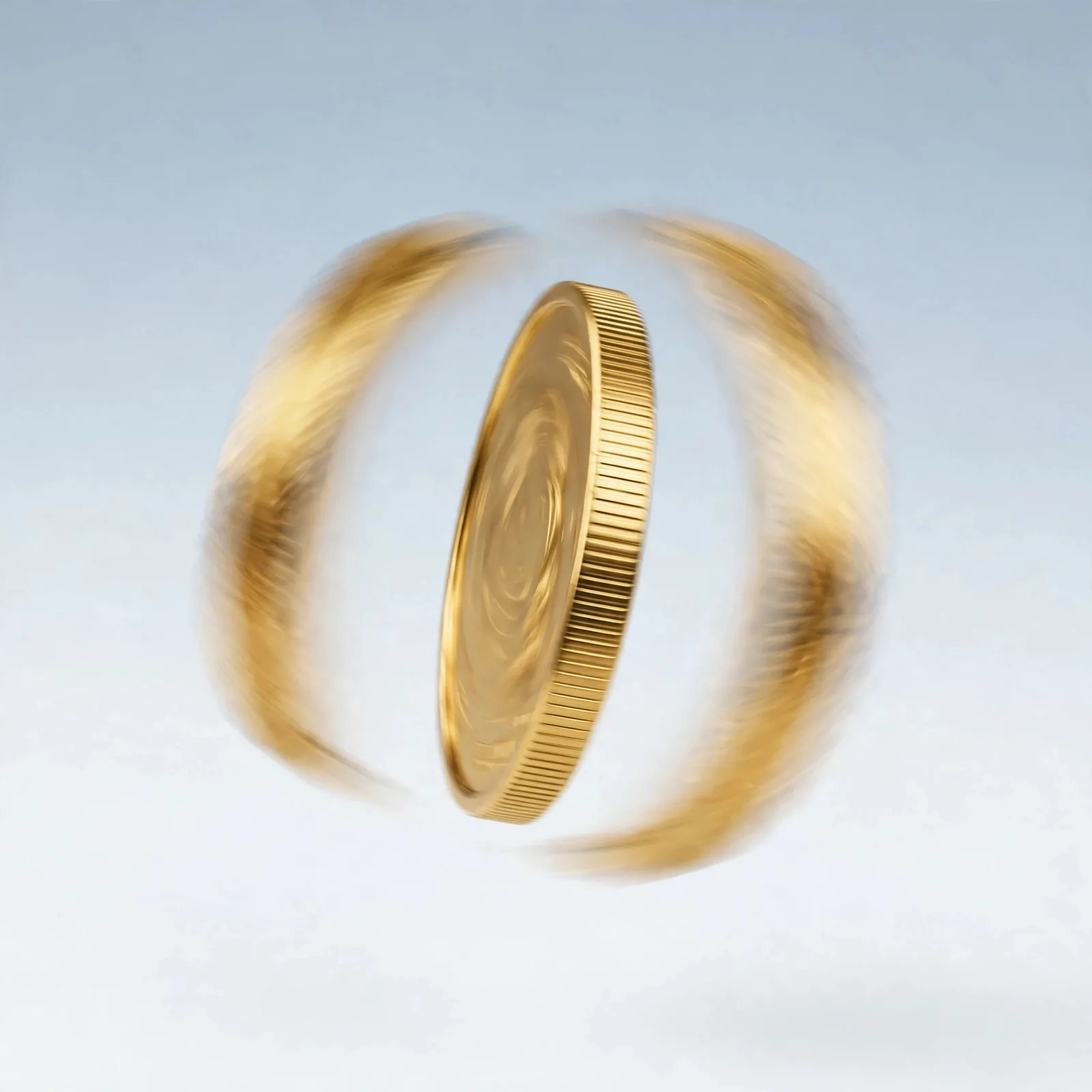
When logic fails and both paths look equal, the oldest decision tool still works best: a simple coin flip.
Your Brain on Hard Choices
Psychologists document a phenomenon called "decision paralysis." When two options seem equally good — or equally bad — the human brain gets trapped in an endless loop of pros and cons. Research suggests the average adult makes around 35,000 decisions every single day. Most are trivial, but the hard ones drain the mental energy we need for everything else. We make lists, we ask friends, we lose sleep — and often end up exactly where we started.
Behavioral economists have studied this trap extensively. The more evenly matched the options, the harder the choice becomes, and the more cognitive fuel it burns. This is not a character flaw; it is how the brain works. When there is no clear winner, the decision-making machinery spins without traction.
What the Flip Reveals
Here is what most people misunderstand about the coin flip: it is not about letting chance decide. It is about revealing what you already want.
Try it yourself. Assign heads to one option and tails to the other, then flip the coin. In that split second while the coin is spinning in the air, pay close attention to what happens inside you. You will notice something remarkable: you are hoping it lands a certain way. That quiet hope is your real answer surfacing. The coin did not decide anything — it simply gave your gut permission to speak.
Professional decision coaches actually teach this technique. The flip externalizes the choice, which allows intuition to finally get a word in edgewise. When you have been going back and forth for hours, that moment of suspended uncertainty cuts through the noise.
The Science Behind It
Researchers have found that people who used random decision aids for difficult choices reported higher satisfaction months later compared to those who continued agonizing. The act of committing — even to a randomly selected outcome — breaks the paralysis loop and frees up mental resources. Action, it turns out, beats perfection almost every time.
This makes intuitive sense. Much of our decision anxiety comes not from the choice itself but from the fear of choosing wrong. The coin flip reframes the situation: once the coin lands, you have an answer, and your brain can move forward instead of spinning.
Two Thousand Years of Flipping
The practice is ancient. The Romans called it "navia aut caput" — ship or head — and used coin flips to settle legal disputes. Julius Caesar himself was said to flip coins before major decisions. The tradition survived across millennia because it works: it converts an open-ended worry into a closed, committed action.
In the modern era, the coin toss decides who kicks off the Super Bowl and which team bats first in cricket's biggest tournaments. When the stakes are real but the options are genuinely equal, randomness remains the fairest referee available.
You do not need to carry lucky coins anymore. A free coin flip tool (https://xn--kopfoderzahlmnzwurf-ibc.com/) online replicates the entire ritual in a single tap — perfect for settling debates with friends or breaking your own decision deadlock when you are stuck.
How to Flip Like a Pro
If you want the technique to work, follow a few simple rules. First, define both options clearly before you assign sides — vague choices produce vague answers. Second, assign heads and tails before the flip and do not switch afterward. Third, flip exactly once; a best-of-seven series just reintroduces the paralysis you were trying to escape. Fourth, pay attention to your gut reaction while the coin is in the air — that instinctive pull is the real data. Finally, commit to the result fully, or at least to what your gut told you mid-flip.
The Math Is Fair
A standard coin flip is as close to a perfect fifty-fifty as everyday randomness gets. No algorithm, no mood, no bias, no bad days. Unlike human judgment, a coin has no preferences and no off days. For decisions where both paths are genuinely equal, fifty-fifty randomness is not a cop-out — it is the most honest method available.
The Takeaway
The coin flip survived two thousand years because it solves a problem that technology still cannot: the deeply human tendency to overthink. Next time you find yourself stuck between two equal choices, flip a coin, notice what you hope for while it spins, decide, and move forward. That mental clarity is worth far more than the illusion of a perfect choice.