Managing customer conversations manually might work in the early stages, but as your business grows, it becomes overwhelming. Messages pile up, responses get delayed, and important leads often slip through the cracks. This lack of structure can directly impact customer trust and overall business growth.
A structured system brings order to this chaos by organising chats, automating repetitive responses, and enabling teams to collaborate more effectively. Instead of switching between multiple tools, businesses can manage all interactions in one place, ensuring nothing is missed.
Choosing the right WhatsApp CRM provider plays a key role in building a scalable communication system. Solutions like Sendgun are designed to simplify operations while still offering powerful features, making it easier for businesses to grow without operational bottlenecks.
What Is WhatsApp CRM?
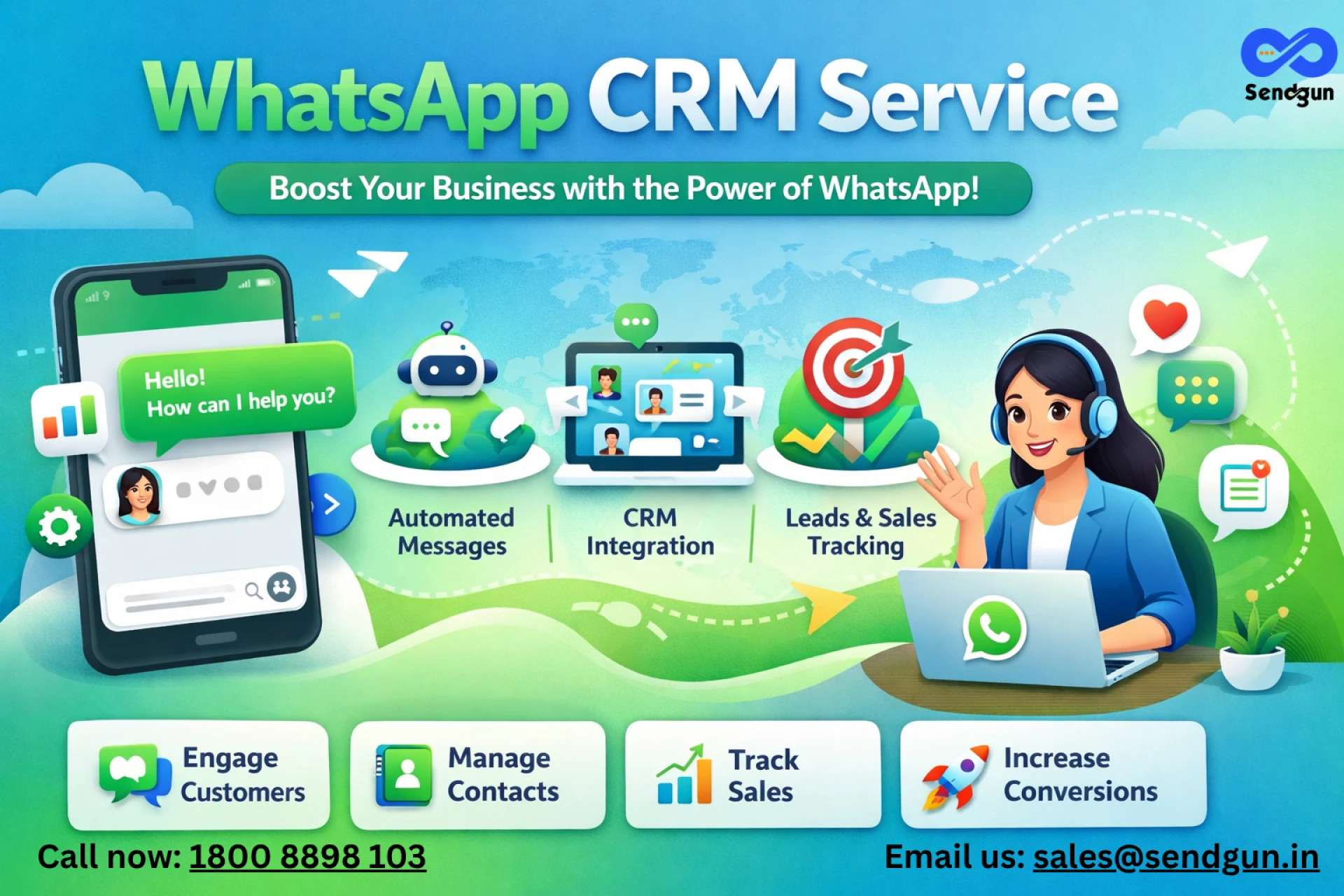
WhatsApp CRM is a smart combination of messaging and customer management that allows businesses to handle conversations in a more organised and strategic way. It centralises chats, stores customer information, and provides a clear view of every interaction.
Unlike standard messaging, this system introduces accountability and structure. Teams can easily divide chats among themselves, keep track of what’s happening, and follow up on time without any mix-ups. This helps keep communication smooth, clear, and more professional.
This leads to more consistent and professional communication.
For businesses adopting WhatsApp CRM India solutions, the platform becomes more than just a communication tool-it becomes a growth engine. It enables brands to manage large volumes of conversations efficiently while maintaining a personalised touch.
How WhatsApp CRM Works in Real-World Scenarios
A WhatsApp CRM system functions by combining APIs, automation, and data tracking into a unified workflow. When a customer reaches out, the system captures the message and processes it based on predefined rules, ensuring no delay or confusion.
Automation takes care of common, repetitive questions, while your team handles the more important or complex conversations. This balance helps you reply faster while still maintaining good quality communication.
A typical workflow includes:
- A customer sends a message via WhatsApp
- The system captures and logs the interaction
- Automated replies or chatbots respond instantly
- Conversations are assigned to the relevant team
- Data is stored for tracking and future engagement
A seamless WhatsApp CRM integration ensures all tools and processes work together efficiently. This saves time on manual work and makes communication easier and smoother for both the team and customers.
Types of WhatsApp CRM Solutions Used by Businesses
Shared Inbox CRM
This solution brings all conversations into a single dashboard, allowing teams to collaborate without confusion. It is especially useful for small teams that need visibility and control without complexity.
With everything in one place, teams can respond faster and avoid duplicate replies. Managers can also track performance and ensure communication quality remains consistent.
Automation-Driven CRM
Automation-focused systems are built to handle repetitive tasks like FAQs, follow-ups, and lead qualification. This reduces workload and allows teams to focus on high-value interactions.
Such systems are ideal for businesses dealing with high message volumes. They ensure customers receive instant responses, improving engagement and satisfaction levels.
Advanced CRM with Analytics
Advanced solutions go beyond communication by offering insights into customer behaviour. Businesses can analyse response times, engagement trends, and conversion rates to refine their strategies.
A flexible WhatsApp CRM software allows companies to start small and expand features as their needs grow. This ensures long-term usability and scalability.
Key Benefits of WhatsApp CRM for Businesses
Faster Response Time
Speed matters in customer communication. With automated replies and smart routing, businesses can respond instantly and keep customers engaged.
Centralized Communication
All chats and customer data are stored in one place, making it easier to manage interactions and maintain consistency across teams.
Better Lead Tracking
A structured system helps capture and nurture leads more effectively, increasing the chances of conversion and repeat business.
Enhanced Personalization
Access to customer history allows businesses to tailor their responses, creating more meaningful and engaging conversations.
Effortless Scalability
As your business grows, the number of customer messages and interactions also increases. A CRM system ensures you can handle this growth without adding unnecessary complexity.
Industry-Wise Use Cases of WhatsApp CRM
E-Commerce and Retail
Brands use CRM systems to manage orders, send updates, and handle customer queries in one place. This makes the experience smoother for customers and helps build trust over time.
Healthcare Services
Hospitals and clinics streamline appointment scheduling, reminders, and patient communication, reducing manual workload and improving efficiency.
Education and Coaching
Institutions manage student inquiries, admissions, and updates seamlessly, ensuring consistent communication with students and parents.
Real Estate
Agents handle property inquiries, follow-ups, and lead nurturing more effectively, leading to better conversion rates.
Service-Based Businesses
Service providers use CRM tools to manage bookings, support, and ongoing communication, ensuring smooth service delivery.
How WhatsApp CRM Helps Small Businesses Scale
Small businesses often face challenges in managing growing customer interactions with limited resources. A CRM system provides a structured way to handle communication without needing a large team.
By using WhatsApp CRM software, businesses can automate routine processes and focus on strategic growth. This helps you work more efficiently and also lowers your overall operating costs.
Solutions like Sendgun make adoption simple by offering user-friendly features and minimal setup requirements. This enables small businesses to compete with larger players while maintaining a professional communication approach.
Challenges of WhatsApp CRM and How to Overcome Them
Over-Automation
Too much automation can make conversations feel robotic and less engaging.
Solution:
Strike a balance by combining automation with human interaction where necessary.
Data Management Issues
Handling large volumes of data without structure can lead to confusion.
Solution:
Use a system that organises and categorises data efficiently for easy access.
Integration Complexities
Connecting multiple tools can sometimes be challenging.
Solution:
Choose a reliable WhatsApp CRM provider that offers seamless integration and support.
Team Adaptation
Adopting new systems can slow down teams initially.
Solution:
Provide training and continuous support to ensure a smooth onboarding.
Best Practices for Implementing WhatsApp CRM
- Create clear and consistent messaging templates
- Use automation thoughtfully, not excessively
- Track performance metrics regularly
- Leverage customer data for insights
- Continuously refine workflows as your business evolves
These practices help maximise the effectiveness of your CRM system and ensure long-term success.
Scale Customer Communication with Sendgun WhatsApp CRM
Selecting the right platform is essential for building a strong communication strategy. Businesses should focus on solutions that offer simplicity, flexibility, and scalability.
Key considerations include ease of use, automation features, and integration capabilities. A good platform should adapt to your needs without adding unnecessary complexity.
Sendgun stands out by offering a balanced approach, combining essential features with a user-friendly interface. This makes it easier for businesses to manage conversations efficiently while preparing for future growth.
Conclusion
WhatsApp CRM is reshaping how businesses connect with customers by bringing structure, speed, and scalability to communication. It allows companies to manage conversations more effectively while delivering a better customer experience.
With the right tools and approach, businesses can improve response times, strengthen relationships, and drive higher conversions. As customer expectations continue to rise, adopting a smarter communication system is no longer optional.
So, is your business ready to move beyond scattered chats and build a streamlined, growth-driven communication system?
FAQs
1. What is WhatsApp CRM?
It is a system that helps businesses manage customer conversations, track interactions, and organise communication through WhatsApp.
2. How does WhatsApp CRM work?
It integrates messaging with CRM tools to automate responses, store customer data, and streamline conversations in one place.
3. Why use WhatsApp CRM instead of regular WhatsApp?
It offers automation, team collaboration, and tracking capabilities that regular WhatsApp cannot support for business-scale operations.
4. What are the 3 types of CRM?
Operational CRM handles daily processes, Analytical CRM provides insights through data, and Collaborative CRM improves team coordination.