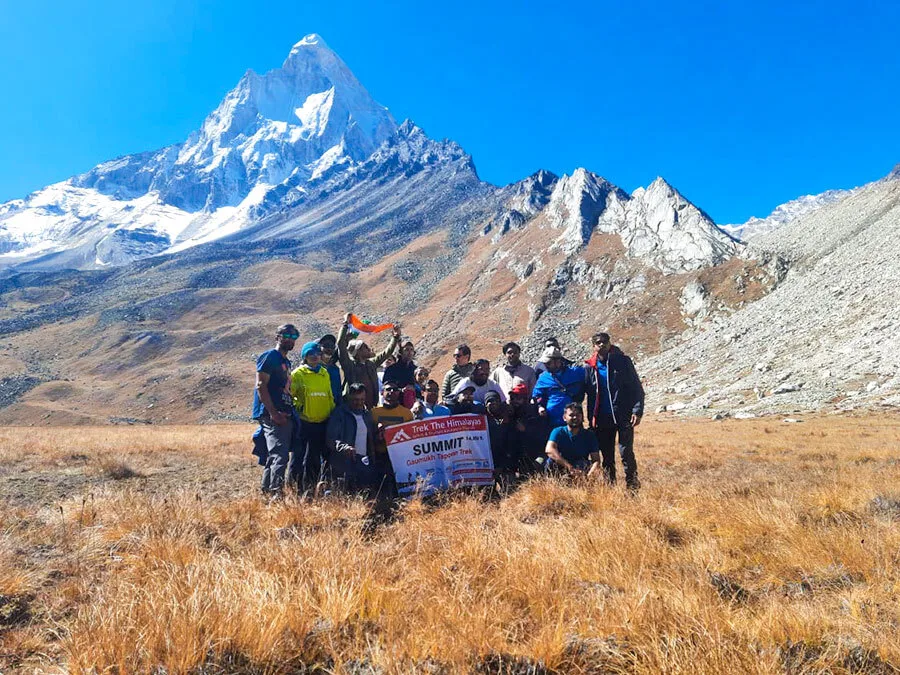
The Gaumukh Tapovan Trek offers a fascinating combination of Himalayan adventure and spiritual exploration. Located in Uttarakhand's Garhwal region, the trek begins at Gangotri and follows the Bhagirathi River towards Chirbasa, Bhojwasa, Gaumukh and finally Tapovan.
The current TTH listing gives the trek a duration of 8 days, a trekking distance of 40 km, a maximum altitude of 14,600 feet and a Moderate to Difficult grade. The listed trekking months are May, June, September and October.
For anyone planning this trek in 2026, understanding the route, weather, fitness requirements and altitude is essential.
Quick Facts About Gaumukh Tapovan Trek
InformationDetailsRegionUttarakhandBase CampGangotriDuration8 DaysDistance40 kmMaximum Altitude14,600 ftDifficultyModerate to DifficultBest MonthsMay, June, September, OctoberRailheadDehradunAirportJolly Grant Airport
Why Trek to Gaumukh and Tapovan?
The journey is special because the route combines several different Himalayan experiences.
You begin in Gangotri, an important pilgrimage destination, before following the Bhagirathi River through the mountain landscape.
The trail eventually reaches Gaumukh, a sacred glacial destination, and then climbs towards Tapovan.
The Gaumukh Tapovan Trek Guide published by TTH highlights the trek's glaciers, campsites, panoramic mountain views and high-altitude landscapes.
Tapovan is particularly famous for its views of Shivling, Bhagirathi and Mount Meru.
Gaumukh Tapovan Trek Route
The route is:
Dehradun → Gangotri → Chirbasa → Bhojwasa → Tapovan → Gaumukh → Bhojwasa → Gangotri → Dehradun
The lower section follows the river and passes through areas of blue pine and Bhojpatra vegetation. As the route gains altitude, the environment becomes more open and rugged.
The most challenging portion is the climb towards Tapovan. The return route goes through Gaumukh before descending towards Bhojwasa.
Day-by-Day Itinerary
Day 1 – Dehradun to Gangotri
Drive approximately 250 km to Gangotri. The journey takes around 8–9 hours according to the current itinerary.
Day 2 – Acclimatization
Spend the day at Gangotri to adjust to the altitude.
Day 3 – Gangotri to Chirbasa
Walk approximately 9 km through the Bhagirathi Valley. The section takes around 5–6 hours.
Day 4 – Chirbasa to Bhojwasa
A shorter 5 km section requiring around 3–4 hours.
Day 5 – Bhojwasa to Tapovan
The major climbing day covers approximately 6 km and takes around 7–8 hours.
Day 6 – Tapovan to Bhojwasa via Gaumukh
Descend towards Bhojwasa through Gaumukh.
Day 7 – Bhojwasa to Gangotri
Walk approximately 14 km back to Gangotri.
Day 8 – Gangotri to Dehradun
Complete the journey with the road drive back to Dehradun.
Best Time for Gaumukh Tapovan Trek
The best trekking window listed by TTH is May, June, September and October.
May
The landscape can still retain traces of winter snow at higher elevations.
June
June provides a summer trekking window before the monsoon period.
September
The post-monsoon landscape can be fresh and clear.
October
October can provide excellent mountain visibility, although temperatures become colder as winter approaches.
TTH advises avoiding the July-August monsoon period because heavy rainfall can create difficult conditions.
Gaumukh Tapovan Trek Weather
Weather at high altitude can change rapidly. Trekkers should be prepared for cold conditions, wind, changing visibility and sudden weather shifts.
The temperature difference between Gangotri and Tapovan can be substantial, making proper layering important.
A waterproof outer layer is useful because weather conditions can change even during an otherwise clear trekking day.
Gaumukh Tapovan Trek Difficulty
The official grade is Moderate to Difficult.
The altitude is one of the main factors. At 14,600 feet, the body works harder even during relatively slow walking.
The terrain also changes considerably. Rocky trails, boulder sections and glacier areas require careful foot placement.
The current TTH eligibility information says first-timers are welcome but prior trekking experience is preferred, with good fitness required.
Fitness Requirements
Start preparation several weeks before the trek.
A useful routine includes:
- Running
- Brisk walking
- Stair climbing
- Squats
- Lunges
- Core workouts
- Long weekend walks
- Backpack training
TTH currently recommends an endurance benchmark involving 5 km jogging in 30 minutes without stress or 10 km in 70 minutes without stress.