
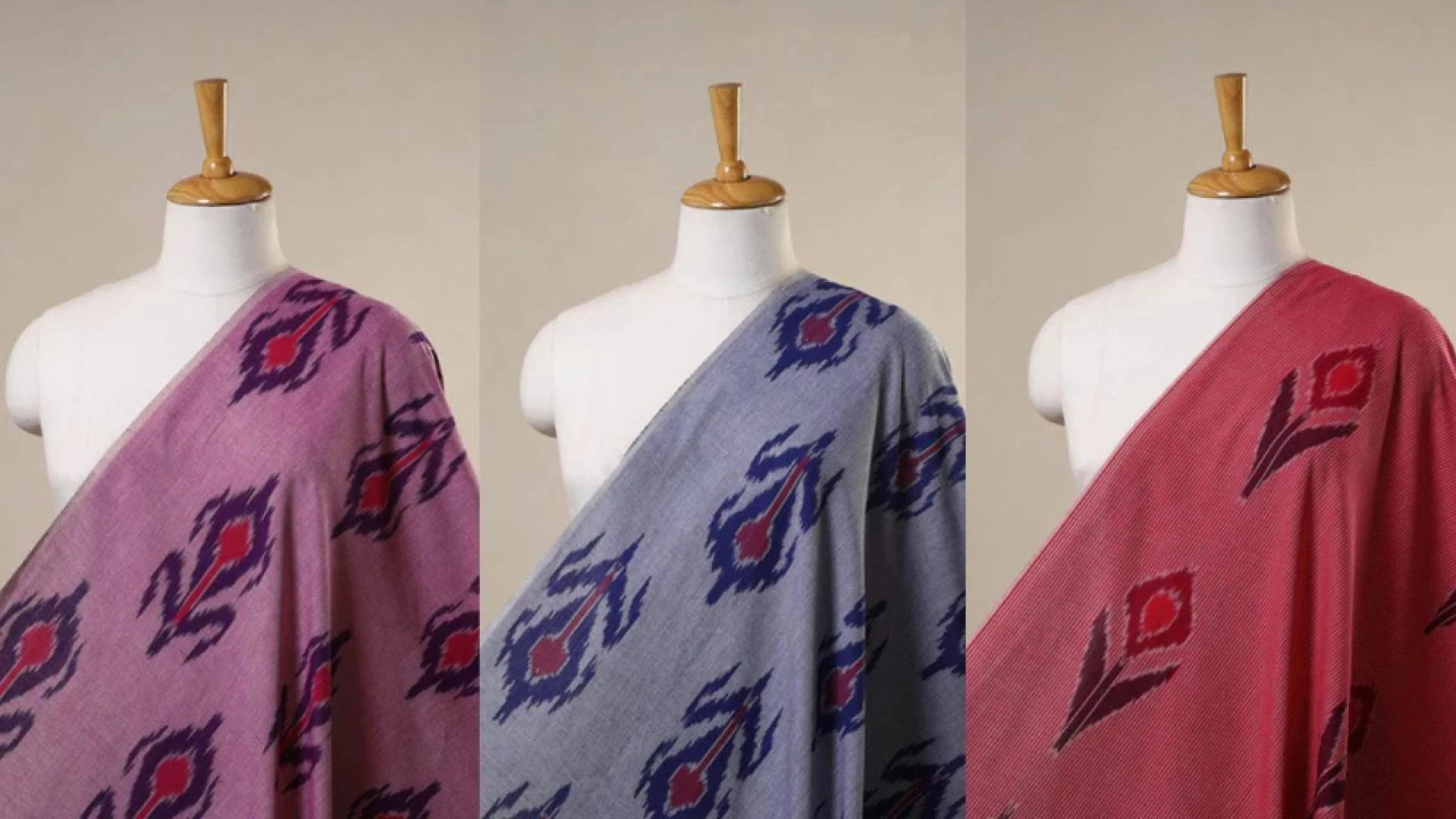
Handloom fabric carries within its weave the stories of craftsmanship, tradition, and artistry — here's how you can recognize its true essence compared to its power-loom counterpart:
1. Weave & Texture — The Soul of the Fabric
Authentic handloom fabric is woven on traditional looms, reflecting the weaver's creativity and skill. This gives it unique, irregular textures and detailed designs that machines simply cannot replicate. These textures feel distinct and often more appealing to the touch.
2. Feel & Comfort — A Clear Sensation
One of the most talked-about differences is how the fabric feels. Handloom fabric generally feels softer, more breathable, and better against the skin, especially compared to the typically more uniform, less comforting feel of power-loom textiles.
3. Imperfections — Marks of the Artisan’s Hand
Look for tiny quirks — slight weave irregularities or wavy, uneven edges are hallmarks of the human hand behind the loom. These imperfections are precisely what power-loom fabrics lack, as they are produced on machines with no variation or character.
4. Materials & Sustainability — Nature Speaks
Most handloom fabric collections at iTokri use 100% natural fibers — cotton, silk, linen — often organically sourced and eco-friendly. In contrast, power-loomed fabrics may rely more heavily on synthetic fibers, which aren’t as kind to the environment.
5. Cultural Value & Artisanal Legacy
Handloom pieces carry cultural richness — each region boasts its unique craft, from Mangalagiri to Ajrakh to Chanderi. Not only are you wearing textile art, but you're also supporting local artisans and preserving heritage. Power-loom fabric lacks this depth of cultural connection and craftsmanship.
6. Durability & Longevity — Built to Last
Due to the personal care and traditional techniques in their creation, handloom textiles are often more durable and long-lasting than their mass-produced counterparts. They're investments in both quality and legacy.
Quick Comparison Table
Feature----------Handloom Fabric-------------Powerloom Fabric
Weave & Texture-----Irregular, artisan-driven, distinctive-------Uniform, machine-made, consistent
Feel------Soft, breathable, gentle on skin--------------Often stiffer, less breathable
Imperfections--------Subtle irregularities and wavy edges---------Perfectly uniform, straight edges
Materials---------Natural fibers (cotton, silk, linen), eco-friendly-------Often synthetic, less sustainable
Cultural & Artisan Value----------Rich, regional craft heritage----------Lacks cultural authenticity
Durability-----------Long-lasting due to skilled weaving-----------Variable, often less enduring
Why This Matters—Especially from iTokri
iTokri’s collection of handloom fabric isn't just fabric—it's a curated archive of regional traditions and artisanal excellence. Here’s what sets it apart:
- Authenticity: 100% natural and artisan-sourced — quality you can trust.
- Diverse Offerings: From breathable Mangalagiri cotton to elegant silk, linen, and silk-cotton blends—there’s a style for every climate and mood.
- Fair Pricing: Transparent per-meter pricing preserves both affordability and artisan value.
Final Thoughts
Spotting the difference between handloom and power-loom begins with your senses—feel the texture, examine the weave, and look at the edges. When you choose handloom fabric, you embrace a piece of India’s heritage, support skilled artisans, and bring nature-friendly elegance into your wardrobe.
Feel free to weave in more iTokri details or specific fabric examples if you'd like—I’m here to help you craft an engaging, human-sounding blog post!