Food processing facilities have a demanding job. They must keep products moving efficiently while maintaining clean working conditions, managing temperature, protecting employees, and meeting strict food safety requirements.
Every part of the facility contributes to that goal. Processing equipment matters. Refrigeration matters. Cleaning procedures matter. Employee practices matter. Even the doors connecting different areas can affect how smoothly the operation runs.
This is where high speed doors for food processing can become useful.
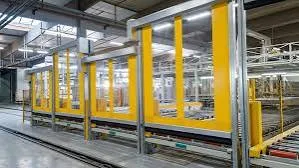
Unlike an ordinary door that may take considerable time to open and close, a high speed door is designed to cycle rapidly. That can make a difference in areas where employees, carts, forklifts, and other equipment move through an opening repeatedly throughout the day.
The purpose of a high speed door is not simply to make traffic faster. In a food processing environment, the door may also help limit the time an opening remains exposed, support separation between work areas, and improve the overall flow of the facility.
This article explains how these doors work, where they may be useful, what features food processors should consider, and why proper selection and maintenance matter.
Why Doorways Matter in Food Processing
A busy food processing plant may have dozens of doors.
Some connect production rooms. Others lead to cold storage, packaging areas, loading zones, warehouses, maintenance spaces, or employee areas.
Not all of these openings have the same purpose.
A doorway used only a few times each day does not necessarily need the same solution as an entrance used continuously by forklifts.
Consider a supermarket checkout line. If one customer passes through a doorway once, a slow opening may not matter. If hundreds of people need to pass through every hour, however, delays become much more noticeable.
Food processing facilities face the same principle.
A door that is opened and closed hundreds of times can influence productivity, environmental separation, maintenance, and employee movement.
What Is a High Speed Door?
A high speed door is an industrial door designed to open and close quickly, particularly in applications where frequent traffic is expected.
The exact speed, construction, operating method, and features vary by product and application.
The basic idea is simple.
Instead of having a large opening remain open for an extended period, the door cycles quickly when people or equipment need to pass through.
Once traffic has cleared the opening, the door can return to its closed position.
This can be especially useful in food processing environments where maintaining separation between rooms is important.
Supporting Food Safety Practices
Food safety depends on many factors.
A door does not make a facility sanitary by itself, but it can support the facility's broader operating practices.
Food processors work to prevent unwanted contamination from entering production areas. Depending on the operation, this can involve controlling people, materials, pests, airborne particles, moisture, cleaning practices, and other potential sources of contamination.
A frequently open doorway can make that task more difficult.
For example, an exterior opening can provide an opportunity for insects, dust, outdoor air, and moisture to enter.
A rapidly operating door can reduce the amount of time that opening remains exposed during normal traffic.
This does not replace sanitation procedures, pest management, ventilation, or other food safety measures. Instead, it is one part of the overall facility strategy.
Temperature Control Is Another Consideration
Many food products require temperature-controlled storage or processing conditions.
Cold rooms, refrigerated storage areas, and freezer spaces are common examples.
Every time a temperature-controlled doorway opens, conditioned air can move between the two spaces.
The longer the opening remains exposed, the greater the opportunity for air exchange.
A high speed door can reduce the duration of the opening.
This can support the facility's broader temperature-control strategy.
However, it is important to keep expectations realistic.
A door alone does not determine whether a room maintains the required temperature. Refrigeration capacity, insulation, room design, traffic volume, loading practices, and employee behavior also have major effects.
The door simply helps manage one part of the equation.
Faster Traffic Through Busy Areas
Food processing plants can be surprisingly busy.
Employees may move raw materials, ingredients, packaging, cleaning supplies, finished products, and equipment between different departments.
Forklifts and pallet trucks may travel through larger openings.
If a door takes too long to cycle, traffic can build up.
Imagine a warehouse aisle where a forklift must stop at the same doorway every few minutes. A few seconds of waiting may seem insignificant, but repeated hundreds of times, the lost time can become substantial.
High speed industrial doors can reduce that waiting period in suitable applications.
The benefit is not that workers are rushing.
The benefit is that the building creates fewer unnecessary pauses in the workflow.
Separating Different Work Areas
Food processing facilities often have distinct zones.
A facility may contain areas for receiving, preparation, processing, packaging, storage, and shipping.
Keeping these activities organized can help support sanitation and operational procedures.
Doors provide physical separation between those areas.
A high speed door can be particularly useful where the boundary needs to remain closed most of the time but must allow frequent movement.
This creates a practical balance.
Employees can move through when necessary, while the opening can return to its closed position quickly afterward.
Choosing Materials for Food Environments
The material used to construct a door should match the environment.
Food processing areas may experience moisture, repeated cleaning, temperature changes, and exposure to cleaning chemicals.
A door that performs well in a dry warehouse may not be suitable for a wet processing area.
For that reason, facility managers should consider materials and finishes carefully.
In some applications, stainless steel doors may be considered because stainless steel can provide durability and corrosion resistance when properly selected and maintained.
Other materials may be appropriate for different environments.
The correct decision depends on the specific cleaning routine, chemical exposure, temperature, moisture level, and operating conditions.
Designing for Easy Cleaning
Food facilities have regular cleaning schedules.
Some areas may require frequent washdowns, while others have different sanitation routines.
The door should not create unnecessary obstacles for cleaning crews.
Smooth surfaces are generally easier to wipe and maintain than complicated surfaces containing difficult-to-reach recesses.
Think about cleaning a simple countertop compared with a piece of furniture covered with grooves and decorative edges.
The flat countertop is easier to clean thoroughly.
A similar principle applies to industrial doors.
Facility managers should examine the door surface, frame, hardware, seals, and other components.
The goal is to create an installation that works with the established sanitation process.
Moisture and Washdown Conditions
Some food processing environments are wet by design.
Water may be used during cleaning, and equipment may be exposed to moisture during normal production.
These conditions can be demanding for building components.
Door systems used in such environments should be evaluated for their ability to withstand the conditions they will encounter.
This includes considering corrosion resistance, sealing, drainage, hardware, electrical components, and maintenance requirements.
A door selected for a dry warehouse should not automatically be assumed to be suitable for a wet processing room.
Preventing Unwanted Air Movement
Food facilities may have areas with different temperatures, humidity levels, or cleanliness requirements.
A doorway can become a pathway for air movement between these spaces.
A rapidly closing door can help reduce the length of time that the opening remains exposed.
For example, a chilled storage room may connect to a warmer preparation area. When the door remains open, warm air can enter the colder space.
Reducing unnecessary open time can support the refrigeration system.
Again, the door is not the entire solution.
Proper insulation, refrigeration, ventilation, traffic management, and room design all contribute to temperature control.
Improving Employee Productivity
The value of a high speed door is not limited to temperature and cleanliness.
It can also improve the daily experience of employees.
Workers should not have to repeatedly stop their tasks to wait for a slow doorway.
For employees carrying materials, a convenient automatic door can make movement easier.
For forklift operators, predictable operation can help maintain a steady workflow.
The goal is to remove unnecessary friction from the job.
This is similar to an automatic sliding door at a busy store. People do not need to stop, put down what they are carrying, and manually open the door. The entrance simply responds to the traffic.
Industrial systems apply the same basic concept in a much more demanding environment.
Supporting Forklift Traffic
Forklifts are common in food processing warehouses and distribution areas.
Their size and operating speed make doorway design particularly important.
A door should be appropriately sized for the vehicles using it.
There should also be enough clearance for safe passage.
Facility managers need to consider whether the door can withstand the frequency of operation and the conditions around the opening.
Traffic patterns matter too.
If forklifts approach a doorway from multiple directions, the facility may need to consider visibility, sensors, warning systems, and traffic controls.
The best door cannot compensate for an unsafe traffic layout.
Safety Features Matter
Speed should never come at the expense of safety.
A high speed door operates around employees, forklifts, carts, and other equipment. The system therefore needs suitable safety features for the application.
Depending on the door design, these may include sensors, controls, emergency release mechanisms, safety edges, warning devices, or other features.
The specific configuration should be determined according to the door, site conditions, and applicable safety requirements.
Employees should also receive training.
They need to understand how the door operates, what to do if it stops working, and how to report unusual behavior.
Automatic Operation Options
High speed doors can use different activation methods.
Depending on the application, activation may involve push buttons, pull cords, sensors, remote controls, vehicle detection, or other systems.
The right method depends on who uses the doorway and how traffic approaches it.
For a pedestrian entrance, one type of activation may make sense.
For a forklift route, another approach may be more practical.
Hands-free activation can be useful when workers are carrying products or operating equipment.
The objective is to make normal movement efficient without creating unnecessary complexity.
Maintenance and Reliability
Food processing facilities cannot afford to overlook maintenance.
A door that fails in the middle of production can interrupt traffic and create additional work for employees.
Preventive maintenance helps reduce this risk.
Maintenance teams can inspect:
- Door panels or curtains
- Moving components
- Sensors
- Controls
- Seals
- Frames
- Hardware
- Safety devices
- Opening and closing performance
Regular inspections can reveal developing problems before they become complete failures.
A door that begins moving more slowly, making unusual sounds, or stopping unexpectedly should be investigated rather than ignored.
Cleaning the Door Correctly
Cleaning procedures should be established based on the door material and the facility's sanitation requirements.
Employees should know which cleaning agents are approved.
Using an unnecessarily aggressive chemical on an unsuitable surface can damage the door over time.
Similarly, improper cleaning techniques may affect seals, sensors, or other components.
The best approach is to follow the manufacturer's maintenance recommendations and the facility's sanitation procedures together.
Choosing the Right Door for Each Location
One of the biggest mistakes a food processor can make is assuming every doorway needs the same door.
Different parts of a facility can have completely different conditions.
A loading dock may prioritize vehicle traffic and durability.
A chilled storage area may prioritize temperature separation.
A wet processing room may need materials suited to frequent cleaning and moisture.
A packaging area may have different cleanliness requirements.
A facility should therefore evaluate each doorway individually.
Important questions include:
How frequently is the door used?
Who and what passes through it?
Is the area refrigerated or frozen?
Does the room experience frequent washdowns?
What cleaning chemicals are used?
What size does the opening need to be?
What happens if the door fails?
How will maintenance be performed?
These questions help create a more practical specification.
Where Newport Company Fits In
Selecting an industrial door for food processing requires attention to the specific environment.
Newport Company offers industrial door solutions that can be considered for facilities where rapid operation, durability, controlled movement, and environmental separation are important.
The best selection process begins with the application.
A food processor should identify the problem first and then evaluate which door design can address it.
For example, a high-traffic opening may benefit from rapid operation, while a wet processing area may place greater importance on material and cleaning compatibility.
How to Evaluate the Investment
A door upgrade should have a measurable purpose.
If the original problem was traffic congestion, managers can measure whether waiting times have improved.
If the goal was to reduce exposure of a refrigerated opening, the facility can monitor how the new system affects operational conditions.
If maintenance was a major concern, repair frequency can be tracked.
Useful measurements may include:
- Door cycle reliability
- Traffic delays
- Maintenance calls
- Downtime
- Temperature stability
- Energy use
- Employee feedback
- Safety incidents
The exact measurements depend on the facility.
The important point is to define the goal before purchasing the equipment.
Avoiding Common Selection Mistakes
Several avoidable mistakes can reduce the value of a high speed door project.
Focusing Only on Speed
Fast operation is useful, but it is not the only consideration.
The door must also fit the environment, traffic, safety requirements, and maintenance program.
Ignoring Cleaning Conditions
A door that is suitable for a dry warehouse may not survive repeated exposure to water and cleaning chemicals.
Choosing One Door for Every Area
Different rooms can require different solutions.
Forgetting Maintenance
Even durable industrial equipment needs inspection and servicing.
Overlooking Workflow
The door should be positioned and configured around actual traffic rather than assumptions.
A Practical Facility-Wide Approach
The strongest food processing facilities look at doors as part of a larger system.
They consider how products enter the building, where ingredients are stored, how employees move, how finished products are packaged, and how shipments leave.
Doorways are then evaluated within that workflow.
This can reveal opportunities beyond simply replacing equipment.
Perhaps a frequently used doorway should be relocated.
Perhaps two traffic routes should be separated.
Perhaps an automatic activation system would be more useful than a manual control.
Perhaps a particular opening needs a different material.
A complete review can produce better results than focusing on the door alone.
Conclusion
High speed doors for food processing can provide practical benefits in facilities where people, products, and equipment move frequently between different areas.
Their rapid operation can help reduce waiting, shorten the time an opening remains exposed, and support smoother movement. Depending on the application, they can also contribute to environmental separation and temperature-management strategies.
However, a high speed door is not a substitute for good sanitation, refrigeration, ventilation, pest control, employee training, or food safety procedures.
Its value comes from how well it fits into the complete facility.
Food processors should consider traffic frequency, cleaning conditions, moisture, temperature, opening size, safety, maintenance, and the movement of employees and equipment before selecting a system.
When those factors are considered together, a doorway can become more than a passage between rooms. It can become a useful part of a cleaner, safer, and more efficient food processing operation.
The best door is ultimately the one that matches the work being performed around it and continues to perform reliably under the conditions of everyday food production.