
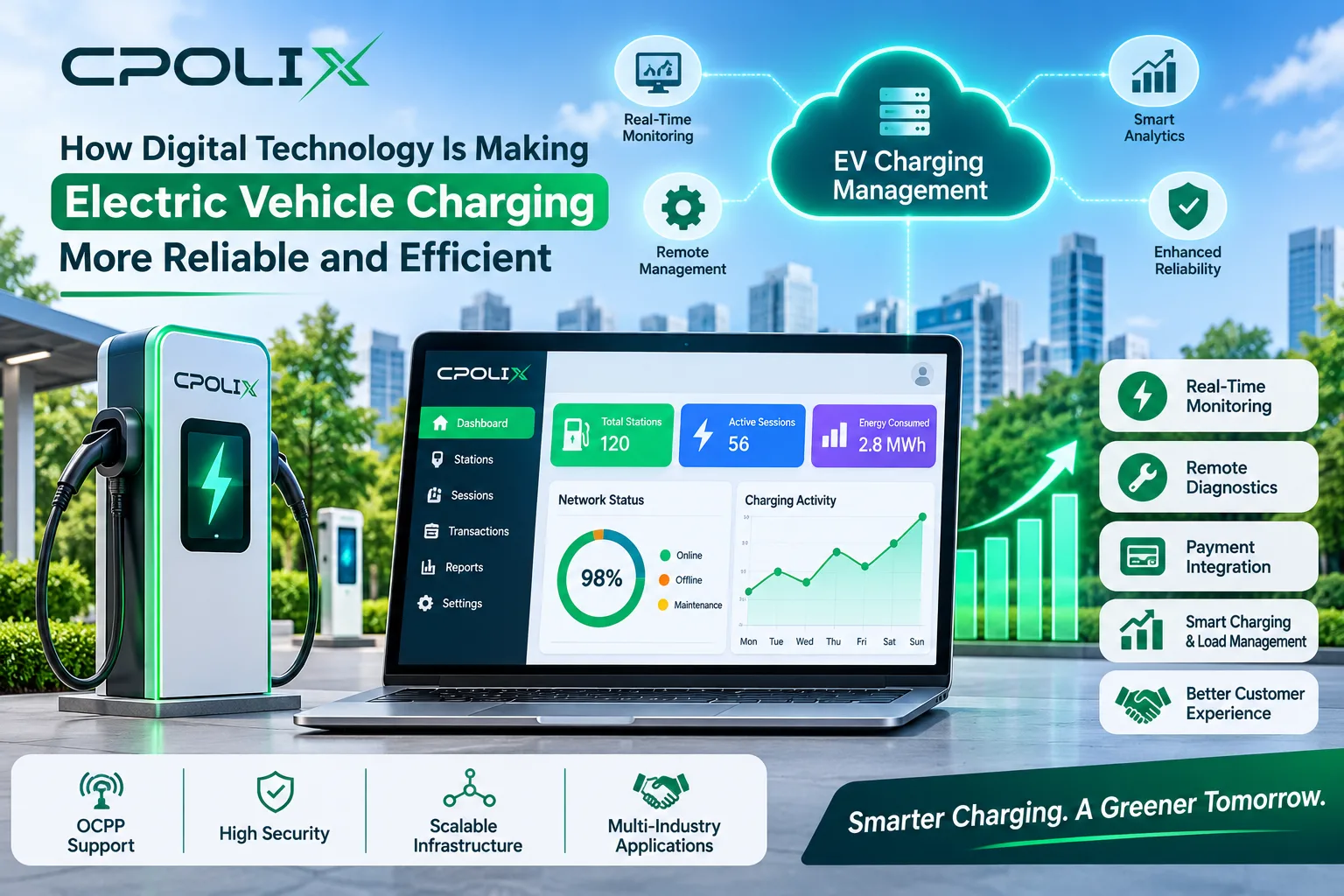
Electric vehicles are becoming an increasingly practical transportation option for individuals and businesses. However, the convenience of owning an EV depends heavily on the availability and reliability of charging infrastructure. Modern ev charger software is helping charging network operators manage their equipment, monitor charging activity, and deliver better services to electric vehicle users.
As charging networks expand across cities, highways, workplaces, and residential communities, managing individual charging points manually becomes increasingly difficult. Digital technology provides a centralized way to monitor equipment, handle charging sessions, and identify operational problems.
Why EV Charging Infrastructure Needs Software
Installing charging stations is only one part of building an effective charging network. Operators must also ensure that chargers remain connected, transactions are processed correctly, and customers can access the facilities without unnecessary difficulties.
A charging station may experience connectivity problems, communication failures, hardware faults, or payment-related issues. Without proper monitoring, these problems can remain unnoticed until a customer reports them.
Software-based management allows operators to monitor connected charging equipment and access important operational information through a centralized interface.
Essential Features of Modern EV Charging Software
A reliable charging management solution generally includes several important capabilities.
1. Real-time monitoring
Operators can view charger connectivity, availability, and operational status. This information helps technical teams identify equipment that may require attention.
2. Remote charger management
Compatible charging stations can support remote operations, such as restarting equipment, updating configurations, and retrieving diagnostics.
3. Charging session tracking
The software records charging activity, including session information and energy consumption. These records help operators maintain operational visibility.
4. Payment integration
Digital payment facilities can simplify transactions and provide customers with convenient charging experiences.
5. Reporting and analytics
Operators can review energy consumption, station utilization, charging patterns, and transaction information to support business decisions.
How OCPP Supports Connected Charging Networks
Interoperability is an important requirement for modern charging infrastructure. Charging stations from different manufacturers need a standardized way to communicate with central management systems.
The Open Charge Point Protocol, commonly known as OCPP, helps establish communication between compatible charging stations and backend platforms.
Depending on the supported version and implementation, OCPP can facilitate charger status reporting, charging session management, remote commands, configuration updates, and diagnostic information.
This flexibility can help operators build networks with equipment from multiple manufacturers instead of depending entirely on a single hardware supplier.
Improving Charger Uptime Through Remote Diagnostics
Charging station downtime can negatively affect both customer satisfaction and operator revenue.
Traditional maintenance processes may require technicians to visit each location to investigate reported problems. While physical inspections remain necessary for certain faults, remote diagnostics can help resolve some issues more efficiently.
For example, a charger that becomes disconnected may require a connectivity check or remote troubleshooting procedure. A compatible management system can help technical teams investigate the issue before arranging a physical visit.
Monitoring recurring faults can also help operators identify equipment that requires preventive maintenance.
Smart Charging and Load Management
When several vehicles charge simultaneously, electricity demand can increase significantly. This is particularly relevant for commercial facilities, fleet depots, and large residential developments.
Smart charging solutions can distribute available electricity across connected charging points according to configured limits and operational requirements.
Load balancing helps reduce the risk of exceeding available electrical capacity. Scheduled charging can also help operators coordinate charging activity during suitable periods.
These capabilities are useful for businesses that want to expand their charging infrastructure without unnecessarily increasing electricity-related costs.
Creating a Better Customer Experience
Drivers expect charging stations to be easy to locate, accessible, and dependable.
Connected charging networks can provide information about charger availability, supported connectors, charging status, and pricing. Mobile applications can further simplify the experience by allowing users to locate charging points and manage payments.
Clear pricing and reliable transaction records also help build customer confidence.
Operators should regularly evaluate customer feedback and use operational data to identify locations where service improvements may be required.
Applications Across Different Industries
EV charging technology is useful across several industries.
Commercial property owners can provide charging facilities for employees and visitors. Hotels and shopping centres can use charging infrastructure as an additional customer service.
Fleet operators can coordinate vehicle charging schedules, while logistics businesses can monitor energy consumption across their transportation operations.
Highway charging operators can use centralized systems to manage geographically distributed infrastructure.
Each application has different requirements, so selecting an appropriate software solution is important.
Preparing for Future Charging Demand
As electric vehicle adoption increases, charging networks will need to support more users, equipment, and locations.
Operators should consider scalability, cybersecurity, interoperability, software updates, and technical support when choosing a charging management solution.
Technology providers such as CPOLIX are contributing to this changing environment by focusing on connected charging infrastructure and centralized network management.
Conclusion
Digital technology is making charging infrastructure easier to monitor, maintain, and expand. Features such as real-time monitoring, remote diagnostics, payment integration, and smart energy management help operators improve charging station performance.
However, technology alone is not enough. Operators also need suitable electrical infrastructure, trained technical teams, and effective maintenance processes. A well-planned approach to EV charging management can help businesses build dependable networks that are prepared for the growing requirements of electric transportation.