Whenever your corporation runs on separate spreadsheets, siloed systems, and handwritten invoices, you're losing cash. While you may not notice the effects on individual receipts, missed opportunities from stock shortages, double-ticketing, and decision-making lag will accumulate over time.
With Odoo ERP software, you can prevent these types of losses, you can be assured that your company will continue to experience this loss each year — but the good news is that more and more Australian businesses are taking advantage of its benefits every year!
This blog will explain exactly what Odoo is and why so many companies in Australia are utilising its benefits today.
What Is Odoo ERP Software and Why Does It Matter?
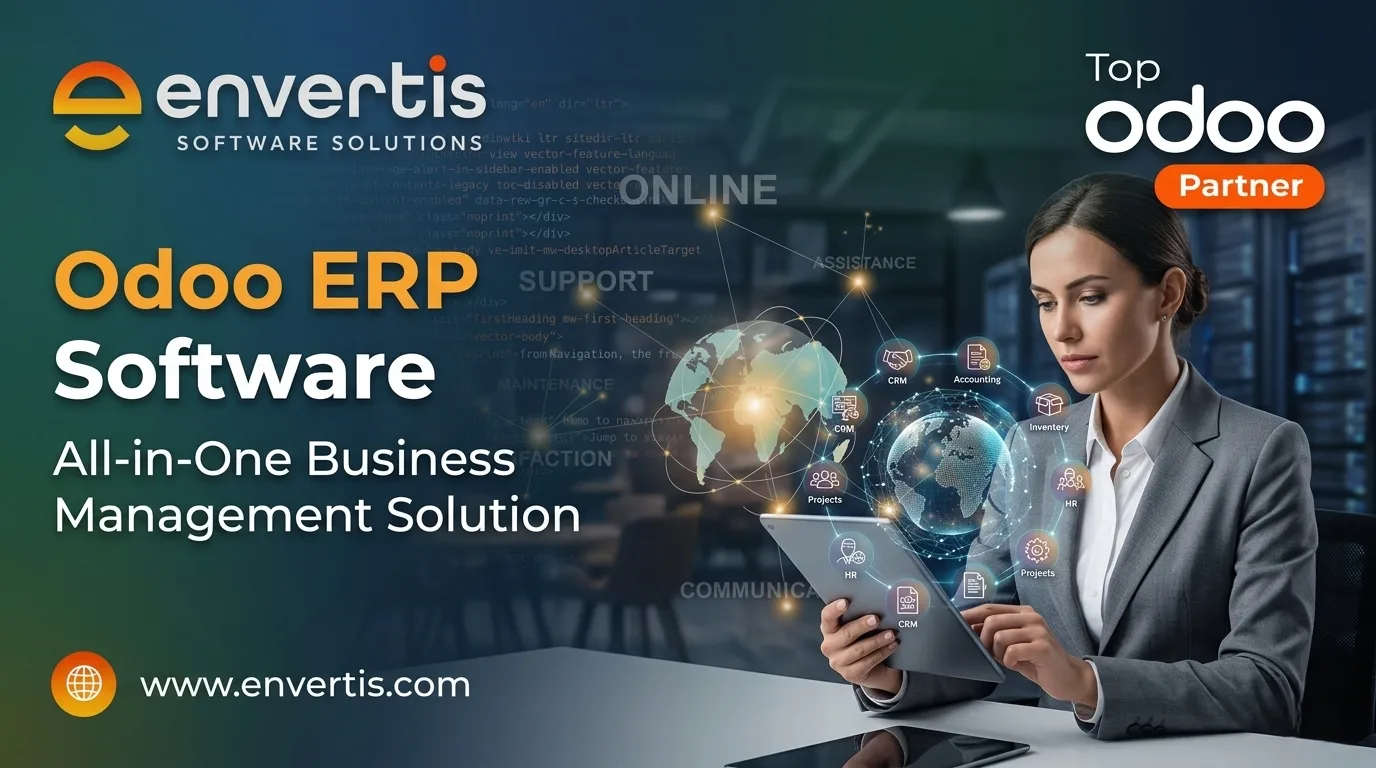
Odoo is a fully integrated, modular business management platform that covers everything from accounting, sales, and inventory to HR, manufacturing, project management, and customer relationship management. It replaces the patchwork of disconnected tools that most growing businesses rely on, bringing all operations into a single, real-time system.
Unlike traditional enterprise software that requires massive budgets and year-long rollouts, Odoo ERP software is designed to be accessible, fast to deploy, and cost-effective. Businesses can start with the modules they need and expand as they grow. Implementation typically takes between two and twelve months, depending on business size, compared to twelve to twenty-four months for legacy platforms like SAP.
How Odoo ERP Software Reduces Overstock and Stockouts with Intelligent MPS Planning
One of the most costly problems for product-based businesses is getting stock levels wrong. Overstocking ties up cash and increases storage costs. Stockouts damage customer relationships and result in lost sales. Odoo addresses both through its Master Production Schedule (MPS), a powerful planning tool that gives businesses real-time control over their inventory and procurement decisions.
Here is how MPS planning inside Odoo ERP software directly benefits your business operations:
- Demand Forecasting Based on Real Data: Odoo analyses historical sales data and current demand signals to project future stock requirements. Rather than guessing or relying on outdated spreadsheets, your purchasing decisions are guided by live intelligence. This means you order what you need, when you need it, and nothing more.
- Automated Replenishment Rules: You can set minimum and maximum stock thresholds for every product. When stock drops below the reorder point, Odoo automatically generates a purchase order or manufacturing order. This removes the human delay that causes stockouts and ensures shelves are never empty at the wrong time.
- Multi-Warehouse and Multi-Location Visibility: For businesses operating across multiple sites, Odoo provides a consolidated, real-time view of stock levels at every location. You can transfer stock between warehouses, prioritise fulfilment from the nearest location, and avoid ordering stock that already exists elsewhere in your network.
- Lead Time Integration: Odoo factors supplier lead times directly into its planning calculations. If a product takes 3 weeks to arrive, the system schedules the reorder 3 weeks before the projected stockout date. This removes the guesswork from procurement and eliminates last-minute panic that leads to expensive rush orders.
- Overstock Prevention Through Expiry and Rotation Tracking: For businesses dealing with perishable goods or products with shelf-life requirements, Odoo tracks lot numbers, expiry dates, and stock rotation. This prevents the build-up of slow-moving inventory and reduces wastage, both of which directly impact profitability.
- Real-Time Reporting and Alerts: Managers receive instant alerts when stock falls below critical levels or when a procurement decision requires approval. Reports are generated in seconds, showing stock turn rates, slow-moving items, and cost of goods sold. This level of visibility allows smarter buying decisions and faster responses to market changes.
The result is a business that runs leaner, wastes less, and serves customers more reliably. For any Australian product-based business, this alone justifies the investment in Odoo ERP Australia.
Why You Need an Odoo ERP Consultant to Get It Right
Technology is only part of the equation. How you implement it determines whether you see results within months or struggle for years. Working with a qualified Odoo ERP consultant gives your business a structured path to go-live, reduces implementation risk, and ensures the system is configured to match your specific workflows and compliance requirements.
An experienced Odoo ERP consultant maps your existing processes, identifies inefficiencies, recommends the right modules, manages data migration, and trains your team. Businesses that take this approach consistently report smoother rollouts, faster time-to-value, and higher staff adoption rates.
Concluding Words
Companies that act quickly will set up their operational frameworks to compete in an increasingly digital marketplace. Companies that do not take action may find themselves at a disadvantage compared with those that benefit from real-time data, automated workflows, and integrated systems that work in their favour.
The next step would be to discuss with a trained Odoo ERP consultant who understands Odoo ERP software, your industry, your goals, and your business context in Australia. The team at Envertis has helped Australian businesses do exactly this.