
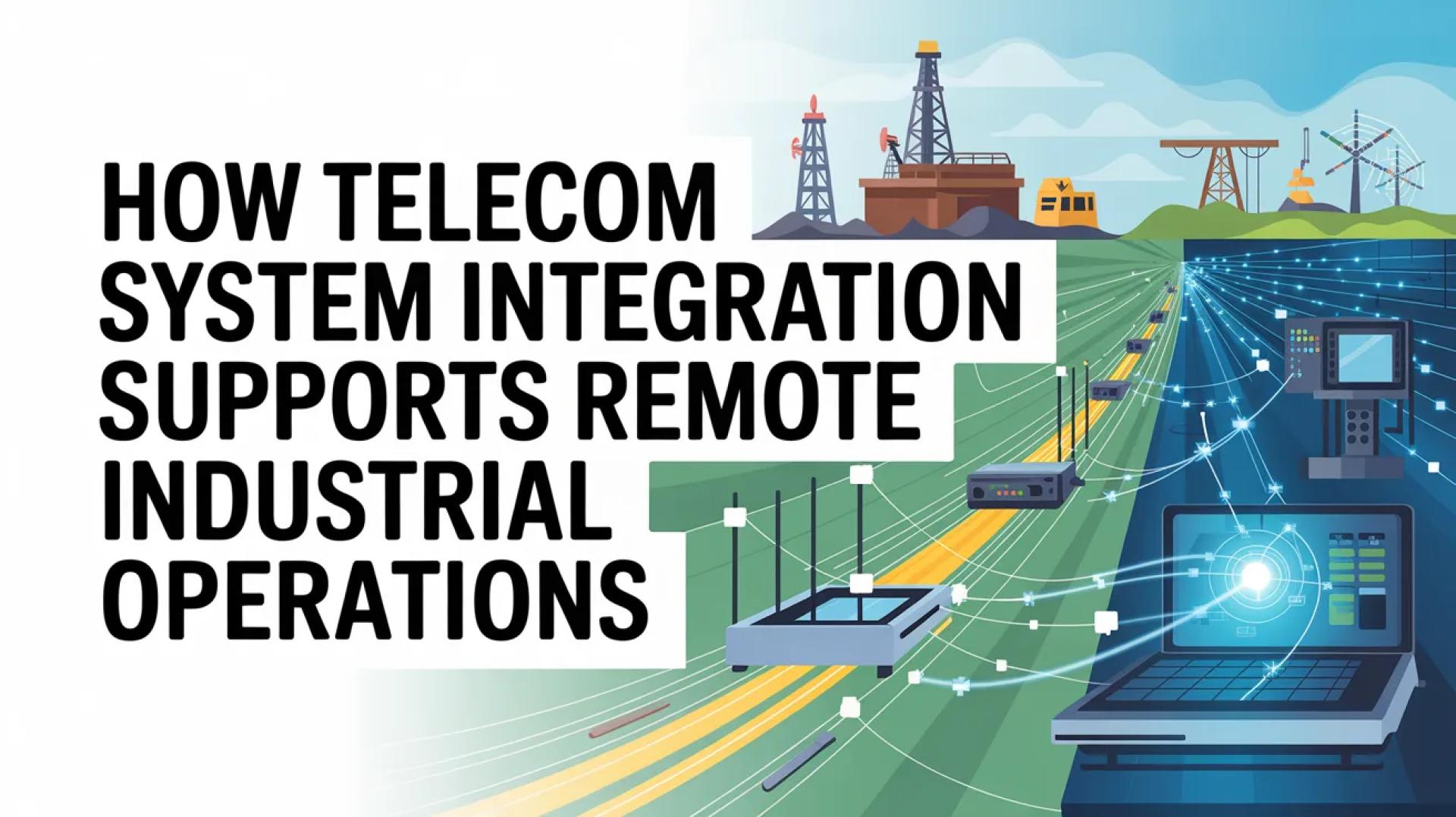
Remote industrial operations such as oil and gas fields, mining sites, offshore platforms, and power plants depend on reliable communication to maintain continuity. Telecom system integration connects multiple communication technologies into a unified framework. This includes radio networks, satellite communication, fiber optics, wireless systems, surveillance, and control infrastructure working together as one system.
In isolated environments, individual systems cannot operate effectively in silos. Integration ensures seamless communication between field devices, control centers, and operational teams, allowing data and voice transmission without disruption.
Enabling Reliable Connectivity in Remote Locations
Remote sites often lack access to traditional telecom infrastructure. Integrated telecom solutions use a mix of satellite links, microwave communication, and wireless networks to establish connectivity. These systems are designed with redundancy, so if one network fails, another takes over.
This approach ensures continuous operations even in challenging environments where connectivity is critical for safety and productivity.
Real Time Communication and Operational Control
Industrial operations require instant communication between field staff and central control units. Integrated telecom systems enable real time voice, video, and data exchange. This allows supervisors to monitor ongoing activities and respond immediately to operational issues.
Control centers can access live data from remote assets, improving decision making and reducing delays in executing critical tasks.
Supporting Industrial Automation and Monitoring
Modern industrial operations depend on automation systems such as SCADA and remote sensors. Telecom integration connects these systems to centralized platforms, allowing continuous monitoring of equipment and processes.
Operators can track performance indicators such as pressure, temperature, and equipment status. This visibility helps identify issues early and prevents unexpected failures.
Strengthening Safety and Emergency Response Systems
Safety systems in remote industrial environments rely heavily on communication networks. Telecom integration connects emergency alarms, public address systems, surveillance cameras, and access control systems.
In case of an incident, alerts are transmitted across all connected systems simultaneously. This coordinated response improves safety outcomes and ensures faster action during emergencies.
Cybersecurity in Integrated Telecom Networks
As industrial systems become more connected, they also become more vulnerable to cyber threats. Telecom system integration includes security measures such as encrypted communication, firewalls, and network monitoring tools.
These protections ensure that sensitive operational data is secure and that unauthorized access to critical systems is prevented.
Improving Workforce Collaboration Across Locations
Remote industrial operations often involve teams spread across multiple locations. Integrated communication platforms combine voice, messaging, and video into a single system.
This simplifies communication and allows engineers, technicians, and managers to collaborate effectively without relying on disconnected tools. It reduces delays and improves coordination between on site and off site teams.
Scalability for Expanding Operations
Industrial projects often expand over time, requiring additional communication infrastructure. Integrated telecom systems are designed to be scalable. New devices, locations, and users can be added without disrupting existing operations.
This flexibility supports long term growth and reduces the need for major system redesigns.
Reducing Downtime Through Predictive Maintenance
Telecom integration enables continuous data flow from equipment to monitoring systems. This data can be used for predictive maintenance, where potential issues are identified before they lead to failure.
Maintenance teams can take proactive action, reducing downtime and avoiding costly disruptions.
Ensuring Compliance and Operational Transparency
Industries such as oil and gas and energy are subject to strict regulatory requirements. Integrated telecom systems support compliance by providing centralized monitoring, reporting, and data logging.
This ensures that operations meet regulatory standards and that all activities are properly documented.
Optimizing Cost and Resource Utilization
Managing multiple independent communication systems increases operational complexity and cost. Integration reduces redundancy by combining systems into a unified network.
This leads to better resource utilization, lower maintenance costs, and improved overall efficiency.
Building a Resilient Communication Infrastructure
Remote environments are exposed to harsh weather conditions, physical challenges, and technical limitations. Telecom system integration focuses on creating resilient infrastructure with backup systems and failover mechanisms.
This ensures that communication remains active even during disruptions, supporting uninterrupted operations.
Why Businesses Should Consult a Telecom System Integration Company
Telecom system integration requires technical expertise, industry knowledge, and careful planning. A specialized integration company understands how to design and implement communication systems tailored to complex industrial environments.
They assess existing infrastructure, identify gaps, and develop solutions that align with operational needs. Their expertise ensures compatibility between different technologies and reduces the risk of system failure.
Professional integrators also provide ongoing support, system monitoring, and upgrades. This helps maintain performance over time and adapt to evolving technological requirements.
Working with an experienced telecom system integration provider allows businesses to build a stable, secure, and scalable communication network. It reduces operational risks, improves efficiency, and supports long term growth in remote industrial operations.