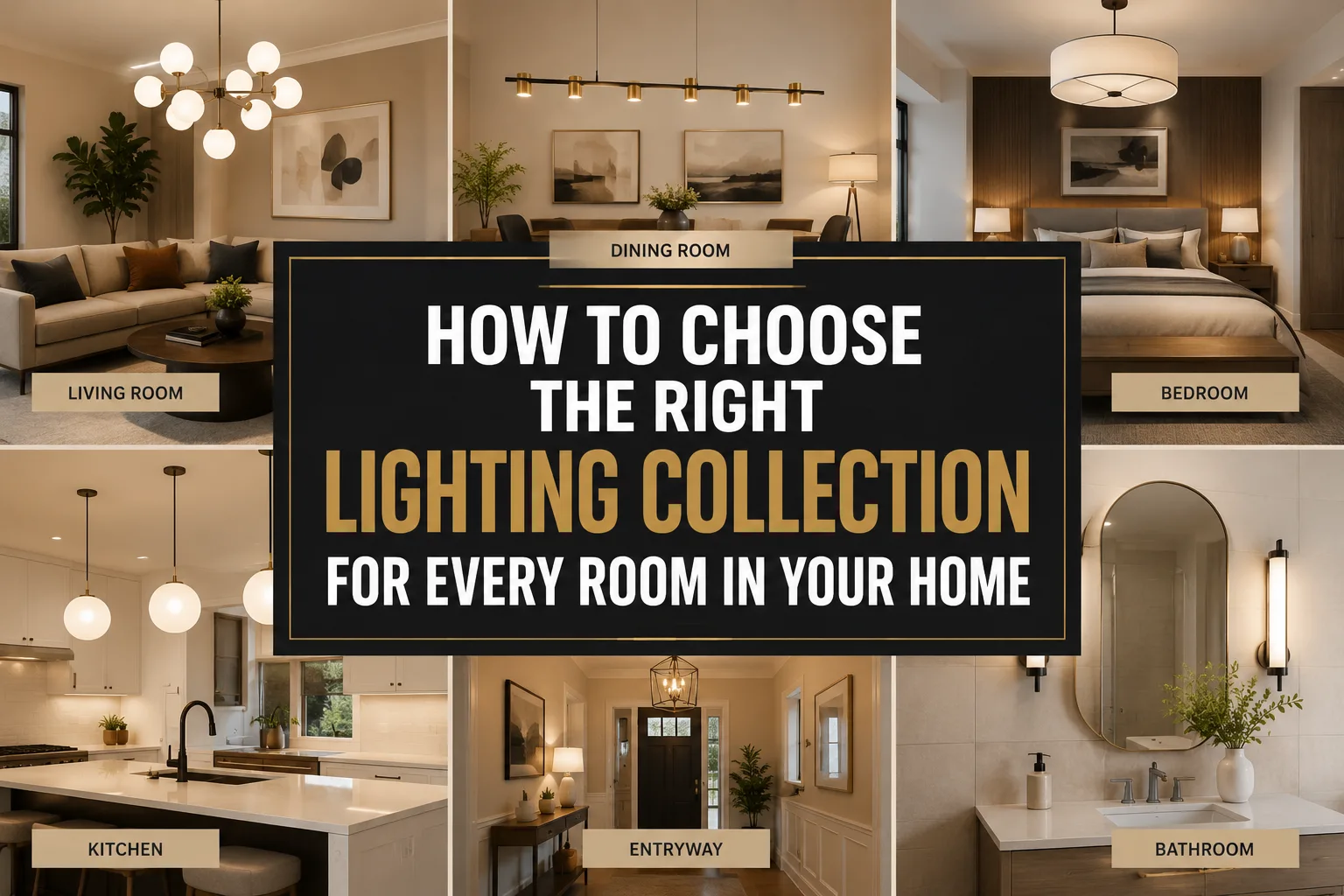
Lighting is one of those design decisions people put off until the last minute, and then regret rushing. You spend weeks picking out a sofa fabric or debating paint swatches, but the fixtures that actually control how a room feels day and night often get chosen in a five-minute scroll through whatever pops up first online. That's backwards. Light shapes mood, makes colors read true or false, and can make a small room feel open or a large room feel cold and empty. Getting it right room by room is worth the extra thought.
Below is a practical, room-by-room way to think about lighting, along with what to actually look for when you're comparing fixtures instead of just guessing.
Why Room-Specific Lighting Actually Matters
Most people default to a single lighting "style" and repeat it through the whole house. A few pendant lights in the kitchen, the same recessed cans everywhere else, one generic outdoor fixture by the front door. It's not wrong, exactly, but it leaves a lot of value on the table.
Every room has a different job. A kitchen needs bright, even, task-focused light so you're not chopping vegetables in your own shadow. A bedroom wants something dimmer and warmer, closer to candlelight than daylight. A home office needs light that reduces eye strain over long stretches at a screen. Treating them all the same means at least one or two rooms in your house are working against how you actually use them.
The Practical Difference Between Ambient, Task, and Accent Light
Before picking fixtures, it helps to understand the three basic categories designers work with:
- Ambient light is the general, overall illumination in a room, usually from ceiling fixtures or recessed lighting.
- Task light is focused and functional, like under-cabinet kitchen lighting or a reading lamp beside a chair.
- Accent light highlights something specific, an art piece, a shelf, a piece of architecture, and adds depth to a space.
A well-lit room usually layers all three rather than relying on one overhead fixture to do everything. That's often the missing piece when a room feels flat despite decent furniture and paint.
Choosing Lighting Room by Room
Kitchen Lighting
The kitchen is arguably the hardest-working room in the house, so its lighting needs to earn its keep. Pendant lighting over an island or breakfast bar is a popular choice because it adds both task light and a visual anchor point. Warmer color temperatures tend to make a kitchen feel inviting rather than clinical, especially if you're going for a look that blends with wood cabinetry or natural stone counters.
Dining Room Lighting
This is the one room where a statement fixture is almost always worth it. A chandelier centered over the table does double duty: it lights the meal and sets the tone for the whole room, whether that's formal, rustic, or somewhere in between. Dimmable options matter a lot here, since a dining room needs to shift from bright and functional for daytime cleanup to soft and warm for an evening dinner.
Bedroom Lighting
Bedrooms benefit from softer, warmer light and multiple sources rather than one bright overhead fixture. Bedside lamps, wall sconces, or a dimmable ceiling fixture all work better than a single harsh light source that makes it feel like you're getting ready under office lighting right before trying to fall asleep.
Bathroom and Vanity Lighting
Vanity lighting is one of the most overlooked details in a bathroom remodel, and one of the most noticeable when it's wrong. Light positioned directly overhead casts shadows across your face, which makes shaving, applying makeup, or just seeing yourself clearly harder than it should be. Fixtures placed at eye level on either side of the mirror, or a well-placed bar above it, give a far more even and flattering result.
Living Room Lighting
Living rooms usually need the most layering because they serve the most purposes: reading, entertaining, watching TV, just relaxing. A mix of ceiling lighting, floor or table lamps, and accent lighting for shelves or artwork gives you flexibility to adjust the mood depending on what the room is being used for at any given moment.
Outdoor and Entryway Lighting
Outdoor fixtures need to handle two jobs that are somewhat in tension: they need to look good and hold up against weather. Post lights, wall lanterns, and well-placed landscape lighting do more than just illuminate a path, they're often the first impression of a home after dark, and good outdoor lighting quietly improves both curb appeal and basic safety.
Commercial and Office Lighting
For office or commercial spaces, consistency and glare control matter more than personality. Even, well-distributed light reduces eye fatigue over an eight-hour day, and track or linear lighting systems make it easier to adjust light where it's actually needed as a space's layout changes over time.
What to Actually Look for When Buying Fixtures
A few practical things worth checking before you commit to a fixture, beyond just liking how it looks in a photo:
- Color temperature. Measured in Kelvin, lower numbers (around 2700K–3000K) give a warm, cozy glow, while higher numbers (4000K and up) lean cooler and more clinical. Match the temperature to the room's purpose.
- Dimmability. A fixture that can't be dimmed limits how flexible a room can be. This matters most in dining rooms, bedrooms, and living rooms.
- Scale. Oversized fixtures overwhelm small rooms, and undersized ones disappear in large ones. As a rough rule, a fixture's diameter in inches should roughly match the room's length and width in feet, added together and divided by two.
- Placement height. Especially for pendants and chandeliers, hanging height changes both function and feel. Too low and it's in the way; too high and it loses its impact.
- Indoor vs. outdoor rating. Not every attractive fixture is built to survive rain, humidity, or direct sun exposure, so always check the rating before buying for an exterior space.
Bringing It All Together
None of this needs to be complicated, but it does need to be intentional. Walking room by room and asking what that specific space needs, rather than defaulting to whatever's easiest, is the difference between a house that's simply lit and one that actually feels considered.
If you're starting that process and want to browse fixtures organized by room and style rather than scrolling through an undifferentiated catalog, the Circ Lighting collections page is a good place to start. It's organized by category, ceiling fixtures, chandeliers, outdoor lighting, and more, so you can shop by the room you're actually trying to solve for instead of digging through everything at once.
Good lighting is rarely about buying more fixtures. It's about buying the right ones, in the right places, for how you actually live in the space.