Your website is no longer a digital brochure. It is your hardest-working salesperson, your first impression, and often the deciding factor between a customer choosing you or a competitor. With thousands of agencies promising stunning visuals and fast results, finding the right partner can feel overwhelming. If you have already researched the top web design companies, you have probably noticed that most look impressive on the surface. The real difference lies in process, strategy, communication, and the results delivered after launch.
This guide covers what a web design company actually does, what to evaluate, which red flags to avoid, and how to decide with confidence.
What Does a Web Design Company Actually Do?
Many business owners assume a web design company simply makes a website look good. In reality, a professional agency shapes how users experience your brand online. A full-service team typically provides:
- Strategy and discovery: Researching your goals, audience, and competitors before design begins.
- UX and UI design: Structuring layouts and navigation so visitors find what they need quickly.
- Responsive development: Building a site that works on desktops, tablets, and smartphones.
- Content support: Copywriting, imagery, and messaging that reflect your brand voice.
- SEO foundations: Clean code, fast load times, proper headings, and metadata.
- Testing and launch: Checking performance, accessibility, and cross-browser compatibility.
- Ongoing support: Maintenance, security updates, and continuous improvements.
Knowing this scope helps you compare quotes fairly. A low price that covers only visual design is not equal to a higher one that includes strategy, SEO, and support.
Why Your Choice of Web Design Partner Matters
The impact of a website goes far beyond aesthetics. Users form an opinion within a fraction of a second, and a poor experience sends them straight to a competitor. The right partner influences:
- Trust: A polished site signals credibility before anyone reads a word.
- Conversions: Clear calls to action and smooth journeys turn visitors into leads.
- Search visibility: Technical structure and content hierarchy affect how well pages rank.
- Brand consistency: Your site should match the tone and values of every other touchpoint.
- Long-term cost: A poorly built site often needs rebuilding within a year or two.
Choosing on price alone is one of the costliest mistakes. The cheapest option often becomes the most expensive once redesigns and lost leads are counted.
Key Factors to Evaluate Before You Hire
Once you have a shortlist, judge every agency against the same criteria.
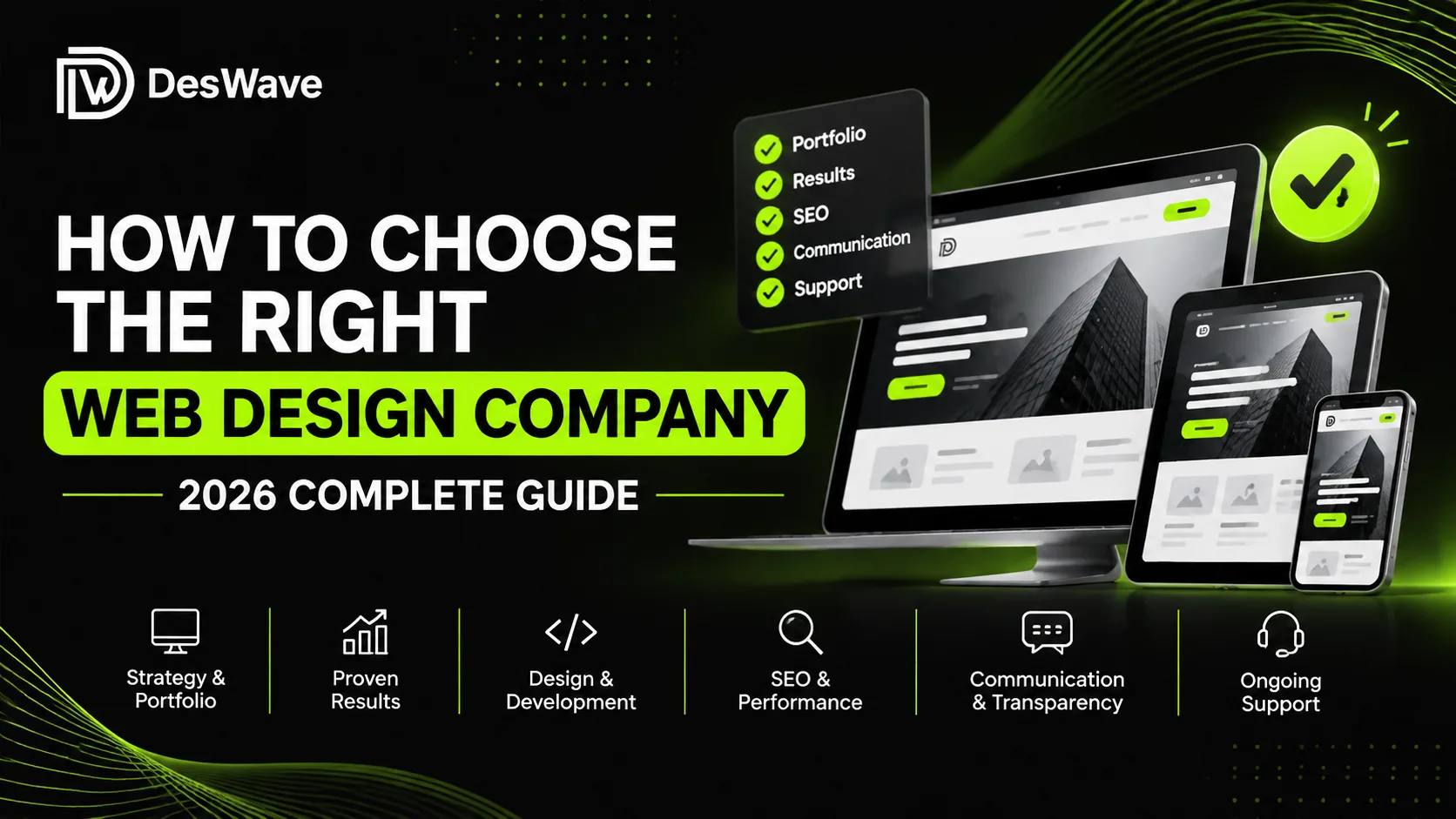
1. Portfolio Quality and Relevance
Look beyond pretty screenshots. Seek variety in style, evidence of problem solving, and projects in industries like yours. Check whether the sites load quickly, work well on mobile, and look unique rather than templated.
2. Proven Results
Good design produces measurable outcomes. Ask for case studies with real numbers, such as higher traffic, better conversion rates, or lower bounce rates. Agencies that track results care about your success, not just delivery.
3. Technical and SEO Expertise
The best agencies pair creative talent with technical skill. They can recommend the right platform, whether WordPress, Shopify, Webflow, or custom code, instead of pushing a single solution. They should also understand:
- Core Web Vitals and page speed
- Clean URL and heading structure
- Schema markup and structured data
- Mobile-first indexing and accessibility
4. Communication and Transparency
Notice how quickly an agency responds, how clearly it explains ideas, and whether it listens to your goals. Clear timelines, milestones, and regular updates signal a well-run process.
5. Reviews and Reputation
Platforms like Clutch, Google, and Trustpilot show what working with an agency is really like. One negative review is normal. Repeated complaints about missed deadlines or poor communication are a warning.
6. Post-Launch Support
Websites are living assets that need security patches, updates, and performance monitoring. Confirm what support is included, how long it lasts, and what it costs afterward.
Red Flags to Watch Out For
Knowing what to avoid is as valuable as knowing what to look for. Be cautious if an agency:
- Guarantees number-one rankings or unrealistic results
- Refuses to show past work or provide references
- Gives vague pricing without a defined scope
- Pushes pre-made templates without customization
- Has no clear process or timeline
- Never asks about your goals, audience, or competitors
- Prevents you from owning your website, domain, or content
Ownership matters most. Confirm in writing that you will own all design files, code, and content when the project ends.
Questions to Ask Before Signing a Contract
Strong agencies welcome tough questions. Ask each candidate:
- Can you share three case studies similar to my project?
- Who will work on my site, and who is my point of contact?
- How many revisions are included?
- What is the timeline from kickoff to launch?
- Who owns the final design files and content?
Their answers reveal how experienced and client-focused they really are.
Understanding Web Design Pricing
Pricing varies with location, experience, and project complexity. These ranges give a general picture:
- Small business sites (5 to 10 pages): Typically a few thousand dollars
- Mid-size custom sites: Often $8,000 to $25,000
- E-commerce sites: Frequently $10,000 to $50,000 or more
- Enterprise platforms: Can exceed $50,000
Costs rise with page count, custom animations, payment integrations, copywriting, CMS development, SEO migration, and ongoing maintenance. Ask every agency for an itemized proposal so you compare scope, not just price.
A Typical Web Design Process
A transparent process shows you what to expect. Most professional projects follow these steps:
- Discovery and planning: Goals, audience, and requirements are defined.
- Wireframes: Page structure is mapped before visual design begins.
- Visual design: Mockups apply color, typography, and imagery.
- Development: Approved designs become a responsive website.
- Testing and SEO setup: Devices, browsers, speed, and metadata are checked.
- Launch and support: The site goes live with redirects and tracking, then improves over time.
If an agency cannot explain its process clearly, expect disorganization later.
What Makes the Best Website Design Company?
After comparing proposals, you may wonder what separates an average agency from the best website design company for your needs. It is rarely awards or flashy pitches. It comes down to a few qualities:
- Strategy before aesthetics: Every design choice supports a business objective.
- User-centered thinking: Real visitors, not internal opinions, guide decisions.
- Technical excellence: Fast, secure, accessible sites on every device.
- Search-ready structure: Content organized for search engines and AI-powered answer tools.
- Honest communication: Realistic timelines and clear pricing.
- Long-term partnership: Commitment that continues after launch.
Priorities matter too. A startup may value speed and flexibility, while an established company may need brand consistency and scalability. Define your goals first, and the right choice becomes much easier to spot.
Web Design Trends Shaping 2026
A forward-thinking agency keeps pace with changing user expectations. Discuss these trends with any candidate:
- Performance-first design: Lightweight code and optimized images.
- AI-friendly structure: Clear headings, concise bullets, and FAQs that generative search tools can cite.
- Accessibility as standard: Inclusive design is both an ethical priority and, in many regions, a legal one.
- Mobile-first thinking: Most traffic comes from phones, so design starts with the smallest screen.
Final Thoughts
Choosing a web design company is one of the most important marketing decisions you will make. The right partner combines strategy, creativity, technical skill, and genuine care for your results. Define your goals, evaluate portfolios critically, ask detailed questions, and trust agencies that are open about process and pricing.
If you want a team that blends thoughtful design with search-ready structure, DesWave is ready to help you build a website that looks exceptional, performs fast, and supports your growth for years to come.
Frequently Asked Questions (FAQs)
1. How long does it take to design a website?
Most business websites take 6 to 12 weeks from kickoff to launch. Simple sites can be faster, while complex e-commerce or custom platforms may take several months. Scope, content readiness, and feedback speed all affect the timeline.
2. How much should I budget for a professional website?
A small business site may cost a few thousand dollars, while custom or e-commerce projects can reach tens of thousands. Focus on value and scope rather than the lowest price, and always request an itemized proposal.
3. Should I choose a template or a custom design?
Templates are faster and more affordable, which suits simple needs. Custom design offers stronger branding and better scalability. Many businesses start with a customized template and upgrade as they grow.
4. Does a web design company handle SEO?
Many do, but the depth varies. At minimum, expect fast load times, clean code, mobile responsiveness, and proper heading structure. Ongoing content and link building may require a dedicated SEO service.
5. Will I own my website after the project is finished?
You should. Confirm in the contract that you receive full ownership of design files, code, content, and domain, and avoid agencies that charge extra to release your site.
6. How often should I redesign my website?
Most businesses refresh every three to five years, with smaller updates in between. Redesign sooner if your site is slow, outdated, hard to use on mobile, or no longer reflects your brand.
7. What should I prepare before contacting a web design company?
Gather your business goals, target audience details, examples of sites you like, a rough budget, your preferred timeline, and existing brand assets such as logos and color guidelines.