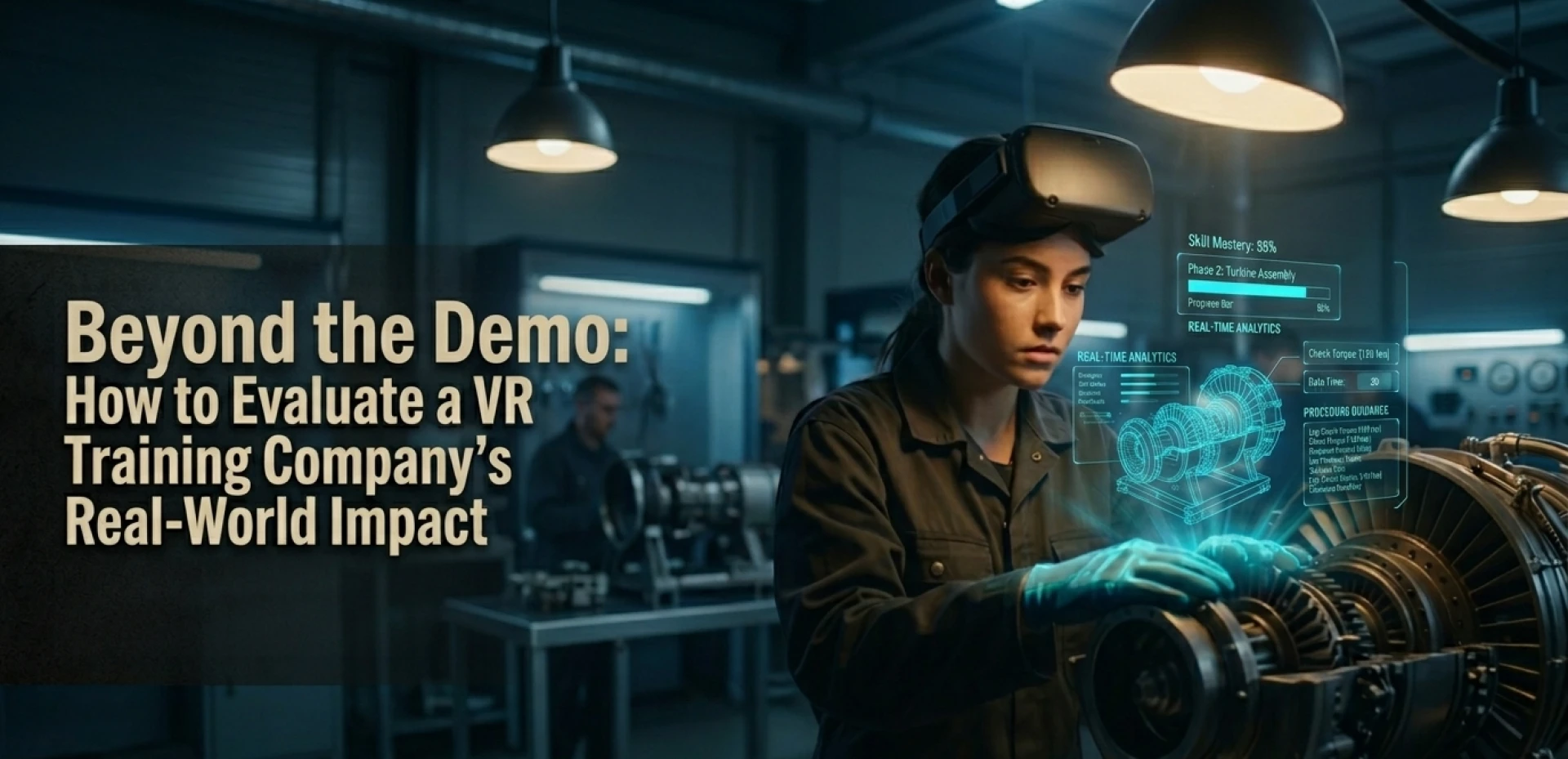
A product demo can be impressive, but it often shows only the best-case scenario. Many virtual reality solutions are designed to look engaging during presentations, yet real-world performance depends on more than visuals. Organizations must look beyond surface-level experiences and assess how the training performs in actual work conditions. This means asking how well the solution supports daily operations, adapts to different learners, and delivers measurable results over time.
Focusing on Real-World Application
The true value of virtual reality training lies in how well it prepares employees for their roles. A reliable vr training company should provide simulations that closely match real work environments. These simulations must reflect actual tasks, tools, and challenges employees face. When training aligns with real job requirements, employees can transfer their skills more easily. This reduces confusion and shortens the time needed to become fully productive.
Measuring Learning Outcomes Clearly
Evaluation should always include clear learning results. It is not enough for training to be engaging. It must improve knowledge, skills, and performance. Organizations should look for evidence such as faster task completion, fewer errors, and better decision-making. These outcomes show whether the training is effective. Reliable providers often include systems that track progress and provide detailed reports. This data helps managers understand if employees are truly learning or just completing modules.
The Role of Data and Feedback
Modern training solutions often include performance tracking. This means the system records how learners interact with the training. It can measure accuracy, time taken, and repeated mistakes. This data is important because it highlights areas where employees need improvement. Feedback should be simple and easy to understand so learners can correct their mistakes quickly. When training includes clear feedback, employees improve faster and gain confidence in their skills.
Ensuring Consistency Across Teams
One key factor in evaluating impact is consistency. Training should deliver the same quality of learning to all employees, no matter where they are located. Virtual reality can support this by providing standard experiences for everyone. This helps maintain uniform performance across teams. Consistent training also reduces the need for repeated instruction and ensures that all employees follow the same processes and standards.
Supporting Safety and Compliance Needs
In many industries, safety and compliance are critical. Training must prepare employees to follow rules and handle risks correctly. Virtual reality allows employees to practice these situations in a safe environment. They can learn how to respond to problems without facing real danger. This type of preparation reduces workplace risks and improves confidence. When evaluating a solution, organizations should check if it covers important safety scenarios and industry requirements.
Assessing Scalability and Long-Term Value
A strong training solution should grow with the organization. It should be easy to update and expand as needs change. Companies should consider whether the training content can be modified to match new processes or regulations. Long-term value is also important. A system that saves time, reduces errors, and improves performance will provide better returns over time.
Looking at User Experience and Adoption
Even the best training system will fail if employees do not use it properly. The experience should be simple, clear, and easy to follow. Employees should feel comfortable using the technology without needing constant support. High adoption rates often indicate that the training is effective and practical. Feedback from users can provide useful insights into how well the system works in real conditions.
Making an Informed Decision
Choosing the right training solution requires careful evaluation. Organizations should focus on real-world impact rather than first impressions. By examining learning outcomes, consistency, safety, and long-term value, they can make better decisions. Virtual reality has the potential to transform training, but only when it is implemented with clear goals and proper evaluation.