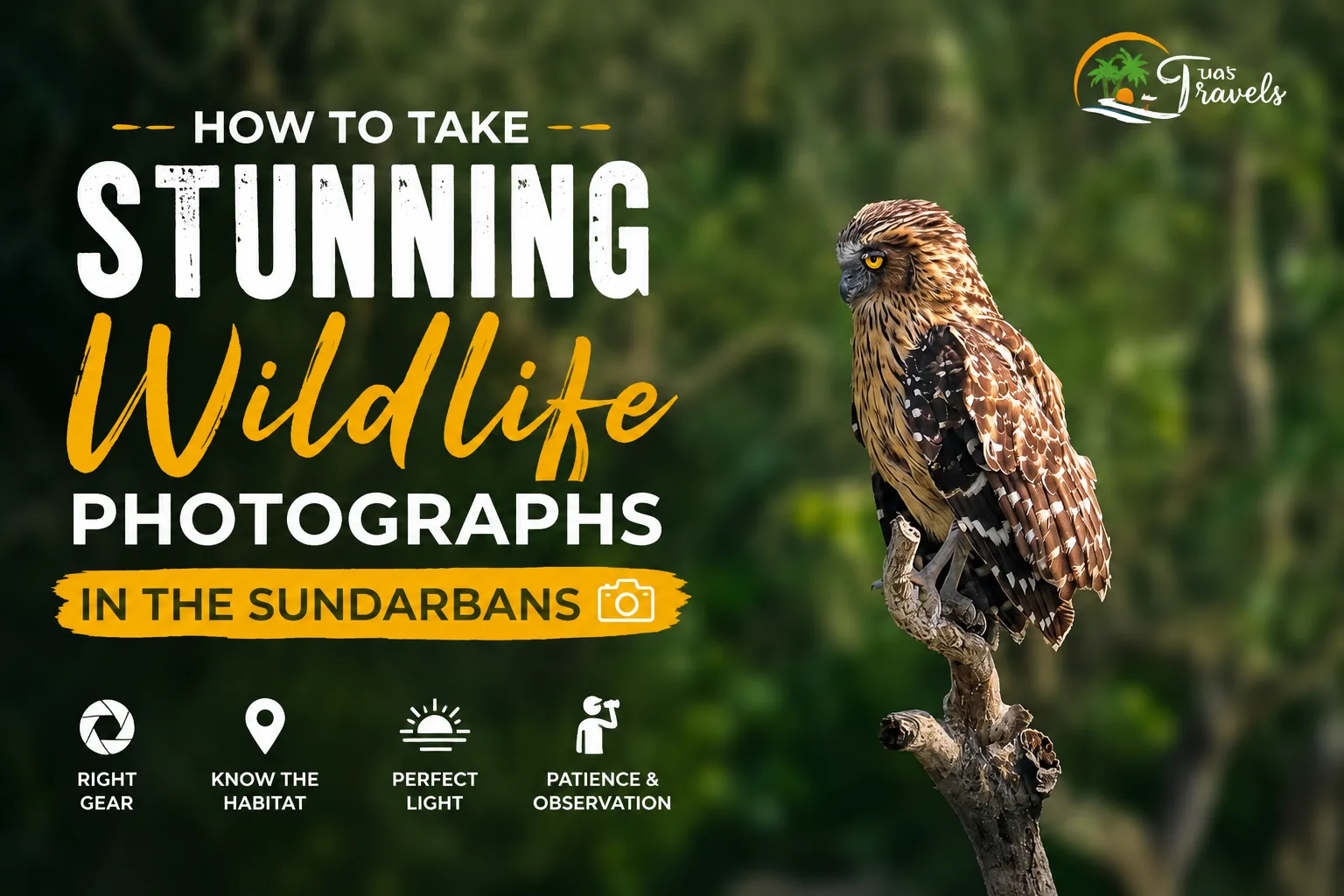
The Sundarbans is a great place to experience wildlife photography, though it can be challenging at times. Sundarbans is famous for its dense forest of mangroves, its unique ecosystem, its majestic Royal Bengal Tiger, salt water crocodiles, spotted deer, exotic birds and a lot more. Patience, skill and preparation are a must to capture these animals in their native habitat. When you are on a photography excursion to this UNESCO World Heritage Site, there are some techniques to follow that will help you get better images.
Understand the Environment
The Sundarbans is a place like no other. A huge delta, waterways, mud flats and dense mangrove forests. Trees can often block the view. Animals here can only be seen with patience and good eyesight; unlike open grasslands the hides are not so obvious. The style of your photography has to be adjusted to the place - don't expect a lot of full body shots of wildlife, more shots of detail, textures and story.
Select The Proper Equipment
The proper camera gear is crucial to a wildlife photographer. It is best to use a DSLR or mirrorless camera that has rapid autofocus and low-light sensitivity. A telephoto lens (200mm–600mm or more) is strongly suggested as animals may be far away. A wide angle lens might also be advantageous for landscape images of the mangroves and rivers.
Take extra batteries and memory cards, charging points may be limited on boat safaris. Waterproof bag to keep the equipment protected from moisture and possible splashes.
Master Camera Settings
Quick adjustments are needed in wildlife photography. Take photos of animals in motion using a fast shutter speed (1/1000 or faster). Use continuous shooting mode (burst mode) to get the ultimate shot.
Lighting – early morning and late afternoon lightings will be most successful. Adjust the ISO setting to ensure there are not too many "noise" particles when taking photos in low-light conditions. Consider using an aperture between 5.6 and 8 to ensure clarity of the object in your photograph and create a more pleasing background blur.
Be Patient And Observe
Meeting wildlife is always hit-or-miss in the Sundarbans. You can wait hours and hours and then see a tiger for several seconds. Patience is key. Always bring your camera!
Take time to closely watch animal life. When predators are nearby, birds will give signals. Knowing these little hints can help you foresee what is about to happen and capture one-of-a-kind moments.
Focus on Composition
The subject is only part of the equation of a good wildlife photograph. Use the Rule of Thirds to create effective framing. Include elements that create depth such as reflections on water, mangrove roots or sun dappled through trees.
Avoid cluttered backgrounds. Square up with the subject so that they stand out from the background. The right composition and lighting can create a powerful deer portrait, even if it is as simple as one.
Creative use of Natural Light
Lighting is very important for wildlife photography. The lighting effects, such as the soft golden hues at sunrise and sunset, enhance colors and textures. Mornings in Sundarbans are often foggy, leading to dramatic and moody scenes.
Try to steer clear of the harsh direct sunlight of the day, which produces very strong shadowing and highlights. If you need to shoot during this period, try to move to a more shaded location or use the exposure settings.
Be Quiet And Don't Disturb Wildlife
Wildlife photography isn't simply about taking photos, it's about respecting nature as well. Don't make noise on safari to not disturb the animals. They can be frightened off by sudden movements or loud noises.
Listen to the directions of your guide and keep a distance from the animals. Do not try to lure animals in for more of an opportunity. Ethical photography means that you and the animals are safe.
Take A Range Of Shots For A Variety Of Subjects
The Royal Bengal Tiger reigns as the main attraction within the Sundarbans, but there's much more than that. Take photos of birds, such as kingfishers, egrets and herons. Reptiles like crocodiles sunning themselves are interesting subjects to shoot, as are insects and mangrove.
Variety of shots can convey a full ecosystem story, not an individual species story.
Shooting from a Boat: Effectively
A large majority of the photography is done from a boat, in the Sundarbans. This poses special challenges such as moving and restricted angles. Shutter speed and stabilization and even the position of shooting.
Attempt to make a prediction about the direction of the boat and the subject. Get in position for the maximum angle with the boat (when possible) and communicate with the boat operator.
Post-Processing Tips
Editing is a critical step in the process of making wildlife photos. Enhance colors, exposure and details using software such as Lightroom and Photoshop. However, avoid over-editing. Make sure your pictures are realistic and represent the actual setting.
Crop to enhance composition, particularly when the subject is distant. Another benefit of noise reduction is that it works for low-light images.
Safety and Preparation
Make sure that you are properly equipped before you go to the Sundarban region. Wearing a casual outfit that is neutral in colour helps one to blend in. Bring items such as sunscreen, insect repellent, and water.
Follow forest authorities' safety instructions. The Sundarbans is a wild and unpredictable environment - it's important to remain vigilant.
Conclusion
Overall, wildlife photography in the Sundarbans is a rewarding and adventurous experience that requires patience and creativity. With the right techniques, gear, and respect of nature, you can take some amazing photos and share some of the incredible stories of this unique ecosystem. From sightings of tigers to peaceful images of birds on still waters, each and every moment within the Sundarban Wildlife Photography Tour is a chance to capture unforgettable photographs.
Learn to observe, be patient and discover nature through your lens.