
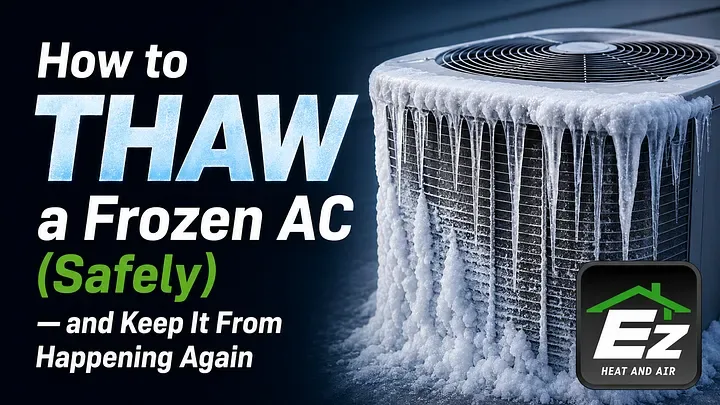
How to Thaw a Frozen AC (Safely) — and Keep It From Happening Again
Finding your AC coil covered in ice is unsettling, but how you handle the next few hours matters just as much as figuring out why it froze in the first place. Shutting the system off the wrong way, restarting it too soon, or ignoring it entirely can turn a simple airflow problem into a compressor repair.
This guide covers exactly how to thaw a frozen air conditioner safely, what not to do while it's icing over, and the everyday habits that keep it from freezing again. If you haven't yet identified why your coil froze, our companion guide on the [causes of a frozen AC coil in San Diego] walks through the eight most common culprits.
Step 1: Turn the System Off Immediately
The moment you notice ice on the coil, refrigerant lines, or indoor unit, switch your thermostat off. Continuing to run a frozen system forces the compressor to work against blocked airflow and low coil pressure, which is one of the fastest ways to turn a $150 fix into a $1,500 one.
Step 2: Switch the Fan to "On"
Most thermostats let you run the blower fan independently of cooling. Set it to "on" rather than "auto." This keeps air moving across the coil, which speeds up thawing and helps prevent water from pooling as the ice melts.
Step 3: Give It Time — Don't Rush the Thaw
Depending on how much ice has built up, full thawing can take:
- 2–4 hours for light frost
- 8–12 hours for moderate ice buildup
- Up to 24 hours for a heavily iced coil or frozen refrigerant lines
Resist the temptation to chip, scrape, or pry ice off the coil. The fins are thin aluminum and bend or puncture easily, which can cause a refrigerant leak on top of the original problem.
Step 4: Protect the Area Below the Indoor Unit
As the ice melts, it produces more water than your condensate drain may be able to handle at once. Place towels or a shallow pan beneath the indoor unit, especially if it's in an attic, closet, or garage, to catch overflow and avoid water damage.
Step 5: Check (and Likely Replace) the Air Filter
While the system thaws, pull the air filter and inspect it. A clogged filter is the single most common reason coils freeze, and it costs a fraction of a service call to rule out. If you can't see light through it, replace it before restarting the system.
Step 6: Restart Only Once Fully Thawed
Look and feel for any remaining ice on the coil and refrigerant lines before switching the AC back on. If you restart too early, residual ice can cause the same freezing cycle to repeat within hours.
When Thawing Doesn't Fix the Problem
If your AC refreezes within a day or two of restarting it, that's a strong sign the underlying cause isn't something a filter change can solve. At that point, it's time to bring in a licensed technician to check for:
- Low refrigerant from a leak
- A failing blower motor or fan
- A clogged condensate drain
- Thermostat or control board issues
Repeated freeze-thaw cycles put real strain on the compressor, so this isn't a step to put off indefinitely.
How to Prevent Your AC From Freezing Again
Most frozen coils are preventable with a few consistent habits:
- Replace your air filter every 30–60 days, especially during San Diego's dusty Santa Ana wind season.
- Keep supply and return vents open throughout your home, even in unused rooms.
- Avoid running the AC when outdoor temps drop below ~60°F. Use the fan-only setting instead on mild coastal evenings.
- Schedule a professional tune-up once a year, ideally before peak summer heat, to catch refrigerant leaks and coil buildup early.
- Watch for early warning signs, like weak airflow, warm spots in the house, or a hissing sound near the outdoor unit, before ice ever forms.
Conclusion
Thawing a frozen AC correctly is mostly about patience: power it down, let the fan run, and give the ice time to melt before starting the system back up. But if it happens more than once, that's your cue to look past the ice and find the root cause. A quick filter check today is a lot cheaper than a compressor repair next month.
If your system keeps freezing despite doing everything right, our San Diego HVAC technicians can pinpoint the cause and get it fixed for good. San Diego HVAC technicians