
“How can I shorten my links and still track detailed analytics?”
Many marketers, businesses, and content creators face the same challenge when sharing links online. URLs can become extremely long, especially when they include tracking parameters, campaign identifiers, or complex page structures. These lengthy links often look unprofessional and are difficult to manage across marketing channels.
This is where web address shortening becomes valuable. Instead of sharing complicated links, businesses can convert them into short, clean URLs that are easier to distribute across websites, social media, email campaigns, and digital advertisements.
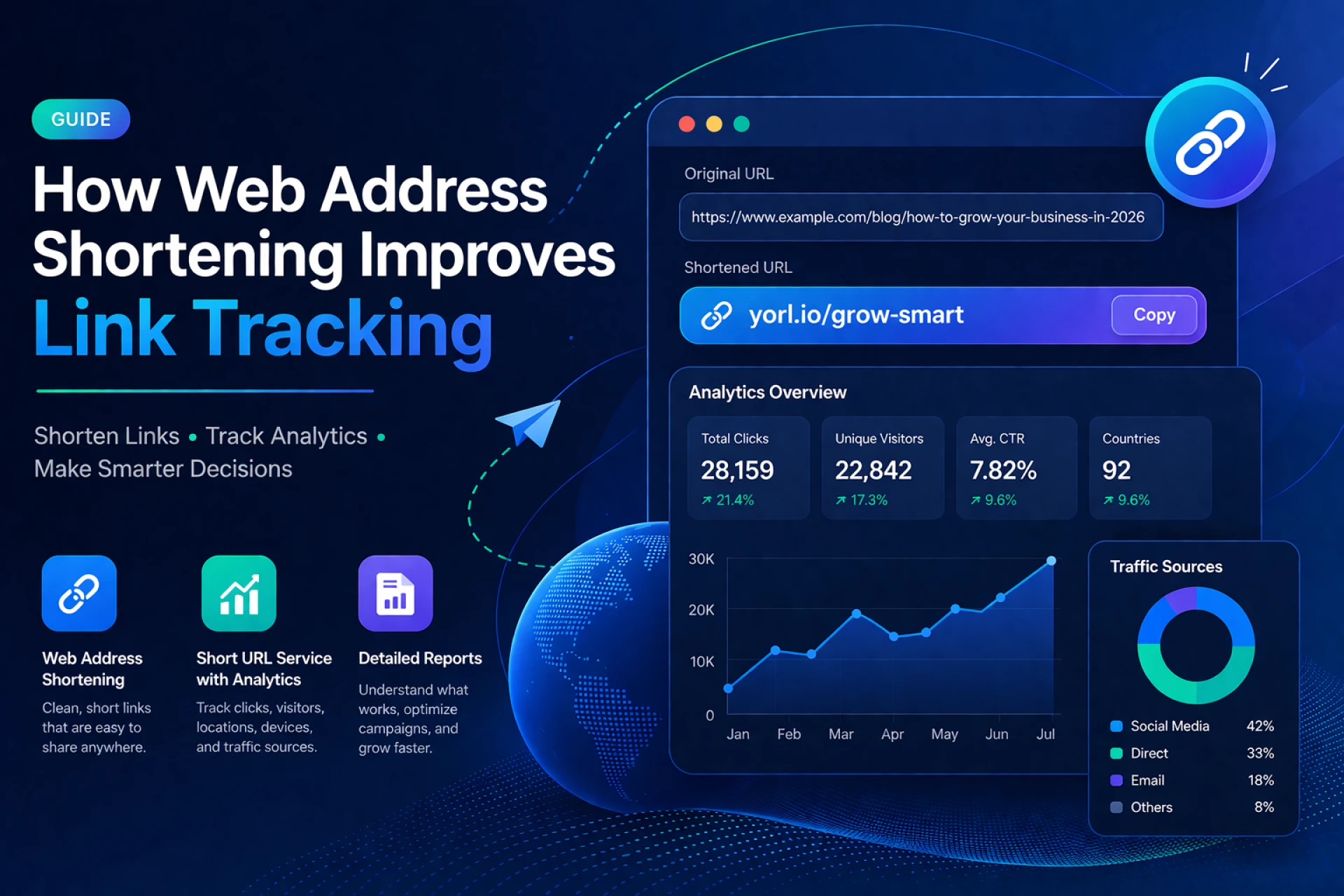
More importantly, modern platforms offer a short url service with analytics and reports, allowing businesses to monitor link performance and understand how audiences interact with their content. By combining link shortening with data tracking, organizations can transform simple links into powerful marketing tools.
Understanding Web Address Shortening
At its core, web address shortening is the process of converting a long URL into a shorter version that redirects users to the same webpage. While the shortened link appears simple, the system behind it stores the original destination and connects it with the short URL.
For example, a long webpage address that contains multiple folders and tracking parameters may look complicated when shared publicly. When a short url service with analytics and reports is used, the system generates a compact version of that link, making it easier to share and manage.
When users click the shortened link, they are instantly redirected to the original webpage. This redirection occurs within milliseconds, creating a seamless experience for users.
The real advantage of modern shortening tools is the data they collect. With built-in analytics, businesses can gain insights into how users interact with their links, which helps improve marketing strategies and campaign performance.
Why Long URLs Create Challenges
Although long URLs function normally, they can create several practical issues when used in marketing campaigns or shared publicly.
Long links often appear cluttered with random characters, making them difficult to read and sometimes reducing trust among users. When links look confusing, people may hesitate to click them because they are unsure about the destination.
Another issue is usability. Long links can break across lines when shared in messaging apps or emails, making them difficult to copy or remember. This reduces convenience for users and can lower engagement.
By implementing web address shortening, businesses can eliminate these problems and present cleaner links that are easier to share and interact with.
The Role of Analytics in Short URL Services
While shortening links improves readability, analytics is what truly turns a shortened URL into a strategic marketing asset.
A short url service with analytics and reports allows businesses to monitor how users interact with their links. Instead of simply sharing a link and hoping for engagement, marketers can analyze data that reveals the performance of each link.
Analytics tools often provide valuable insights such as:
- Total number of clicks received by the link
- Geographic location of visitors
- Devices used to access the link
- Time and date when clicks occurred
- Sources that generated traffic
These insights allow businesses to evaluate marketing campaigns more effectively. By analyzing the data provided by a short url service with analytics and reports, marketers can identify successful strategies and adjust campaigns that are underperforming.
How Shortened Links Support Marketing Campaigns
Modern marketing strategies often involve multiple channels working together. Businesses may promote the same content through social media platforms, email newsletters, blog articles, and paid advertising campaigns.
Using web address shortening, marketers can create different shortened links for each channel. Even though these links lead to the same destination, each link can be tracked individually.
For example, a company promoting a new product might create separate shortened links for:
- Social media promotions
- Email marketing campaigns
- Online advertisements
- Influencer collaborations
By analyzing the performance of each link through a short url service with analytics and reports, businesses can determine which marketing channels generate the highest engagement.
This level of insight helps organizations allocate marketing resources more effectively and focus on strategies that produce measurable results.
Improving User Experience Through Short Links
User experience plays a critical role in digital engagement. When links are short, clean, and easy to recognize, users feel more comfortable clicking them.
Shortened links also integrate better into different platforms. Social media posts, for example, often have character limitations, making shorter URLs more practical.
Similarly, in email marketing, short links improve the visual appearance of messages and make calls to action easier to follow.
Through effective web address shortening, businesses can improve the readability and accessibility of their links while maintaining a professional online presence.
The Importance of Reliable Short URL Platforms
Not all link shortening tools provide the same level of reliability or data accuracy. Businesses should choose platforms that offer secure redirects and comprehensive analytics.
A dependable short url service with analytics and reports ensures that links remain active, redirect quickly, and provide accurate tracking information.
When businesses rely on trustworthy shortening platforms, they can confidently manage large volumes of links without worrying about broken redirects or lost data.
Why Businesses Use Modern Short URL Services
The growing complexity of digital marketing has increased the demand for tools that simplify link management while providing actionable insights.
A modern short url service with analytics and reports helps businesses achieve several goals simultaneously. It simplifies long URLs, improves link presentation, and provides valuable analytics that guide marketing decisions.
By combining web address shortening with performance tracking, businesses can transform ordinary links into powerful tools for measuring engagement and understanding audience behavior.
Conclusion
Sharing links is a fundamental part of digital communication, but long URLs can reduce both usability and professionalism. Web address shortening solves this problem by converting complex URLs into clean, manageable links that are easier to distribute across digital platforms.
When combined with a short url service with analytics and reports, shortened links become valuable sources of marketing data. Businesses can monitor user engagement, track campaign performance, and make informed decisions based on real insights.
In a data-driven digital environment, tools that combine link management with analytics play an important role in improving marketing efficiency and overall online growth.
FAQs
1. What is web address shortening?
Web address shortening is the process of converting long URLs into shorter links that redirect users to the original webpage.
2. What is a short url service with analytics and reports?
It is a platform that shortens links while providing data such as click counts, visitor locations, and traffic sources.
3. Why do businesses use shortened URLs?
Shortened URLs improve readability, make links easier to share, and allow businesses to track engagement through analytics.
4. Can shortened links help improve marketing campaigns?
Yes. By using analytics from a short URL service, businesses can measure campaign performance and optimize their marketing strategies.