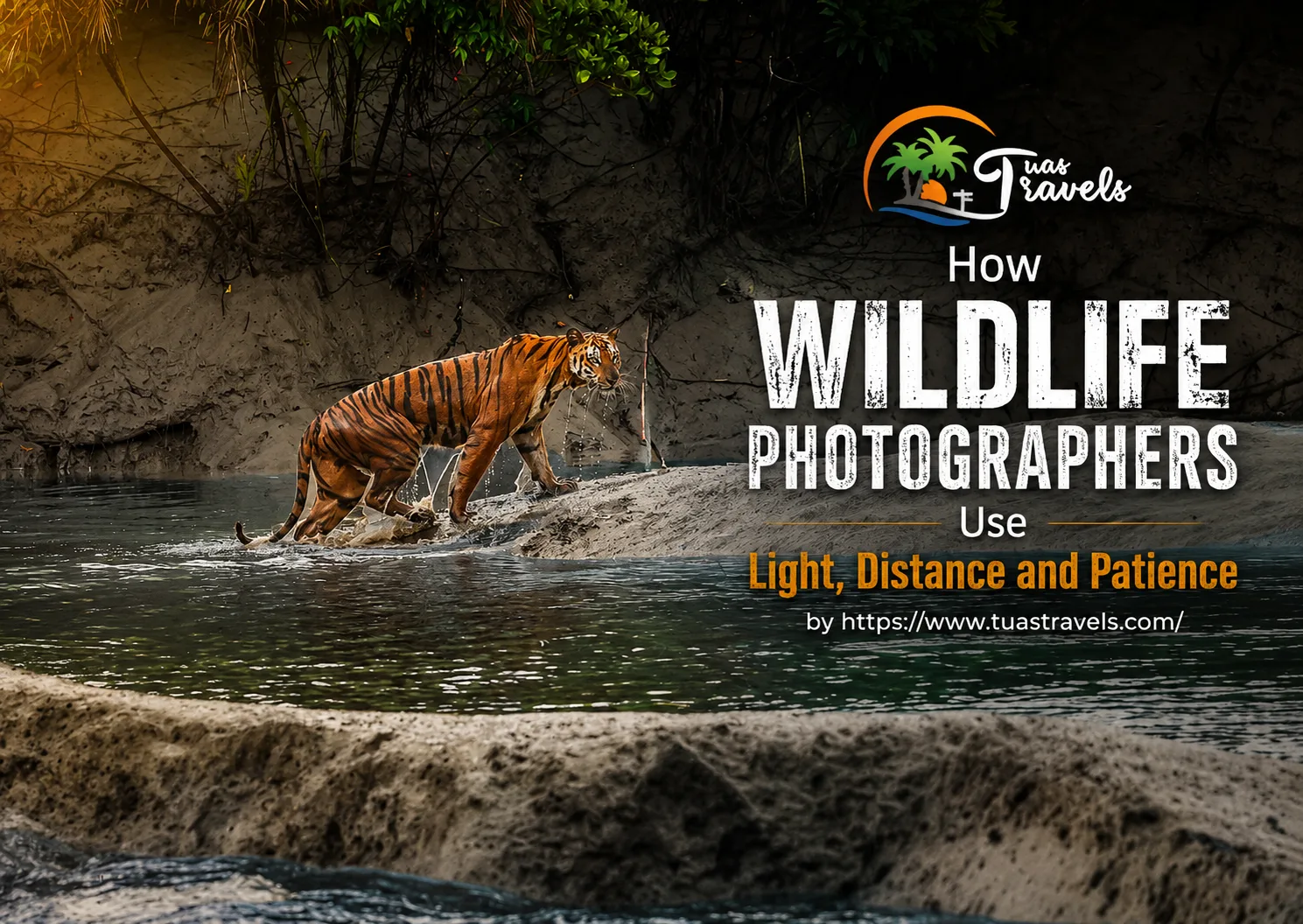
It's not just an expensive camera with a strong lens that makes for a good wildlife photographer. Three of the keys to great wildlife photography are light, distance and patience. These elements enable the photographer to capture animals in their natural behaviours, appealing compositions and great moments without disturbing them. This is particularly crucial when taking wildlife photos in difficult situations like Sundarban.
Using Light Effectively
The lighting conditions in a photo can make all the difference in the world when it comes to a wildlife shot. Early morning and late afternoon are ideal times as the sun is not as harsh and not so hot. This can help to produce gorgeous highlights, shadows, and natural colours.
It is important for wildlife photographers to know the direction of the light. Front lighting will definitely make animals stand out, and side lighting can create depth and texture to fur, feathers and surroundings. A lighting effect called backlighting can produce dramatic silhouettes or glowing edges on an animal.
Clouds, thick mangroves, and reflections off the water can also affect the light in the Sundarban for the photographers. Quick adjustments in ISO, shutter speed and aperture can help to capture moments instantly.
Maintaining the Right Distance
Distance is crucial to wildlife photography. Photographs should never be taken when stress or changes to natural behavior is caused to the animals. A telephoto or super-telephoto lens can ensure that the photographer can take close-up photos from a distance.
A 100–400mm or 150–600mm lens will work well for bird, deer, crocodile and tiger photography from a boat. Longer focal lengths may also help to separate an animal from a cluttered vegetation.
However, sometimes the plan is not to get closer. It's worth considering a broader shot that incorporates the animal's environment to make for a more impactful photo. An image showing a tiger with mangroves in the background can convey a message more effectively than a close-up of a tiger.
The Importance of Patience
Wildlife is not determined by a photographer's program. After waiting for several hours an animal can suddenly appear for a few seconds. So, are patience one of the best skills a wildlife photographer could have?
Photographers should be careful and observe instead of looking for the dramatic moments. Observe the animal's body posture and movements. A bird can suddenly fly, a deer can stand up or a tiger can leave from the bushes. Photographers can take steps to prepare for action if they're able to recognise these signs.
Patience also helps photographers to photograph behaviour instead of just a single portrait. More interesting and emotional photographs can be made by feeding, hunting, grooming, resting, playing and animal interactions.
The merging of Light, Distance and Patience
These three conjunctions can produce the best wildlife photos! A photographer can wait and wait for an animal to come into the beautiful morning light without overstepping bounds.
Final Thoughts
The key to successful Sundarban Wildlife Photography Tour is observation, preparation and respect of nature. Light evokes emotion, distance and helps with composition, and patience helps photographers observe true behavior of wildlife. Once these three factors are understood, wildlife photographers will be able to produce better photos and a more rewarding experience in the field while being a more responsible photographer.