Industrial environments demand high levels of air quality control. From pharmaceutical production lines and biotechnology labs to electronics manufacturing and food processing plants, airborne contamination can directly affect product quality, worker safety, and regulatory compliance. This is why H13 HEPA filters have become a critical component in modern industrial air filtration systems.
In this guide by Rayshen, we explore the importance of H13 HEPA filters and how they help industries maintain clean, safe, and efficient working environments.
What Is an H13 HEPA Filter?
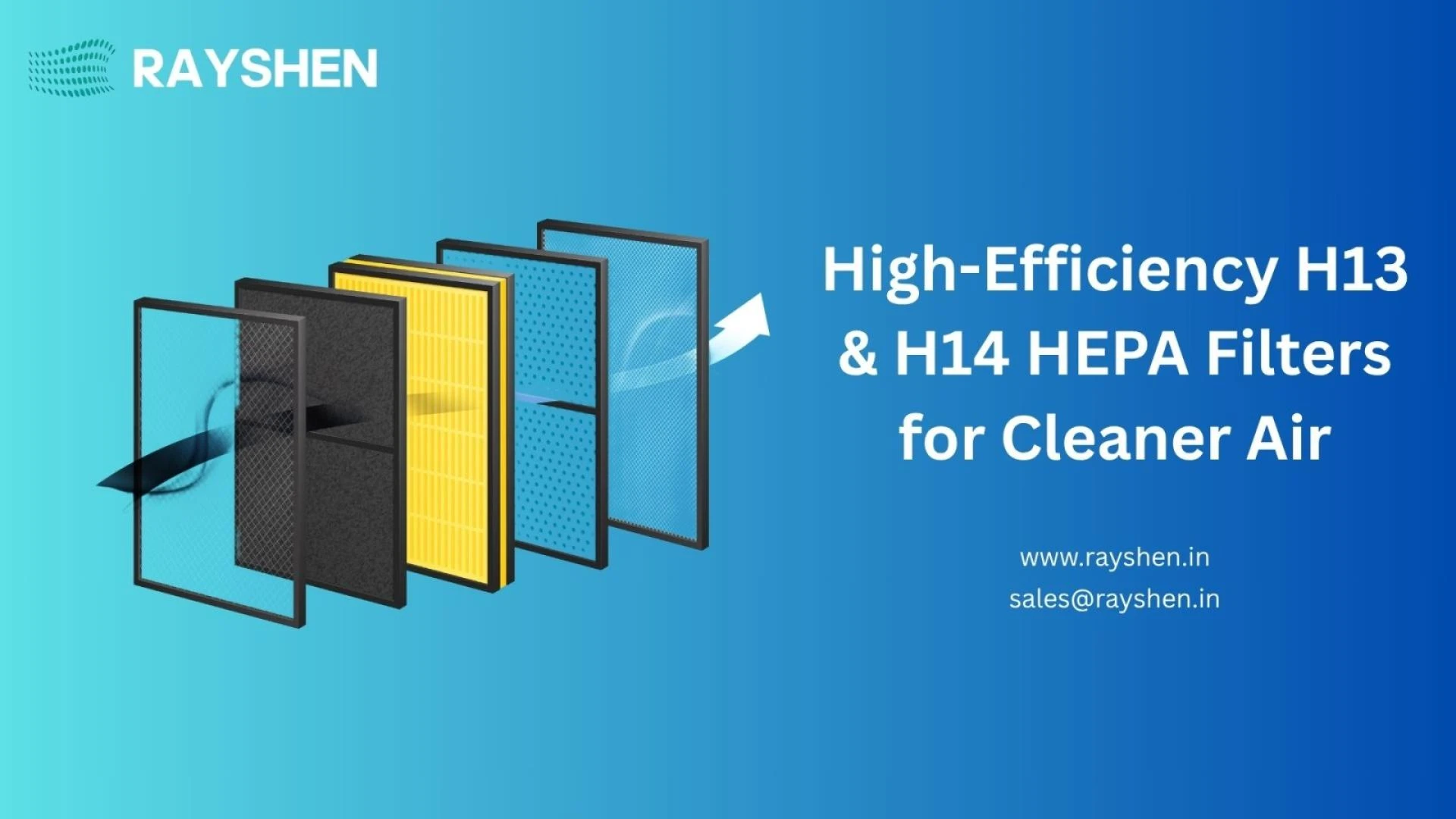
An H13 HEPA filter is a high-efficiency air filter classified under the EN 1822 standard. It is designed to remove 99.95% of airborne particles that are 0.3 microns in size.
These particles include dust, bacteria, mold spores, aerosols, and other microscopic contaminants that can compromise industrial processes. H13 filters offer a strong balance between filtration efficiency and airflow performance, making them ideal for a wide range of industrial applications.
Rayshen manufactures H13 filters to meet strict international quality and performance standards.
Why Industrial Environments Need H13 Filtration
Industrial facilities often generate or handle sensitive materials that must remain free from contamination. Without proper filtration, airborne particles can lead to:
- Product defects
- Equipment damage
- Health risks for workers
- Regulatory violations
H13 filtration helps create controlled air environments where contamination risks are minimized. This leads to more consistent production quality and safer working conditions.
Key Benefits of Using H13 Filters
1. High Filtration Efficiency
H13 filters remove nearly all harmful airborne particles. This ensures cleaner air for both workers and industrial processes.
2. Improved Product Quality
By reducing airborne contamination, H13 filters protect sensitive products such as medicines, microchips, and sterile equipment.
3. Enhanced Worker Safety
Cleaner air reduces exposure to allergens, fine dust, and harmful microorganisms, improving employee health and productivity.
4. Regulatory Compliance
H13 filtration supports compliance with ISO, GMP, FDA, and other industrial standards.
Rayshen H13 systems are designed to meet these requirements across multiple industries.
Common Industrial Applications of H13 Filters
H13 filters are widely used in:
Pharmaceutical Manufacturing
Maintaining sterile conditions during formulation, filling, and packaging is essential. H13 filters help prevent contamination of drugs and medical products.
Biotechnology and Laboratories
Research environments require controlled air to protect experiments and samples from external particles.
Electronics and Semiconductor
Even microscopic dust can damage electronic components. H13 filtration ensures clean assembly environments.
Food and Beverage Processing
H13 filters reduce airborne contamination that can affect hygiene and shelf life.
Automotive and Aerospace
Precision manufacturing relies on clean air to avoid defects in high-performance components.
Rayshen supplies H13 filters tailored to each of these industrial sectors.
H13 vs Standard Air Filters
Many industrial facilities still rely on basic filtration systems. However, standard filters cannot provide the same level of protection as H13.
Integration of H13 Filters in Industrial Systems
H13 filters can be integrated into various air handling systems, including:
- Fan Filter Units (FFUs)
- Air Handling Units (AHUs)
- Laminar airflow benches
- Cleanroom ceiling modules
Rayshen integrates H13 filtration into complete cleanroom and industrial air solutions, ensuring optimal airflow and contamination control.
Energy Efficiency and Performance
One of the key advantages of H13 filters is their ability to deliver high filtration efficiency without excessive energy consumption. Modern H13 designs offer:
- Low pressure drop
- Stable airflow
- Reduced fan load
- Lower operating costs
Rayshen focuses on engineering H13 filters that maintain performance while minimizing energy usage.
Maintenance and Lifespan of H13 Filters
Regular maintenance is essential to ensure consistent performance.
Typical indicators for H13 replacement include:
- Increased pressure drop
- Reduced airflow
- Failed integrity tests
- Visible contamination
In industrial environments, H13 filters usually last between 1 to 3 years, depending on usage and environmental conditions.
Rayshen provides technical support and maintenance guidelines to extend filter lifespan.
Why Choose Rayshen for H13 Solutions?
Choosing the right supplier is crucial for long-term reliability. Rayshen is a trusted brand in cleanroom and industrial air filtration solutions.
Key advantages of Rayshen H13 filters:
- EN 1822 certified performance
- High-quality filter media
- Strong aluminum or stainless frames
- Custom sizes and configurations
- Professional technical support
Rayshen ensures that every H13 filter meets both performance expectations and industry regulations.
Long-Term Value for Industrial Facilities
Although H13 filters require initial investment, they offer long-term benefits:
- Reduced product losses
- Improved worker health
- Fewer regulatory issues
- Increased operational stability
For industries focused on quality, safety, and compliance, H13 filtration is not an option—it is a necessity.
Conclusion
The importance of H13 HEPA filters in industrial environments cannot be overstated. Their ability to remove nearly all airborne contaminants makes them essential for maintaining clean, safe, and efficient operations.
From pharmaceuticals and electronics to food processing and research, H13 filtration protects both people and processes. With Rayshen H13 solutions, industries gain reliable air purity, regulatory compliance, and long-term performance in even the most demanding environments.