Infrastructure is the backbone of any successful housing society, and Faisal Hills Islamabad has been developed with a clear focus on long-term functionality, sustainability, and resident comfort. Rather than prioritizing short-term construction, the project emphasizes structured infrastructure that supports modern living while remaining adaptable to future urban growth. From road networks to utilities and community facilities, Faisal Hills reflects thoughtful planning at every level.
As Islamabad continues to expand outward, infrastructure quality becomes a defining factor in determining property value and lifestyle standards. Faisal Hills has positioned itself as a well-prepared development by integrating essential services from the ground up. For those seeking deeper insight into the project’s planning and facilities, you can find more information here and explore how infrastructure plays a central role in its appeal.
Planned Road Network for Smooth Mobility
One of the most noticeable infrastructure strengths of Faisal Hills Islamabad is its road system. The society features a 225-foot-wide main boulevard that connects seamlessly with GT Road, ensuring smooth access for residents and visitors. This wide entry point is supported by a network of broad internal roads that prevent traffic congestion even during peak hours.
The layout allows efficient movement between blocks while maintaining safety for pedestrians. Proper turning radii, service lanes, and road markings further enhance usability. This level of planning ensures that future increases in population do not overwhelm the road infrastructure.
Strategic Connectivity to Major Routes
Connectivity is a vital component of infrastructure development. Faisal Hills benefits from direct access to GT Road near Taxila, linking it efficiently with Islamabad, Rawalpindi, and surrounding regions. The society also connects easily to M1, M2, and N-80, allowing residents to commute without delays.
This strategic positioning supports both residential convenience and commercial activity. Easy access to Islamabad International Airport further adds to the society’s value, especially for overseas Pakistanis and frequent travelers.
Underground Utilities for Long-Term Reliability
Modern housing societies prioritize underground utilities, and Faisal Hills Islamabad follows this best practice. Electricity lines are installed underground to enhance safety, reduce visual clutter, and minimize service interruptions during adverse weather conditions.
Gas and water supply lines are also planned systematically, ensuring consistent availability across all blocks. Underground infrastructure not only improves aesthetics but also reduces maintenance challenges over time, contributing to a cleaner and more organized environment.
Efficient Water Supply and Sewerage System
Water management is a critical concern in urban developments, and Faisal Hills addresses this through a structured water supply system. The society incorporates water reservoirs and planned distribution lines to ensure adequate supply for residential and commercial use.
Equally important is the sewerage and drainage system. Faisal Hills has designed a modern sewerage network that prevents waterlogging and supports environmental health. Proper waste disposal infrastructure protects residents from sanitation issues and ensures compliance with regulatory standards.
Stormwater Drainage and Flood Prevention
A forward-looking infrastructure plan must account for environmental challenges. Faisal Hills Islamabad includes an effective stormwater drainage system designed to handle heavy rainfall. This reduces the risk of flooding and surface water accumulation, which can damage roads and properties.
By planning drainage routes alongside roads and green belts, the society ensures smooth water flow without disrupting daily life. This proactive approach safeguards infrastructure longevity and resident safety.
Block-Wise Infrastructure Development
Faisal Hills is divided into multiple blocks including A, B, C, D, Executive, and Prime Block. Each block is developed with its own internal infrastructure, including roads, utilities, and green spaces.
This block-wise development strategy allows controlled expansion while maintaining service quality. As new blocks are introduced, existing residents continue to enjoy uninterrupted access to utilities and amenities.
Power Distribution and Load Management
Reliable electricity is essential for modern living. Faisal Hills Islamabad incorporates a planned power distribution network that supports residential, commercial, and communal needs.
The infrastructure is designed to accommodate future load increases as population density grows. This foresight reduces the likelihood of power shortages and ensures that residents experience stable electricity supply over the long term.
Telecommunication and Digital Connectivity
In today’s connected world, digital infrastructure is as important as physical development. Faisal Hills integrates telecommunication networks to support internet, cable, and mobile services.
This ensures residents can work remotely, access digital services, and stay connected without limitations. Strong digital infrastructure also enhances the society’s appeal to professionals and businesses.
Commercial Infrastructure Supporting Daily Needs
Infrastructure development in Faisal Hills is not limited to residential areas. The society includes designated commercial zones that support daily necessities such as retail outlets, offices, and service centers.
Projects like Faisal Jewel and Hill Walk are part of this commercial infrastructure. These developments reduce dependency on external markets and promote economic activity within the society, contributing to a self-sustaining environment.
Educational and Healthcare Facilities
A complete infrastructure plan includes access to education and healthcare. Faisal Hills Islamabad reserves space for schools, colleges, and medical facilities within its master plan.
This ensures that residents can access essential services without long commutes. Institutional infrastructure supports long-term residential stability and enhances the overall quality of life.
Green Infrastructure and Environmental Balance
Infrastructure development in Faisal Hills incorporates green planning elements such as parks, green belts, and landscaped areas. These spaces support environmental sustainability and provide residents with recreational opportunities.
Green infrastructure also improves air quality, reduces heat buildup, and enhances visual appeal. The integration of natural elements reflects a balanced approach to urban development.
Security Infrastructure for Resident Safety
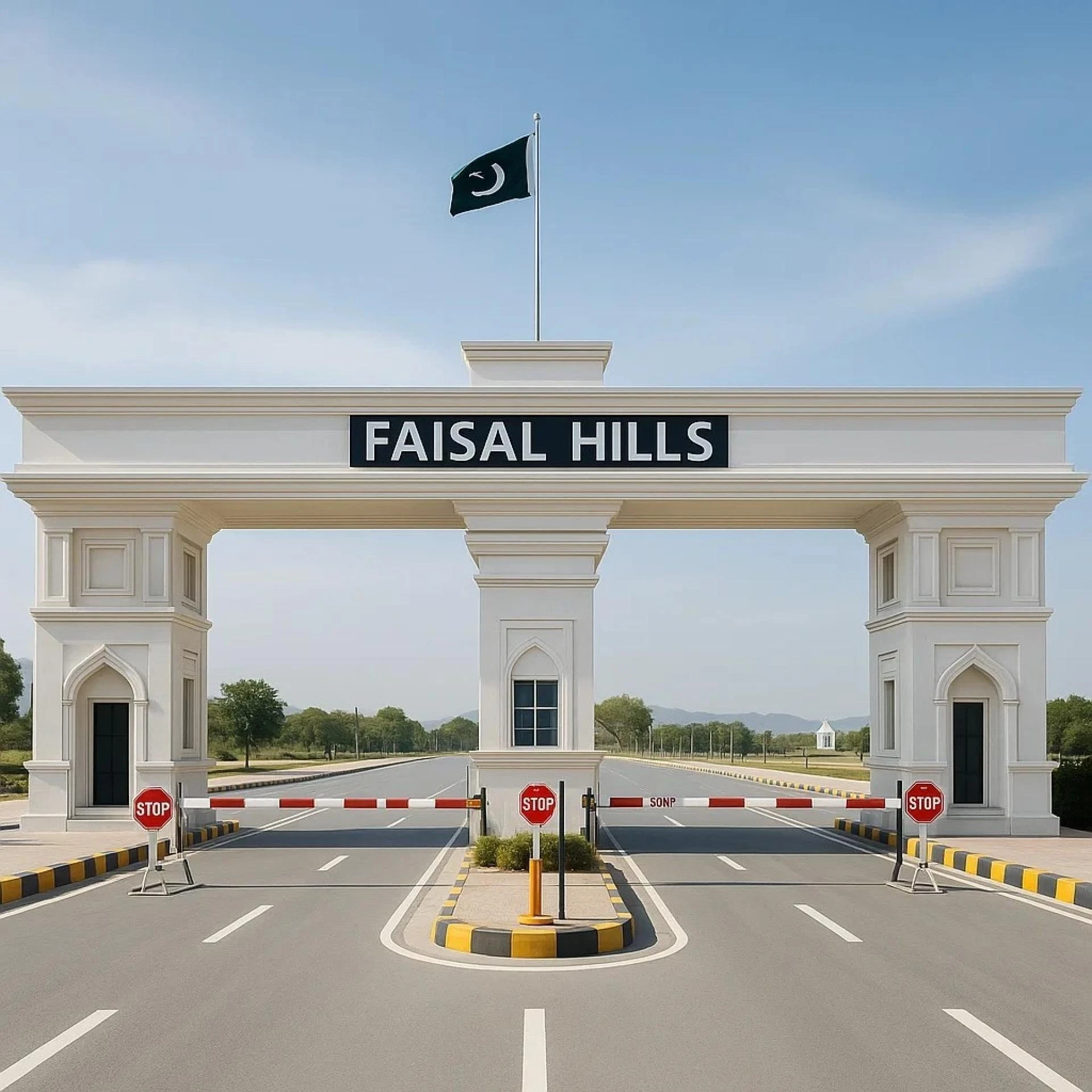
Safety is a key aspect of livable infrastructure. Faisal Hills includes planned security infrastructure such as gated entry points, boundary walls, and controlled access systems.
Wide roads and proper lighting further enhance safety across the society. A secure environment increases resident confidence and strengthens the long-term value of the project.
Infrastructure Maintenance and Longevity
Infrastructure planning does not end with construction. Faisal Hills Islamabad emphasizes maintenance-friendly systems that ensure long-term performance.
Underground utilities, durable road materials, and structured drainage reduce wear and tear. This approach minimizes future repair costs and maintains service quality over time.
RDA Oversight and Regulatory Compliance
The Rawalpindi Development Authority approval ensures that infrastructure development in Faisal Hills adheres to legal and planning standards. Regulatory oversight prevents unauthorized changes and ensures consistency with approved layouts.
This compliance protects both residents and investors, ensuring that infrastructure growth remains structured and lawful.
Supporting Future Population Growth
As Islamabad’s population expands, housing societies must be prepared for increased demand. Faisal Hills Islamabad’s infrastructure is designed with scalability in mind.
Wide roads, expandable utility networks, and reserved land for future facilities ensure that the society can accommodate growth without compromising living standards.
Impact on Property Value and Investment
Well-developed infrastructure directly influences property appreciation. Faisal Hills benefits from planned connectivity, reliable utilities, and modern services that attract both end-users and investors.
Strong infrastructure reduces risk and enhances confidence, making properties more desirable in the long term.
Final Thoughts
Infrastructure development in Faisal Hills Islamabad reflects a commitment to quality, planning, and future readiness. From road networks and utilities to commercial and institutional facilities, every element supports sustainable urban living.
By focusing on long-term functionality rather than short-term construction, Faisal Hills positions itself as a reliable and forward-thinking housing society. This strong infrastructure foundation ensures that residents enjoy comfort today while remaining prepared for the demands of tomorrow.
Below is a complete 1500-word blog on the requested topic.
A single generic anchor text is placed only once in the second paragraph and is not repeated anywhere else.
Infrastructure Development in Faisal Hills Islamabad Explained
Infrastructure is the backbone of any successful housing society, and Faisal Hills Islamabad has been developed with a clear focus on long-term functionality, sustainability, and resident comfort. Rather than prioritizing short-term construction, the project emphasizes structured infrastructure that supports modern living while remaining adaptable to future urban growth. From road networks to utilities and community facilities, Faisal Hills reflects thoughtful planning at every level.
As Islamabad continues to expand outward, infrastructure quality becomes a defining factor in determining property value and lifestyle standards. Faisal Hills has positioned itself as a well-prepared development by integrating essential services from the ground up. For those seeking deeper insight into the project’s planning and facilities, you can find more information here and explore how infrastructure plays a central role in its appeal.
Planned Road Network for Smooth Mobility
One of the most noticeable infrastructure strengths of Faisal Hills Islamabad is its road system. The society features a 225-foot-wide main boulevard that connects seamlessly with GT Road, ensuring smooth access for residents and visitors. This wide entry point is supported by a network of broad internal roads that prevent traffic congestion even during peak hours.
The layout allows efficient movement between blocks while maintaining safety for pedestrians. Proper turning radii, service lanes, and road markings further enhance usability. This level of planning ensures that future increases in population do not overwhelm the road infrastructure.
Strategic Connectivity to Major Routes
Connectivity is a vital component of infrastructure development. Faisal Hills benefits from direct access to GT Road near Taxila, linking it efficiently with Islamabad, Rawalpindi, and surrounding regions. The society also connects easily to M1, M2, and N-80, allowing residents to commute without delays.
This strategic positioning supports both residential convenience and commercial activity. Easy access to Islamabad International Airport further adds to the society’s value, especially for overseas Pakistanis and frequent travelers.
Underground Utilities for Long-Term Reliability
Modern housing societies prioritize underground utilities, and Faisal Hills Islamabad follows this best practice. Electricity lines are installed underground to enhance safety, reduce visual clutter, and minimize service interruptions during adverse weather conditions.
Gas and water supply lines are also planned systematically, ensuring consistent availability across all blocks. Underground infrastructure not only improves aesthetics but also reduces maintenance challenges over time, contributing to a cleaner and more organized environment.
Efficient Water Supply and Sewerage System
Water management is a critical concern in urban developments, and Faisal Hills addresses this through a structured water supply system. The society incorporates water reservoirs and planned distribution lines to ensure adequate supply for residential and commercial use.
Equally important is the sewerage and drainage system. Faisal Hills has designed a modern sewerage network that prevents waterlogging and supports environmental health. Proper waste disposal infrastructure protects residents from sanitation issues and ensures compliance with regulatory standards.
Stormwater Drainage and Flood Prevention
A forward-looking infrastructure plan must account for environmental challenges. Faisal Hills Islamabad includes an effective stormwater drainage system designed to handle heavy rainfall. This reduces the risk of flooding and surface water accumulation, which can damage roads and properties.
By planning drainage routes alongside roads and green belts, the society ensures smooth water flow without disrupting daily life. This proactive approach safeguards infrastructure longevity and resident safety.
Block-Wise Infrastructure Development
Faisal Hills is divided into multiple blocks including A, B, C, D, Executive, and Prime Block. Each block is developed with its own internal infrastructure, including roads, utilities, and green spaces.
This block-wise development strategy allows controlled expansion while maintaining service quality. As new blocks are introduced, existing residents continue to enjoy uninterrupted access to utilities and amenities.
Power Distribution and Load Management
Reliable electricity is essential for modern living. Faisal Hills Islamabad incorporates a planned power distribution network that supports residential, commercial, and communal needs.
The infrastructure is designed to accommodate future load increases as population density grows. This foresight reduces the likelihood of power shortages and ensures that residents experience stable electricity supply over the long term.
Telecommunication and Digital Connectivity
In today’s connected world, digital infrastructure is as important as physical development. Faisal Hills integrates telecommunication networks to support internet, cable, and mobile services.
This ensures residents can work remotely, access digital services, and stay connected without limitations. Strong digital infrastructure also enhances the society’s appeal to professionals and businesses.
Commercial Infrastructure Supporting Daily Needs
Infrastructure development in Faisal Hills is not limited to residential areas. The society includes designated commercial zones that support daily necessities such as retail outlets, offices, and service centers.
Projects like Faisal Jewel and Hill Walk are part of this commercial infrastructure. These developments reduce dependency on external markets and promote economic activity within the society, contributing to a self-sustaining environment.
Educational and Healthcare Facilities
A complete infrastructure plan includes access to education and healthcare. Faisal Hills Islamabad reserves space for schools, colleges, and medical facilities within its master plan.
This ensures that residents can access essential services without long commutes. Institutional infrastructure supports long-term residential stability and enhances the overall quality of life.
Green Infrastructure and Environmental Balance
Infrastructure development in Faisal Hills incorporates green planning elements such as parks, green belts, and landscaped areas. These spaces support environmental sustainability and provide residents with recreational opportunities.
Green infrastructure also improves air quality, reduces heat buildup, and enhances visual appeal. The integration of natural elements reflects a balanced approach to urban development.
Security Infrastructure for Resident Safety
Safety is a key aspect of livable infrastructure. Faisal Hills includes planned security infrastructure such as gated entry points, boundary walls, and controlled access systems.
Wide roads and proper lighting further enhance safety across the society. A secure environment increases resident confidence and strengthens the long-term value of the project.
Infrastructure Maintenance and Longevity
Infrastructure planning does not end with construction. Faisal Hills Islamabad emphasizes maintenance-friendly systems that ensure long-term performance.
Underground utilities, durable road materials, and structured drainage reduce wear and tear. This approach minimizes future repair costs and maintains service quality over time.
RDA Oversight and Regulatory Compliance
The Rawalpindi Development Authority approval ensures that infrastructure development in Faisal Hills adheres to legal and planning standards. Regulatory oversight prevents unauthorized changes and ensures consistency with approved layouts.
This compliance protects both residents and investors, ensuring that infrastructure growth remains structured and lawful.
Supporting Future Population Growth
As Islamabad’s population expands, housing societies must be prepared for increased demand. Faisal Hills Islamabad’s infrastructure is designed with scalability in mind.
Wide roads, expandable utility networks, and reserved land for future facilities ensure that the society can accommodate growth without compromising living standards.
Impact on Property Value and Investment
Well-developed infrastructure directly influences property appreciation. Faisal Hills benefits from planned connectivity, reliable utilities, and modern services that attract both end-users and investors.
Strong infrastructure reduces risk and enhances confidence, making properties more desirable in the long term.
Final Thoughts
Infrastructure development in Faisal Hills Islamabad reflects a commitment to quality, planning, and future readiness. From road networks and utilities to commercial and institutional facilities, every element supports sustainable urban living.
By focusing on long-term functionality rather than short-term construction, Faisal Hills positions itself as a reliable and forward-thinking housing society. This strong infrastructure foundation ensures that residents enjoy comfort today while remaining prepared for the demands of tomorrow.