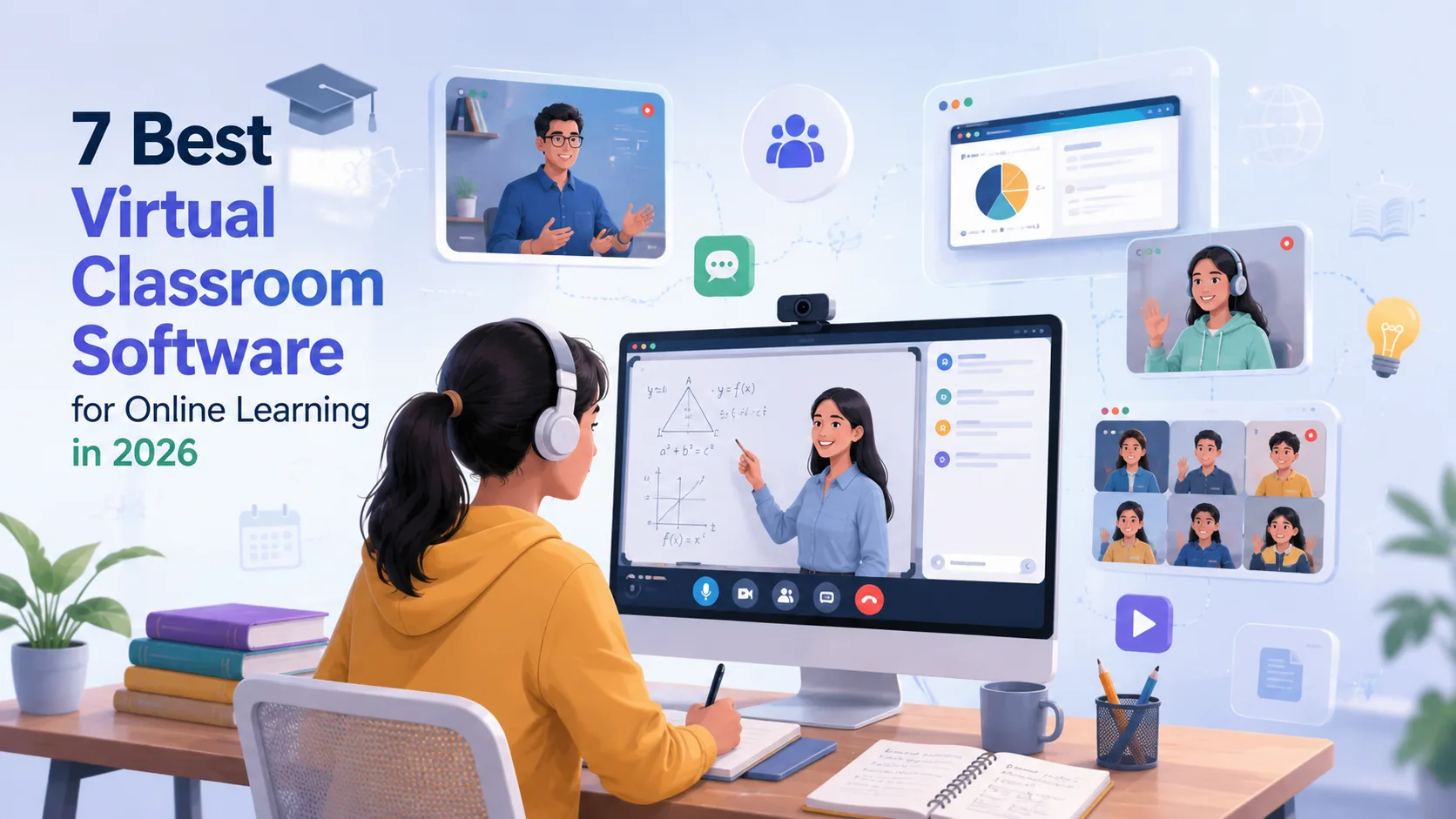

Even though digital learning is gaining momentum fast, face-to-face instructor-led training is still one of the most effective methods to skill up the workforce. Instructor led training is not only fun, but it also combines on-spot interaction (between the learners and the trainer), expert mentorship (provided by the trainer), and collaborative learning (between the peers and the trainer) in one go. These features together help the employees to learn much faster and confidently implement what they have learned. The companies keep investing in this type of training due to its impact on the learning, performance, and retention of the learners.
According to one industry report, billions of dollars are spent by companies every year on training their employees, the largest fraction being attributed to instructor-led training as the main learning mode. Besides that, a study conducted by ATD reveals that when it comes to knowledge transfer and learner engagement, interactive learning far outshines passive methods.
What Is Instructor-Led Training?
A structured face-to-face approach of delivering knowledge where the trainer presents the content and interacts with the learners is what we call an ILT session. ILT could be delivered in a classroom setting or via virtual instructor-led training (VILT) tool or platform depending on the preference of the learners and the availability of such tools.
As a contrast, self-paced eLearning is not the same; it leaves learners with fewer interactions, less opportunity for them to ask the facilitator questions, participate in group discussions.
Key Benefits of Instructor-Led Training
1. Higher Learner Engagement
Lively discussions, peer group activities, and role-play keep the participants engaged and actively participate the entire class duration.
2. Immediate Feedback
Any queries about complicated ideas are solved immediately and this makes the learners more confident in skill development.
3. Personalized Learning Experience
Skilled facilitators can modify the way of teaching examples, pace, level of difficulty according to the needs of the learners and the type of business problems.
4. Stronger Collaboration
These sessions are great for collaborative learning since the instructors can set up workshops, breakout rooms, and cooperative challenges.
Common Challenges
Instructor-led learning has its own set of drawbacks although it's a big boon for learning development.
- Cost of training is relatively higher;
- Harnessing cross-functional teams in a timely manner is an uphill task;
- The method cannot easily be scaled up since it's mainly person dependent;
- Sometimes, employees lose their productivity during their workday.
I’ve supported enterprise training in many different areas. My experience says that most of these problems are overcome by designing a blend of ILT and digital learning. Such strategy can help to retain the social aspects of ILT at the same time.
Best Practices for Effective Instructor-Led Training
Companies can gain maximum out of their training by following these steps:
- Clearly state the goals of the learning.
- Present the training by illustrating with real business scenes or examples.
- The facilitator should engage learners through a lot of dialogues and real-life simulation.
- A continuous flow of assessments during the session will also be a good move.
- Collect opinions of learners and implement changes if required in the course of training the new workforce.
- Lay down a learning follow-up plan with the resources and coaching support after the end of the session.
Such measures are not going to increase the level of knowledge retention alone though. They’re also useful for the workplace performance improvement by the right application of new skills.
Future of Instructor-Led Training
Instructor-led learning is being reimagined instead of being discarded. For instance, instructor-led learning in a remote setup is being supported by virtual classrooms that connect the learners and the instructor. Besides, digital tools supporting collaborative learning and providing real-time data such as learning analytics are reshaping the landscape of learning. Hybrid learning modes are now the norm in modern enterprises, where they use combinations such as classroom teaching, virtual assistance, micro-learning modules, and performance supports.
Companies such as Infopro Learning combine instructor-guided sessions with digital training tools to develop learning paths that align with their business goals while improving the skills of their employees on the job.
Conclusion
Instructor-led training has been a go-to strategy of most of the employers to bring about changes to the working environment through the learning experience. This method, however, not only allows workers to benefit from a close human interaction with an expert trainer but also gives way for collaborative problem solving which self-paced learning cannot provide. ILT, along with the digital learning tools, brings about the learning that balances various factors: skill development of employees, knowledge retention rates of the company workforce, and the long-term success of a business.