
Market Overview
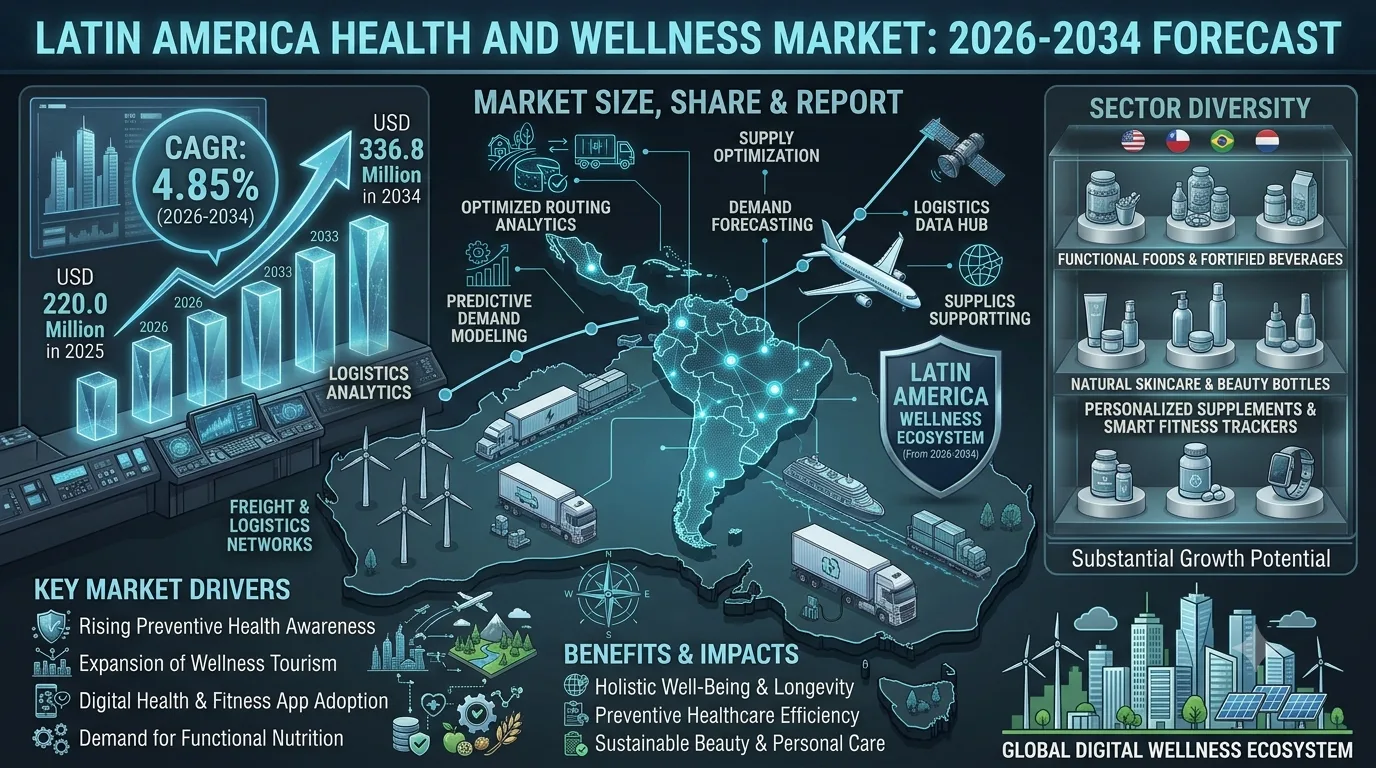
The Latin America health and wellness market grew from USD 220.0 Million in 2025 to USD 230.7 Million in 2026. Looking forward, IMARC Group expects the market to reach USD 336.8 Million by 2034, exhibiting a compound annual growth rate (CAGR) of 4.85% during 2026-2034. A stronger focus on preventive healthcare, rising disposable incomes, growing awareness of holistic health, a shift toward functional foods and beverages, and the expansion of wellness tourism are shaping the Latin America health and wellness market share and outlook through 2034. Consumers across the region increasingly view health as a daily habit that connects nutrition, exercise, sleep, and mental wellbeing.
Market Summary
- Preventive health is gaining priority. The market’s growth is driven by an increased focus on preventative healthcare, rising disposable income, and growing awareness of the importance of holistic health.
- Consumers are taking a proactive stance. Consumers in Brazil and Mexico are more likely than global peers to describe themselves as proactive in improving their health and wellness.
- Weight management and stress are leading concerns. Weight management is a concern for half of Latin American consumers, and stress is the main concern for 60%.
- Functional products are expanding beyond sports. Sports and functional drinks account for over 50% of sports nutrition launches in Argentina, Brazil, Chile, Colombia, Mexico, and Peru.
- Wellness experiences are a growing trend, with wellness tourism and government initiatives that create supportive ecosystems contributing to the evolution of the market.
- The market is segmented by product type (functional foods and beverages, beauty and personal care products, preventive and personalized medicinal products, others), functionality (nutrition and weight management, heart and gut health, immunity, bone health, skin health, others), and country, with forecasts for 2026-2034.
Market Growth Drivers
Preventive Healthcare and Rising Health Awareness
Consumers in Latin America are moving from treating illness to preventing it, supported by greater access to health information, digital channels, and wellness communities. Concerns about weight, sleep, and gut health are leading physical health priorities, and 27% of Latin American consumers are turning to supplements to help them age well. Rising rates of lifestyle-related conditions are encouraging more people to adopt healthier diets, exercise routines, and preventive products. Public awareness programs and labelling rules also reinforce the shift. Governments in countries such as Chile and Mexico have implemented strict labelling laws and sugar taxes, which educate consumers about processed foods and encourage healthier alternatives.
Rising Incomes and Demand for Functional Foods, Beverages, and Personal Care
As disposable incomes rise, particularly among urban middle-class households, consumers are more willing to spend on products that offer clear health benefits. Consumers in Brazil and Mexico show a very positive view of high-fibre foods (62% versus 49% globally), superfoods (54% versus 38%), and high-protein plant-based foods (53% versus 35%). At the same time, 46% of consumers across Brazil and Mexico hold a negative perception of ultra-processed foods, opening room for natural, functional, and clean-label products. Demand extends to beauty and personal care items with skin health and wellbeing claims, supporting broad category growth.
Wellness Tourism, Digital Wellness, and Government Initiatives
Wellness tourism is growing as countries invest in infrastructure and develop spa, retreat, and nature-based offerings. In Mexico alone, IMARC estimates that the health and wellness tourism market reached USD 9.5 Billion in 2025 and is expected to reach USD 18.3 Billion by 2034. Digital wellness is also gaining ground, particularly among younger consumers. In Brazil, growing concern over immunity and long-term wellness has fuelled expansion of the healthy food market, with consumers seeking natural, functional, and locally sourced foods. Government programs, public-private initiatives, and retailer partnerships strengthen the ecosystem and extend reach to more consumers.
Request a Sample Report for In-Depth Market Insights: https://www.imarcgroup.com/latin-america-health-wellness-market/requestsample
Porter’s Five Forces Analysis
Competitive Rivalry: High
- Global food and beverage companies, supplement brands, personal care groups, and local producers compete across price tiers and product categories.
- Innovation in flavours, functional ingredients, and formats is intense, particularly in functional drinks and sports nutrition.
- Brand trust, natural positioning, and distribution reach are key points of differentiation.
Supplier Power: Moderate
- Suppliers of functional ingredients, botanicals, probiotics, proteins, and packaging influence costs and availability.
- Dependence on imported specialty ingredients exposes producers to currency and supply chain risks.
- Local sourcing of fruits, grains, and botanicals can reduce dependence on global suppliers.
Buyer Power: High
- Large supermarket chains, pharmacy groups, and e-commerce platforms negotiate strongly on price, shelf space, and promotions.
- Consumers can switch easily between brands and between conventional and functional versions of everyday products.
- High prices and limited accessibility in rural and lower-income areas hamper penetration of premium products, making price sensitivity an important factor. marketdataforecast
Threat of Substitutes: Moderate to High
- Conventional foods, traditional home remedies, and fresh produce can substitute for packaged functional products.
- Pharmaceutical treatments, including weight loss medications, may shift some spending away from supplements and diet products.
- Consumers’ preference for getting nutrition from everyday foods rather than supplements supports functional foods over pills.
Threat of New Entrants: Moderate
- E-commerce, social media marketing, and contract manufacturing lower entry barriers for new brands.
- Regulatory approvals, labelling requirements, and retail access require investment and local knowledge.
- Established companies hold advantages in distribution, scale, and brand awareness.
Market Segmentation
Product Type Insights
- Functional Foods and Beverages
- Beauty and Personal Care Products
- Preventive and Personalized Medicinal Products
- Others
Functionality Insights
- Nutrition and Weight Management
- Heart and Gut Health
- Immunity
- Bone Health
- Skin Health
- Others
Country Insights
- Brazil
- Mexico
- Argentina
- Colombia
- Chile
- Others
Regional Analysis
Brazil: Brazil is the region’s largest wellness market, with a strong consumer base, a growing healthy food sector, and active digital wellness communities. The Global Wellness Institute reported in 2024 that Brazil’s wellness economy reached USD 96 Billion, ranking first in Latin America and the Caribbean. Industry research also notes that Brazil leads regional growth in vitamins, minerals, and supplements, with emerging niches fuelling probiotic expansion.
Mexico: Mexico combines a large consumer market with strong wellness tourism potential and active health policy, including sugar taxes and front-of-pack labelling. Consumers are health-aware and interested in functional and natural products, although some categories such as probiotics have seen weaker growth, with one industry review noting that Mexico failed to grow in probiotics.
Argentina: Argentina offers a sizeable, health-aware consumer base, with strong demand for sports and functional drinks. Economic volatility and import conditions influence pricing and product availability, favouring locally produced and value-oriented offerings.
Colombia: Colombia is a growing market for functional foods, sports nutrition, and beauty products, supported by a young population and rising interest in natural ingredients. Local fruit flavours, such as passionfruit, offer opportunities for product differentiation.
Chile: Chile has among the strictest food labelling regimes in the region, which has raised consumer awareness and encouraged reformulation toward healthier products. A relatively high-income population supports premium and functional product adoption.
Others: Other countries, including Peru, Uruguay, Ecuador, and Central American markets, offer growing opportunities as incomes rise and health awareness spreads. Product availability and affordability remain key factors, with modern retail and online channels expanding access.
Competitive Landscape
The Latin America health and wellness market features multinational food, beverage, and consumer health companies alongside strong regional brands and fast-growing local start-ups. Competition is being shaped by innovation in functional ingredients, natural and clean-label positioning, price accessibility, retail and e-commerce reach, and acquisitions. Companies are tailoring products to local tastes and health needs, including weight management, gut health, sleep, and stress support. The report covers market structure, key player positioning, top winning strategies, competitive dashboard, and company evaluation quadrant, along with detailed profiles of all major companies.
Key players include:
- Nestlé
- Danone
- Natura &Co
- Haleon
- Herbalife Nutrition
- Grupo Bimbo
- Amway
- Unilever
Recent Industry Developments
February 2026: Industry analysis of the Latin American consumer healthcare sector noted that marketers kicked off 2026 with a wave of M&A, while Haleon broadened the reach of Centrum through further regional rollouts. The activity shows continued consolidation and portfolio expansion as companies position for growth in vitamins, supplements, and wellness products.
January 2026: A trends report on health and wellness in Latin America found that one-third of consumers are increasing their exercise habits and using functional foods and drinks, and that future trends will emphasise sustainable habits over quick fixes. The findings point to long-term demand for everyday functional products rather than short-term diets.
2026: Analysis of sports nutrition trends in the region showed that consumers in Brazil and Mexico seek benefits beyond performance, within a wider wellness frame. The shift supports growth of products that combine energy, hydration, protein, and general wellbeing, moving sports nutrition from the gym into everyday life.
2024: The Global Wellness Institute reported that Brazil’s wellness economy reached USD 96 Billion, ranking 12th globally. The data highlighted the scale of wellness spending in the region’s largest economy and the opportunity for health and wellness product makers.
Key Aspects Required for the Latin America Health and Wellness Market
- Market Performance: The market grew from USD 220.0 Million in 2025 to USD 230.7 Million in 2026 and is expected to reach USD 336.8 Million by 2034, driven by preventive health focus, rising incomes, and wellness awareness.
- Market Outlook: A 4.85% CAGR during 2026-2034 reflects steady expansion supported by demographic trends, health awareness, and wellness initiatives.
- Growth Drivers: Preventive healthcare and rising health awareness; rising incomes and demand for functional foods, beverages, and personal care; and wellness tourism, digital wellness, and government initiatives.
- Competitive Landscape: Nestlé, Danone, Natura &Co, Haleon, Herbalife Nutrition, Grupo Bimbo, Amway, and Unilever compete on innovation, brand trust, and distribution reach.
- Value Chain Analysis: The value chain runs from ingredient sourcing and formulation through manufacturing and packaging, to distribution via supermarkets, pharmacies, specialty stores, direct selling, and e-commerce, serving consumers across Latin American countries.
- Industry Trends: Growth of functional drinks; focus on weight, gut health, sleep, and stress; preference for natural and less processed foods; wider use of digital wellness tools; and rising interest in weight management solutions.
- Strategic Recommendations: Develop affordable functional products for mass markets; tailor flavours and benefits to local preferences; invest in digital and e-commerce channels; build trust through natural positioning and transparent labelling; and pursue partnerships or acquisitions to expand reach.
Note: If you need any specific information that is not covered currently within the scope of the report, we will provide the same as a part of customization.
Speak to an analyst: https://www.imarcgroup.com/request?type=report
Frequently Asked Questions
1. What is the size of the Latin America health and wellness market?
The market grew from USD 220.0 Million in 2025 to USD 230.7 Million in 2026 and is expected to reach USD 336.8 Million by 2034.
2. What is the expected growth rate of the Latin America health and wellness market?
The market is projected to grow at a CAGR of 4.85% during 2026-2034.
3. What is driving the growth of the Latin America health and wellness market?
Growth is driven by preventive healthcare and rising health awareness, rising incomes and demand for functional foods, beverages, and personal care products, and wellness tourism, digital wellness, and government initiatives.
About Us
IMARC Group is a global management consulting firm that helps the world’s most ambitious changemakers to create a lasting impact. The company provides a comprehensive suite of market entry and expansion services. IMARC offerings include thorough market assessment, feasibility studies, company incorporation assistance, factory setup support, regulatory approvals and licensing navigation, branding, marketing and sales strategies, competitive landscape and benchmarking analyses, pricing and cost research, and procurement research.
Contact Us
IMARC Group
134 N 4th St., Brooklyn, NY 11249, USA
Email: sales@imarcgroup.com
Tel No: (D) +91 120 433 0800
United States: +1-631-791-1145