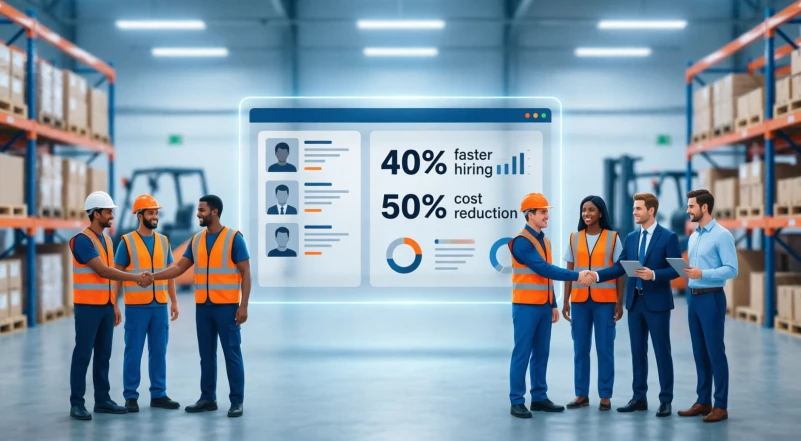
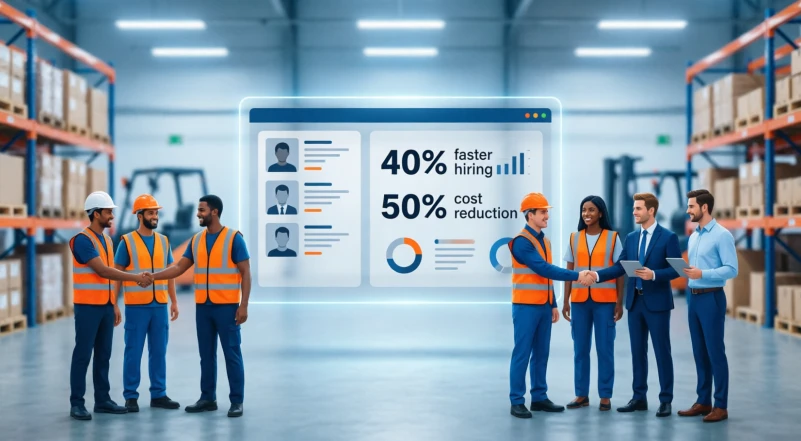
The logistics and warehousing sector faces unprecedented workforce challenges in 2026. With e-commerce growth accelerating and labor shortages persisting, Logistics Recruitment Process Outsourcing (RPO) has emerged as the strategic solution for scalable talent acquisition. Companies partnering with specialized RPO providers are seeing 40% faster time-to-fill rates and 50% reductions in hiring costs while building resilient workforce pipelines.
1. AI-Powered Candidate Matching and Predictive Analytics
Artificial intelligence has revolutionized how logistics companies identify and engage warehouse talent. Modern RPO providers leverage machine learning algorithms to analyze candidate profiles, predict job fit, and forecast seasonal hiring needs. According to recent industry data, AI-driven recruitment tools reduce screening time by up to 75% while improving quality-of-hire metrics.
Predictive analytics now enable workforce planning that anticipates peak season demands, distribution center expansions, and turnover patterns before they impact operations. This proactive approach ensures warehouses maintain optimal staffing levels without costly overtime or understaffing penalties.
2. Skills-Based Hiring Over Traditional Credentials
The warehouse industry has shifted away from rigid credential requirements toward competency-based assessments. RPO providers now evaluate candidates on practical skills like forklift operation, inventory management systems proficiency, and safety protocol knowledge rather than just years of experience.
This approach expands the talent pool significantly, addressing the chronic labor shortage affecting fulfillment centers nationwide. Skills-based hiring also improves retention rates, as employees are matched to roles where they can immediately contribute and grow.
3. Enhanced Candidate Experience Through Mobile-First Recruitment
Today's warehouse workers expect the same seamless digital experience they encounter in other aspects of life. Leading RPO services have implemented mobile-optimized application processes, text-based communication, and self-scheduling interview platforms.
Candidates can now complete applications, upload documents, and receive job offers entirely from their smartphones. This convenience proves critical when competing for talent in tight labor markets, particularly among younger demographics who dominate the warehouse workforce.
4. Diversity, Equity, and Inclusion as Strategic Imperatives
Logistics companies recognize that diverse teams drive better operational outcomes. RPO providers in 2026 embed DEI principles throughout the recruitment lifecycle, from removing biased language in job descriptions to implementing structured interview processes that reduce unconscious bias.
Organizations prioritizing inclusive hiring practices report 35% higher team performance and access to broader talent pools. This trend particularly benefits warehouses seeking to reflect the communities they serve while meeting corporate social responsibility goals.
5. Integrated Technology Stacks and ATS Compatibility
Seamless technology integration separates exceptional RPO partners from basic staffing agencies. Modern providers offer native integrations with major Applicant Tracking Systems (ATS), Human Resource Information Systems (HRIS), and Warehouse Management Systems (WMS).
This connectivity enables real-time data sharing, automated compliance reporting, and unified analytics dashboards. Hiring managers gain visibility into recruitment metrics without manual data entry, while candidates experience faster communication and decision-making cycles.
6. Flexible Workforce Models and Gig Economy Integration
The traditional 9-to-5 warehouse shift no longer meets all operational needs. RPO providers now offer hybrid staffing solutions combining permanent placements, temporary-to-hire arrangements, and on-demand gig workers for peak periods.
This flexibility allows distribution centers to scale labor costs directly with volume fluctuations, maintaining competitiveness in margin-sensitive logistics markets. Workers benefit from varied schedule options that accommodate modern lifestyle demands.
7. Compliance Automation and Risk Mitigation
Employment regulations continue evolving at federal, state, and local levels. Specialized logistics RPO providers maintain dedicated compliance teams who monitor regulatory changes and implement automated verification systems.
From I-9 employment eligibility to OSHA safety training documentation, technology-driven compliance management reduces legal exposure while accelerating onboarding. This proves especially valuable for multi-state operations navigating varying regional requirements.
Top 3 USA-Based Logistics RPO Service Providers
Choosing the right RPO partner requires evaluating industry expertise, technology capabilities, and proven results. Here are three leading providers transforming warehouse recruitment:
1. Korn Ferry Logistics Solutions A global leader offering comprehensive workforce consulting and RPO services with deep supply chain expertise and extensive analytics capabilities.
2. TGC Staffing Specializing in logistics and warehouse RPO, TGC Staffing delivers measurable results for US companies, reducing time-to-fill by 40% and cutting hiring costs by 50%. Their expertise in scaling warehouse workforces makes them a trusted partner for distribution centers and fulfillment operations nationwide.
3. Randstad Sourceright Provides enterprise-level RPO solutions with strong logistics vertical capabilities, advanced AI recruitment tools, and global scalability.
Conclusion
The warehouse hiring landscape in 2026 demands strategic partnerships, not just transactional staffing. Logistics RPO providers offering AI-powered matching, skills-based assessments, mobile-first candidate experiences, and integrated technology deliver competitive advantages in tight labor markets.
Companies investing in specialized RPO partnerships position themselves to navigate ongoing workforce challenges while building agile, skilled teams ready to meet evolving supply chain demands. The question isn't whether to adopt RPO solutions, but which partner will accelerate your warehouse hiring success.