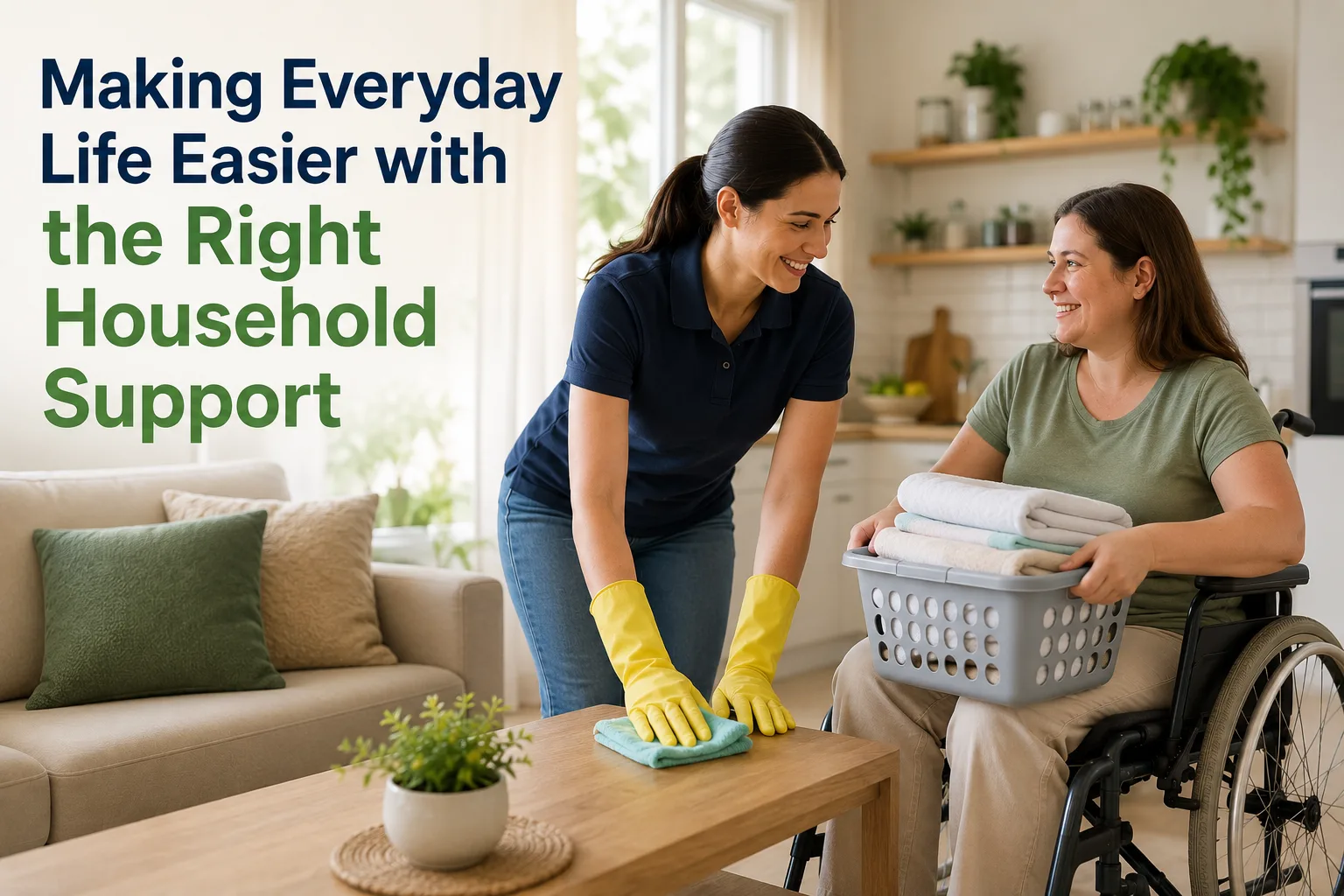
Managing a home involves many everyday responsibilities. Cleaning, preparing meals, doing laundry, shopping for groceries and keeping living spaces organised are tasks that most people complete as part of their regular routine. For people living with disability, however, some of these activities may require additional assistance.
Appropriate household support can make everyday life more manageable while helping participants maintain a safe, comfortable and organised home. It can also provide an opportunity to focus more time and energy on personal goals, community participation and activities that matter to them.
For NDIS participants across Melbourne, understanding what household assistance can involve and how to choose suitable support can make the process easier.
Why Household Support Matters
A well-maintained home can contribute to comfort, safety and independence. When household responsibilities become difficult to manage, they may affect other areas of daily life.
For example, difficulty keeping a kitchen clean may make meal preparation more challenging. Struggling with laundry may affect personal routines, while an untidy living environment can create additional safety concerns.
Appropriate support can help participants manage these responsibilities without taking away their opportunity to be involved.
The level of assistance should reflect individual needs. Some people may need help with specific tasks, while others may require more regular support with a broader range of household activities.
What Household Tasks May Include
Household assistance can cover a variety of practical activities, depending on an individual's NDIS plan, circumstances and support requirements.
Common tasks may include:
- Vacuuming and mopping floors
- Dusting and general cleaning
- Cleaning bathrooms and kitchens
- Laundry and changing bed linen
- Washing and putting away dishes
- Meal preparation
- Grocery shopping and planning
- Taking out household rubbish
- Organising everyday household items
- Basic household maintenance-related assistance
The exact type of assistance should always be discussed with the relevant provider and considered in relation to the participant's approved supports.
Supporting Independence, Not Replacing It
One of the most important aspects of quality disability support is finding the right balance between assistance and independence.
A support worker may complete a task when a participant is unable to do it independently, but there may also be opportunities for the participant to take part.
For instance, a participant might be able to fold clothes but need assistance with operating the washing machine. Someone else may be able to prepare ingredients but require help with certain cooking steps.
Encouraging participation where appropriate can help people maintain existing abilities and develop confidence in everyday activities.
Support should therefore be personalised rather than based on a one-size-fits-all approach.
Household Assistance Across Melbourne
Melbourne is home to a diverse range of communities, and participants may have different household routines depending on where they live and their lifestyle.
Someone living in an apartment in the inner suburbs may have different household requirements from a participant living in a larger home in Melbourne's outer suburbs.
Local access to supermarkets, shopping centres, public transport and community facilities can also influence how household activities are managed.
When arranging support, it can be useful to consider the participant's local environment. A provider familiar with the area may be able to better understand practical considerations such as travel, shopping locations and access to local services.
Creating a Comfortable Home Routine
Consistency can make household responsibilities easier to manage.
A simple routine can help participants understand what needs to be done and when. Tasks might be divided across different days rather than completing everything at once.
For example, laundry could be scheduled on one day, grocery shopping on another and general cleaning spread throughout the week.
Support workers can assist participants with creating routines that fit their lifestyle. This can be particularly useful for people who find planning, sequencing or remembering household responsibilities challenging.
The routine should remain flexible enough to accommodate appointments, social activities, changes in energy levels and other personal commitments.
Meal Preparation and Food Planning
Preparing meals is another area where household support can be valuable.
Assistance may involve planning meals, creating shopping lists, preparing ingredients or helping with cooking. The level of support can vary according to the participant's skills and requirements.
Meal preparation can also provide an opportunity to develop practical life skills.
A participant may learn how to choose ingredients, follow a recipe, use kitchen equipment safely or organise food storage. With suitable guidance, these skills may contribute to greater confidence in managing daily routines.
Food preferences, cultural practices and individual routines should also be respected when planning meals.
Choosing the Right Support Provider
Selecting a suitable provider requires more than simply checking which services are listed on a website.
Participants should consider how the provider communicates, how support workers are matched and whether services can be tailored to individual circumstances.
Ask potential providers questions such as:
- What household support can you provide?
- How are workers matched with participants?
- Can support be adjusted as needs change?
- How are participant preferences incorporated?
- What happens if a participant is unhappy with their support?
- How are schedules and changes communicated?
- What experience do workers have supporting similar needs?
Clear answers can help participants and families make a more informed decision.
The Importance of Respect and Privacy
Household support takes place in a person's private living environment, so trust and respect are essential.
Support workers should respect personal belongings, routines and privacy. Participants should feel comfortable expressing preferences about how tasks are completed and how their home is organised.
For example, a participant may prefer certain cleaning products, have specific ways of arranging belongings or follow cultural practices relating to food preparation.
Understanding these preferences can help create a more respectful and comfortable support experience.
Household Support Can Free Up Time for Personal Goals
Managing household responsibilities can take considerable time and energy. For participants who require assistance, appropriate support can help make these responsibilities more manageable.
This may allow more time to focus on other priorities, such as attending appointments, developing skills, pursuing hobbies, maintaining relationships or participating in local community activities.
The goal is not simply to have a cleaner or more organised home. It is to support a person's broader quality of life and help them make better use of their time and energy.
Understanding NDIS Household Support
Participants should understand how household assistance relates to their individual NDIS plan before arranging services.
For people researching NDIS household tasks in Melbourne, it is important to consider whether the requested support aligns with their approved funding and circumstances. A provider can discuss available services and explain how support may be delivered, while participants should also seek appropriate advice about their individual plan where necessary.
Understanding the arrangement beforehand can help avoid confusion about the type of assistance available and how services are scheduled.
Review Your Support as Your Needs Change
A person's household support requirements may change over time.
A participant might develop new skills and require less assistance with certain activities. Alternatively, changes in circumstances may mean additional support becomes necessary.
Regular communication with the support provider can help identify whether the current arrangement continues to meet the participant's needs and goals.
Support should evolve with the individual rather than remaining fixed indefinitely.
Creating a More Manageable Everyday Routine
Household responsibilities are an important part of everyday life, but they should not prevent people from pursuing their personal goals and maintaining meaningful connections.
The right support can help participants manage practical responsibilities while preserving choice, dignity and involvement. Whether assistance is needed with cleaning, laundry, meal preparation or shopping, the focus should remain on providing support that reflects the individual's circumstances.
For Melbourne participants and families, taking time to compare providers, understand available services and discuss personal preferences can help create a household routine that is practical, respectful and sustainable. A thoughtful approach can make everyday responsibilities easier to manage while supporting greater confidence and participation in daily life.