Sodium Picramate
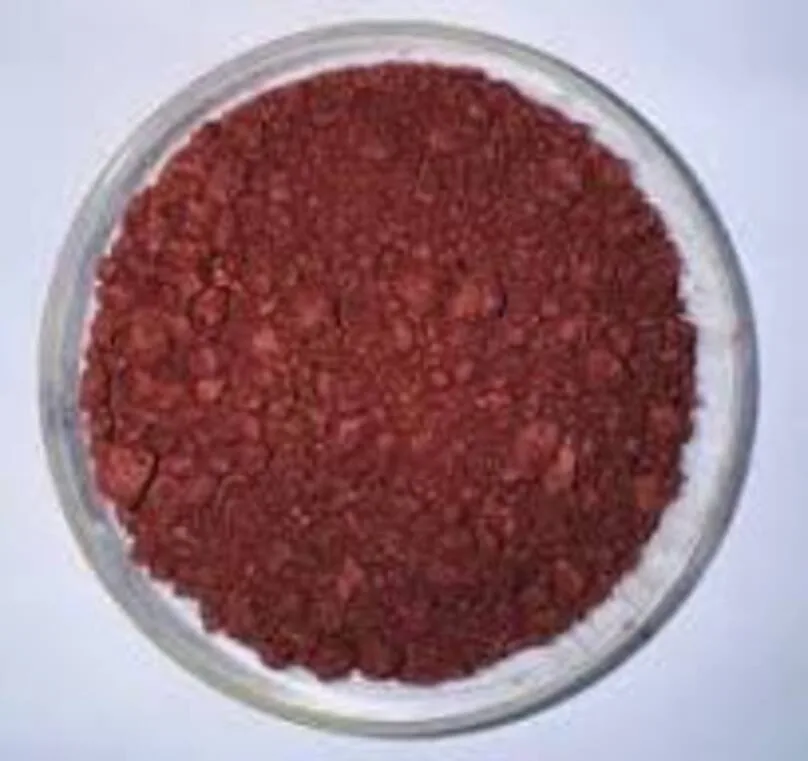
(Commercial Grade)Sodium Picramate known as 2-Amino-4,6-Dinitrophenol Sodium Salt, commercial grades. The commercial grade Sodium Picramate is red to brown in color and available in moist powder form. It consists Sodium Picramate (Amino content) of 60-70% and Picric acid content less than 0.5%.
Commercial use of Sodium Picramate in Leather Dye Intermediates Production, manufacturing of Acid Dyes Intermediates, Intermediates for Brown 75 and as Primary controlled Explosives.
Chemical Properties of Sodium Picramate
Understanding the physical and chemical behavior of sodium picramate is essential for safe storage and manufacturing processes:
- CAS Number: 831-52-7
- Molecular Formula: $\text{C}_6\text{H}_4\text{N}_3\text{O}_5\text{Na}$
- Molecular Weight: ~221.11 g/mol
- Physical Appearance: Red to brownish crystalline powder (often supplied moist to suppress explosive hazards).
- Solubility: Soluble in water, alcohol, and certain organic solvents like aniline and glacial acetic acid; insoluble in non-polar solvents.
- Stability & Reactivity: Stable under controlled, moist conditions, but highly sensitive when dry. It can react vigorously or detonate when exposed to strong reducing agents, severe friction, impact, or high heat.
Common Applications of Sodium Picramate
Sodium Picramate is versatile across multiple industrial sectors:
- Hair Dye & Cosmetics: Widely utilized as a key coloring agent or intermediate in oxidative and non-oxidative hair color formulations, including specific dark or black henna-based hair dyes to impart rich, long-lasting color tones.
- Dye Manufacturing: Functions as a crucial intermediate for producing acid dyes and leather dyes used in the textile and leather industries.
- Specialty Chemical Synthesis: Employed in specialized organic manufacturing processes requiring aromatic compounds with nitro and amino groups.
- Specialized Formulations: Historically used in small-scale or niche applications involving specialized energetic materials or pyrotechnics.
Safety and Handling of Sodium Picramate
Because of its reactive and sensitive nature, strict safety protocols must be observed:
- Hazard Classifications: Classified as a flammable solid and can be explosive in a dry state. It is also categorized as toxic if swallowed, inhaled, or absorbed through the skin, and can cause severe skin sensitization and eye irritation.
- Handling Precautions: Always handle the compound with adequate local exhaust ventilation. Workers must wear full personal protective equipment (PPE), including chemical-resistant gloves, safety goggles, and protective clothing. Avoid friction, static discharge, sparks, and open flames.
- Storage Guidelines: Keep containers tightly closed in a cool, dry, and well-ventilated storage area. To minimize explosion risks, it is frequently stored and transported in a moistened state (with water).
Environmental Impact of Sodium Picramate
- Aquatic Toxicity: Sodium picramate is harmful to aquatic life and can cause long-lasting adverse effects in aquatic ecosystems if improperly discharged.
- Wastewater Management: Industrial facilities must prevent runoff into local drains, groundwater systems, or surface waters. Strict effluent treatment protocols (such as chemical oxidation or specialized adsorption) are mandatory to neutralize trace residues before disposal.