
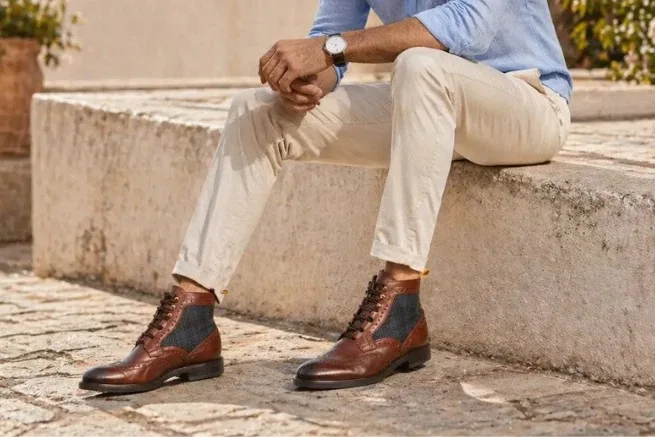
A good pair of boots tends to become one of those wardrobe items you stop thinking about. They work with jeans when the weekend arrives, with tailored trousers when the occasion is smarter and, during colder weather, they provide the extra protection that lighter footwear simply cannot.
That is part of the appeal of men's boots. They combine practicality with a sense of permanence.
However, buying boots well is a little different from buying ordinary fashion footwear. Construction matters. Leather quality matters. So does the sole, the fit and the amount of walking you expect to do in them.
For shoppers considering designer leather boots for men, the most useful approach is to look beyond the label and assess how the boots are actually made. A beautifully finished pair is attractive, but the real value becomes apparent after months and years of wear.
Men's Boots: Choosing the Right Style
There is no single boot that works for every wardrobe.
Chelsea boots are perhaps the easiest starting point. Their clean profile makes them suitable for smart-casual outfits and, with the right finish, more formal clothing too.
Lace-up boots offer a more substantial appearance and can work particularly well with denim, heavy cotton trousers and winter outerwear.
Brogue boots introduce decorative perforations and traditional detailing. They tend to feel more distinctive without becoming excessively formal.
Work-inspired boots sit at the more rugged end of the spectrum. These can be excellent for everyday outdoor wear, although they may look too heavy with slim tailoring.
The best style is ultimately the one that fits your routine.
A boot that looks excellent but only works with one outfit is unlikely to provide much value.
What Makes Designer Leather Boots for Men Worth Considering?
The phrase "designer" can mean many things, so it shouldn't be treated as a guarantee of quality.
With designer leather boots for men, examine the materials and construction first.
High-quality leather tends to have a more natural surface and can develop character over time. Look at the stitching, sole attachment, lining and finishing around the heel and toe. These details often reveal more about craftsmanship than the brand name printed on the box.
Construction is especially important.
A well-built boot should feel supportive without being unnecessarily rigid. The upper should hold its shape, while the sole should provide appropriate flexibility for the way you'll use it.
If you're buying online, detailed product photographs and clear information about materials and construction are worth paying attention to.
The Appeal of Men's Brogue Boots
Traditional detailing can make a straightforward boot much more interesting.
Men's brogue boots combine the practicality of a boot with the visual character of classic brogue perforations. They can work particularly well when you want something smarter than a rugged work boot but less formal than a highly polished dress shoe.
They pair naturally with:
- Dark or mid-wash denim
- Chinos
- Wool trousers
- Corduroy
- Textured jackets
Brown brogue boots are especially versatile in autumn and winter, while black versions create a sharper appearance.
The detailing also gives them a slightly heritage-inspired feel without making the outfit look old-fashioned.
When Brown Loafers for Men Make More Sense
Boots are practical, but there are times when a lighter shoe is simply more comfortable.
During warmer months, brown loafers for men can provide the same level of polish without the weight and structure of a boot.
Loafers work particularly well with chinos, linen trousers, tailored shorts and relaxed summer suiting. Their slip-on construction also makes them convenient for travel.
This doesn't mean boots and loafers compete with one another. They serve different purposes.
A sensible footwear collection often includes both: boots for colder weather, tougher conditions and more substantial outfits, alongside loafers for warmer days and smarter casual occasions.
That kind of variety is more useful than owning several nearly identical pairs of boots.
Getting the Fit Right
Fit remains one of the most important considerations, yet it is surprisingly easy to get wrong.
The boot should hold the heel securely without creating excessive pressure. There should also be enough room in the toe box for natural movement.
Try boots with the socks you expect to wear most often. A thick winter sock can make a significant difference to the fit.
It's worth walking around for several minutes when trying a new pair. Bend your knees, walk up an incline if possible and pay attention to pressure around the heel, ankle and toes.
Leather can soften with wear, but it won't necessarily correct a poor fit.
A comfortable boot should feel reassuring rather than something you need to "break in" through several weeks of discomfort.
Choosing the Right Sole
The sole can change the character of a boot almost as much as the upper.
Leather soles provide a traditional appearance and can look excellent with tailoring. Rubber soles offer greater grip and are often more practical for wet pavements and British weather.
Chunkier soles can give rugged boots more traction and visual weight, while slimmer soles create a more refined silhouette.
Consider where you'll wear the boots most often.
If the answer involves walking through town during winter, a grippy rubber outsole may be considerably more useful than a beautifully finished leather sole with limited traction.
Style matters, but practicality should have the final say.
Leather Care and Long-Term Wear
One of the biggest advantages of quality leather is that it can often be maintained and restored.
Regularly remove surface dirt with a soft brush or cloth. Use a suitable leather conditioner when needed, and polish periodically if you want to preserve the colour and finish.
Wet boots should be allowed to dry naturally. Direct heat can damage leather and weaken adhesives.
Shoe trees can also help maintain the shape of boots while absorbing some moisture between wears.
Perhaps most importantly, rotate footwear when possible. Wearing the same pair every day places unnecessary stress on the leather and sole.
A short period of rest between wears can make a meaningful difference to longevity.
Building a Versatile Footwear Collection
A useful wardrobe doesn't need a huge number of shoes.
Three or four well-chosen pairs can cover most situations.
A pair of polished black or dark brown boots can handle smart occasions and colder weather. Men's brogue boots can provide a more characterful alternative for casual tailoring and weekends.
A pair of brown loafers for men can cover warmer weather, summer dinners and relaxed business-casual outfits.
Add a comfortable everyday trainer, and you've got a flexible collection without becoming excessive.
This approach also makes it easier to buy better.
When each pair has a clear role, you're more likely to invest in materials and construction that will stand up to regular use.
Avoiding Common Boot-Buying Mistakes
Buying purely on appearance is one of the easiest mistakes to make.
A striking silhouette can be tempting, particularly when shopping online, but think about whether you'll actually wear it regularly.
Another mistake is assuming expensive means well-made.
Price can reflect design, branding, materials or craftsmanship, but it doesn't guarantee all four. Look for specific evidence of quality instead.
Fit is another area where buyers sometimes compromise. A great-looking boot that causes heel rubbing or toe pressure will quickly become an expensive mistake.
Finally, think about the climate.
A lightweight Chelsea boot may be perfect for dry autumn days but less suitable for heavy rain and muddy winter walks.
The right boot should match the reality of your wardrobe and your lifestyle.
The best men's boots are the ones that become dependable rather than disposable. They should offer enough comfort for regular wear, enough durability to justify the investment and a style that remains relevant beyond one season.
For those considering designer leather boots for men, look closely at construction, leather quality, sole design and fit rather than relying on branding alone. Men's brogue boots can add character to a winter wardrobe, while brown loafers for men offer a lighter, smarter option when the weather and occasion call for something less substantial.
Good footwear should make getting dressed easier, not more complicated. Buy carefully, look after what you own and choose styles that genuinely fit the way you live.
FAQs
How long should quality leather boots last?
With proper care, well-made leather boots can last for many years. Some designs can be repaired or resoled, which can extend their useful life considerably.
Are designer leather boots for men worth the extra cost?
They can be, particularly when the higher price reflects better materials and construction. The important thing is to assess quality rather than assuming the brand alone justifies the price.
Can men's brogue boots be worn with jeans?
Yes. Brogue boots pair particularly well with dark denim, adding structure and traditional detailing without looking overly formal.
Are brown loafers for men suitable for smart occasions?
Yes. A clean leather loafer can work well for business-casual settings, dinners and other occasions where full formal footwear isn't required.
Should boots feel tight when new?
They should feel secure but not painfully tight. Some materials soften with wear, but significant pressure points are usually a sign of poor fit rather than something that will disappear completely.
How should leather boots be stored?
Keep them somewhere cool and dry, away from direct heat. Using suitable shoe trees can help maintain their shape, particularly between regular wears.