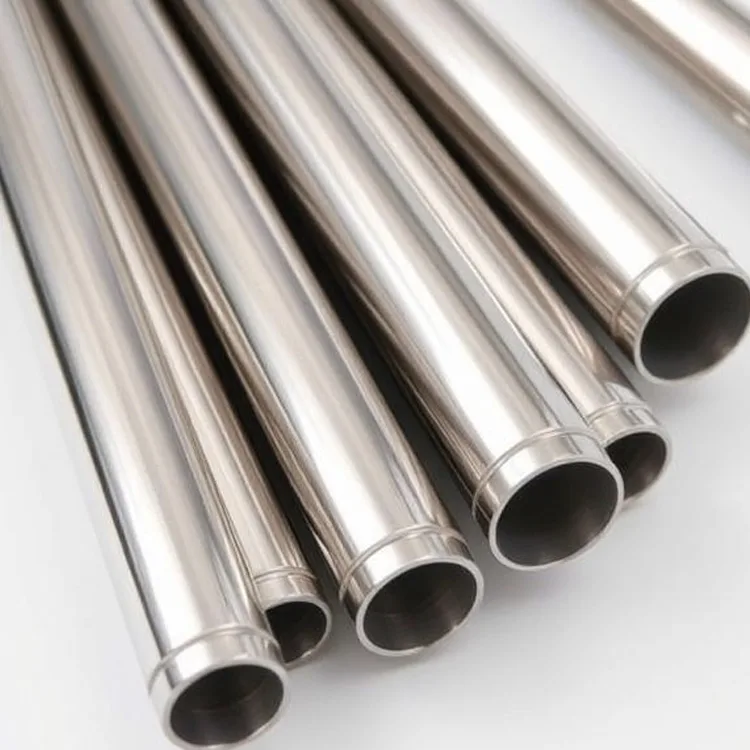
Monel K500 Pipes: Metallurgy, Engineering Performance, Standards and Industrial Service
Monel K500 is a precipitation-hardenable nickel-copper alloy developed to retain the corrosion resistance associated with the Monel family while providing substantially higher strength and hardness. In pipe form, this combination is particularly significant where equipment must withstand chloride-bearing environments, seawater exposure, sour-service conditions, elevated mechanical loading, or high-velocity fluid movement. Unlike conventional corrosion-resistant pipe materials whose performance depends primarily on solid-solution alloying, Monel K500 Pipes derive much of their enhanced mechanical capability from controlled precipitation hardening involving aluminium and titanium.
The alloy is commonly identified as UNS N05500 and Werkstoff Number 2.4375. Its nominal chemistry is based on nickel and copper, with aluminium and titanium added to permit age hardening. Iron, manganese, silicon, carbon and other residual elements are controlled within the applicable material specification. The resulting metallurgical system makes K500 fundamentally different from Monel 400: the two alloys share a nickel-copper corrosion-resistant base, but K500 can achieve considerably higher strength after appropriate solution treatment and aging.
Alloy Design: Why K500 Behaves Differently from Monel 400
The starting point for understanding this pipe material is its metallurgy. Monel K500 contains approximately 63% minimum nickel with copper as the principal alloying element, while aluminium and titanium are present in controlled amounts to create precipitation-hardening capability. Nickel provides the continuous corrosion-resistant matrix, copper contributes to resistance in many marine and chemical environments, and the aluminium-titanium additions enable strengthening during aging.
The alloy's strengthening mechanism is particularly important. Following suitable solution treatment, controlled aging causes fine strengthening precipitates to develop within the nickel-copper matrix. This increases yield strength, tensile strength and hardness without converting the material into a conventional ferrous high-strength alloy.
The principal engineering consequence is a useful combination of:
- High mechanical strength
- Good resistance to seawater and marine environments
- Resistance to chloride-containing media
- Good resistance to stress-corrosion cracking in appropriate environments
- Useful resistance to erosion and cavitation
- Nonmagnetic characteristics in suitable conditions
- Good dimensional stability after correct heat treatment
- Strong performance in demanding oil, gas and marine equipment
Because precipitation hardening is central to the alloy's properties, the delivery condition cannot be considered a secondary purchasing detail. Heat-treatment condition, section size and manufacturing route all influence the final performance of the pipe.
Chemical Composition and Metallurgical Significance
Typical composition limits associated with UNS N05500 are governed by the applicable product specification rather than by a single universal chemistry independent of product form. The principal alloying system can be summarized as follows:
ElementMetallurgical roleNickelForms the corrosion-resistant matrix and supports high-temperature and chemical stabilityCopperEnhances resistance in marine and reducing environmentsAluminiumParticipates in precipitation strengtheningTitaniumWorks with aluminium in the age-hardening systemIronControlled residual/alloying elementManganeseControlled to support processing and material characteristicsSiliconControlled residual elementCarbonRestricted because excessive carbon can adversely affect metallurgical behaviorThe precise permissible limits should always be taken from the material standard specified on the purchase order and verified against the mill test certificate.
This distinction is important for engineering procurement. A pipe described simply as “K500” does not fully define its expected performance. The UNS designation, applicable ASTM/ASME specification, product form, dimensions, heat-treatment condition and inspection requirements collectively establish the technical identity of the material.
Mechanical Performance Depends on Condition
One of the defining characteristics of Monel K500 is the difference between its solution-treated and age-hardened conditions.
Solution treatment establishes a suitable metallurgical starting condition. Subsequent aging allows strengthening precipitates to form. The resulting increase in hardness and strength makes the alloy suitable for components subjected to mechanical loads that could exceed the practical capability of a conventional Monel 400 product.
Published mechanical-property values vary with the applicable product specification, diameter, wall thickness and heat-treatment condition. Consequently, values from a bar specification should not automatically be transferred to pipe, and values for one heat-treated condition should not be represented as universal.
For engineering qualification, the relevant material certificate should establish at least:
- Heat or cast identification
- Chemical analysis
- Tensile properties where required
- Yield strength
- Elongation
- Hardness where specified
- Heat-treatment condition
- Applicable product specification
This approach prevents a common procurement error: selecting the alloy solely by its nominal grade while overlooking the condition in which the pipe will actually enter service.
Pipe Manufacturing Requires Control from Billet to Finished Product
The production route for K500 pipe depends on the required dimensions, manufacturing specification and commercial product form. Seamless pipe is generally produced from suitable alloy stock or billet through hot-working and/or cold-working operations followed by controlled heat treatment and finishing.
A representative manufacturing sequence may involve:
- Alloy melting and refining — Raw materials are melted under controlled conditions to achieve the required chemical composition.
- Billet or hollow preparation — The cast product is converted into suitable stock for pipe production.
- Hot working — Piercing, extrusion, forging or related operations can be used depending on the manufacturing route.
- Cold reduction or sizing — Additional working may be applied to achieve dimensional accuracy and surface requirements.
- Solution treatment — The alloy is heated under controlled conditions to establish the appropriate metallurgical structure.
- Quenching or controlled cooling — Cooling is controlled according to the applicable specification and heat-treatment procedure.
- Age hardening — A subsequent aging treatment develops the precipitation-strengthened condition when required.
- Straightening and finishing — Dimensional correction, surface finishing and end preparation are performed.
- Inspection and testing — Chemical, mechanical, dimensional and nondestructive examinations are applied according to the purchase specification.
Heat treatment deserves particular attention because excessive cold work, unsuitable aging, or uncontrolled thermal exposure can alter the balance between strength, ductility and corrosion performance.
Dimensional Selection Is More Than Nominal Pipe Size
Pipe procurement typically involves several independent dimensional variables. Nominal pipe size identifies the general pipe designation, while the actual outside diameter and wall thickness determine the physical geometry.
For Monel K500 pipe, the purchase specification may therefore need to establish:
- Nominal pipe size or outside diameter
- Wall thickness
- Schedule where applicable
- Pipe length
- Manufacturing type
- End configuration
- Dimensional tolerance
- Straightness requirements
- Surface condition
- Heat-treatment condition
Standardized pipe dimensions may be selected using recognized dimensional systems, but the dimensional standard and material specification should be treated separately. A dimensional standard establishes geometry; the material specification establishes alloy, manufacturing and testing requirements.
For engineered pressure-containing systems, wall thickness should not be selected merely by copying a conventional stainless-steel schedule. Design pressure, operating temperature, corrosion allowance, allowable stress, external loads, joining method and governing pressure-vessel or piping code all have to be evaluated.
Standards: The Specification Must Match the Product Form
For Monel K500, the relevant standard depends on whether the material is purchased as pipe, tube, bar, forgings, fittings or another product form. One of the most relevant specifications for pipe and tube products is ASTM B725, which covers welded nickel-copper pipe. Seamless products may instead fall under other nickel-alloy product specifications depending on their exact form and dimensions.
For pressure-equipment applications, ASME requirements may also be invoked where the material is used within an ASME-code construction. The applicable ASME material designation should be confirmed against the current code edition and product form rather than assumed from the UNS number alone.
Other international systems can appear in procurement documentation:
- ASTM — Establishes product-specific requirements for nickel and nickel-copper alloy products.
- ASME — Relevant where materials are incorporated into equipment governed by ASME construction codes.
- UNS — Provides the unified numerical alloy identification system; UNS N05500 identifies Monel K500.
- EN/DIN systems — May be referenced by European projects and material documentation, with equivalence requiring verification rather than assumption.
- JIS — May appear in Japanese or Asia-Pacific procurement specifications where an equivalent material is required.
A key technical principle is that equivalent designation does not automatically mean identical specification compliance. A purchasing department should specify the governing standard, not merely request an alloy name.
Corrosion Performance in Marine and Chemical Service
Monel K500 is particularly associated with marine and seawater environments. Its nickel-copper metallurgy provides strong resistance to many forms of corrosion encountered in marine equipment, while the high-strength condition allows designers to reduce the dependence on lower-strength corrosion-resistant alloys in mechanically demanding components.
Typical service considerations include:
Seawater and Marine Equipment
The alloy is used in selected marine applications involving seawater exposure, including components associated with pumps, valves, shafts, fasteners and related equipment. Pipe applications must still consider fluid velocity, deposits, crevices and galvanic interactions.
Oil and Gas Service
K500 can be relevant to components exposed to saline production fluids and demanding mechanical conditions. Sour-service suitability must not be assumed solely from the alloy designation. Hydrogen sulfide concentration, temperature, stress level, hardness condition and applicable project requirements must be assessed individually.
Chemical Processing
The nickel-copper matrix offers useful resistance to several chemical environments, particularly reducing media. However, chemical compatibility is always process-specific. Concentration, temperature, impurities, aeration and flow conditions can change corrosion behavior substantially.
Engineering Limitations Should Be Considered Alongside Advantages
High strength does not make K500 universally superior to other nickel alloys. Material selection should account for the actual service environment.
Several considerations are particularly important:
Heat-treatment control: The strengthening mechanism requires controlled metallurgical processing. Documentation of the delivered condition is therefore essential.
Machining: The alloy's high strength and work-hardening tendency can make machining more demanding than machining conventional low-alloy steels. Appropriate tooling, cutting conditions and rigidity are important.
Welding: Welding procedures require attention to alloy condition, joint preparation, filler selection, heat input and subsequent property requirements. A welded pipe product should be evaluated against its governing product specification rather than treated as equivalent to seamless material.
Corrosive environment: Although K500 has strong corrosion resistance, no alloy is immune to every chemical environment. Oxidizing acids and highly specific chemical combinations can require different nickel alloys.
Galvanic compatibility: Connecting K500 pipe to dissimilar metals can create galvanic corrosion conditions depending on the electrolyte and relative surface areas.
Inspection and Documentation Establish Material Traceability
Industrial piping systems frequently require complete traceability from the finished pipe back to the original heat. The inspection plan should therefore correspond to the project specification rather than relying on a generic “tested material” statement.
Typical documentation and inspection requirements can include:
- Material Test Certificate
- Heat number traceability
- Chemical composition
- Mechanical test results
- Heat-treatment records where required
- Dimensional inspection
- Visual and surface examination
- Hydrostatic or alternative pressure testing where specified
- Nondestructive examination where required by specification or purchase order
- Positive Material Identification where required
- Certificate of conformity
- Packing and marking records
For imported material, consistency between the pipe markings, test certificate, purchase order and inspection report is especially important. The heat number should remain traceable throughout cutting, fabrication and installation whenever project procedures require full material identification.
Where Monel K500 Pipe Provides the Strongest Engineering Case
The material is generally considered where corrosion resistance must be combined with substantially elevated mechanical strength. Typical areas include marine engineering, offshore equipment, oil and gas systems, chemical-processing equipment, pump and valve assemblies, instrumentation-related components and specialized high-load fluid-handling systems.
The strongest justification for K500 is not simply resistance to seawater. It is the combination of a nickel-copper corrosion-resistant matrix with precipitation-hardened strength.
For less mechanically demanding corrosion-resistant service, another nickel alloy or Monel 400 may be more appropriate from a fabrication or cost perspective. Conversely, highly oxidizing chemical environments may require alloys specifically designed for those conditions. The selection therefore has to be based on the complete service envelope rather than alloy reputation alone.
Procurement Checklist for Monel K500 Pipes
A technically complete purchase description should identify the material and product requirements with enough precision to prevent substitutions or ambiguities. Important fields include:
- Alloy: Monel K500
- UNS: N05500
- Product form: seamless or welded, as applicable
- Governing ASTM/ASME specification
- Nominal size or outside diameter
- Wall thickness
- Length
- Heat-treatment condition
- End preparation
- Dimensional requirements
- Mechanical-property requirements
- Nondestructive examination requirements, where applicable
- Pressure testing requirements, where applicable
- Material certification and traceability requirements
- Applicable project or code requirements
- Packaging and marking requirements
Particular caution is warranted when purchasing “equivalent” material. The alloy designation, product specification and delivery condition should all be reviewed before technical approval.
Technical Perspective
Monel K500 Pipes occupy a specialized position among corrosion-resistant piping materials because their engineering value comes from two interacting characteristics: nickel-copper corrosion resistance and precipitation-hardened mechanical strength. The alloy's performance cannot be separated from its metallurgical condition; solution treatment, aging, manufacturing history and dimensional processing all contribute to the properties ultimately delivered to the installation.
For demanding marine, offshore, chemical and selected oil-and-gas environments, the appropriate evaluation therefore begins with service chemistry and mechanical loading, then progresses through alloy selection, product specification, heat treatment, dimensional requirements and inspection. Correct identification as UNS N05500, compliance with the applicable product standard, and complete heat traceability provide the foundation for reliable procurement.
The most technically sound specification is consequently not simply “Monel K500 pipe.” It is a complete description of alloy, product form, governing standard, dimensions, metallurgical condition, testing and documentation. That level of precision is what converts a corrosion-resistant nickel alloy into a dependable engineered piping component.