
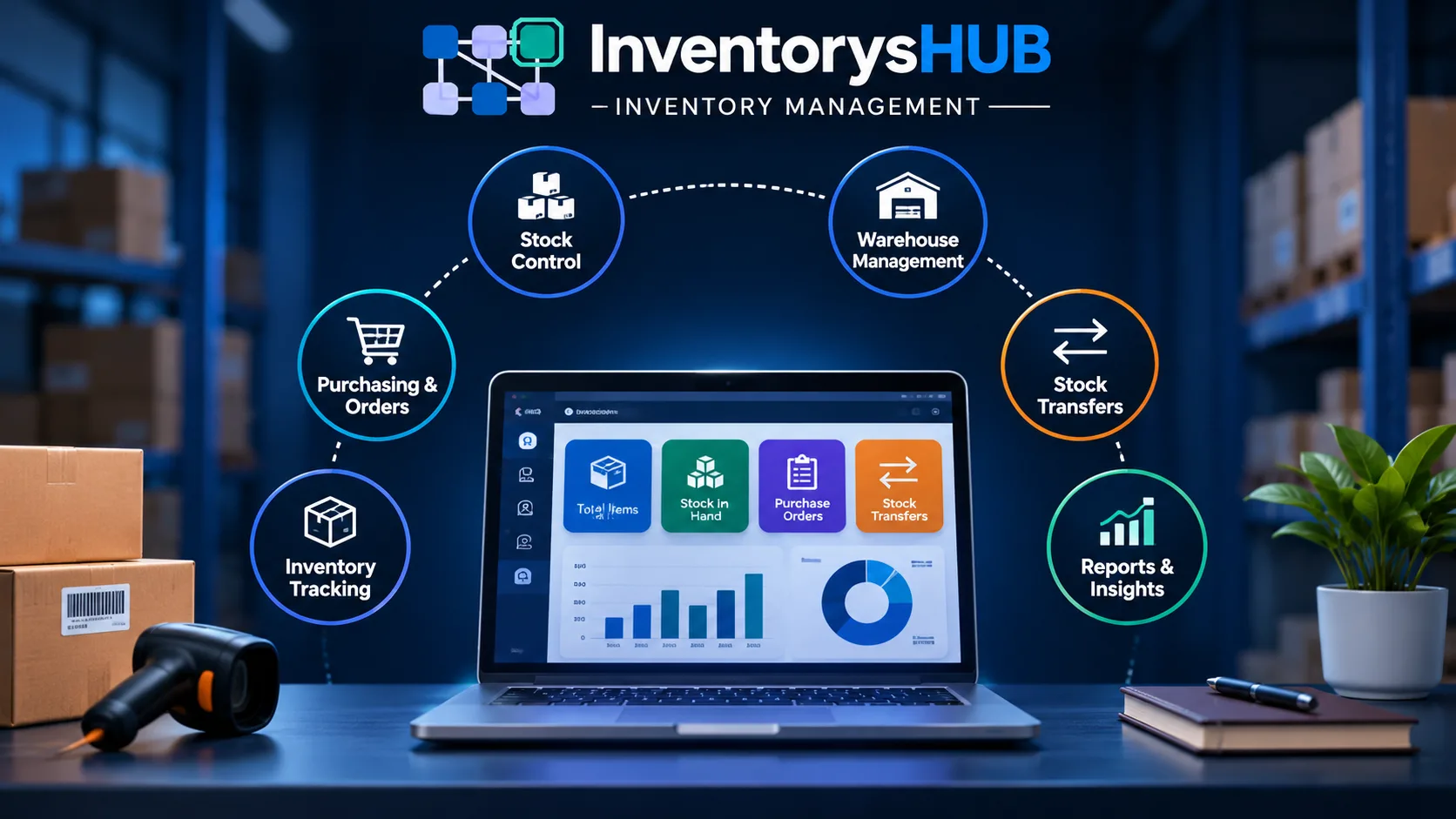
Businesses operating from multiple warehouses need accurate information about products stored at different locations. As operations expand, managing inventory across branches, distribution centers, and storage facilities becomes more complicated. Employees need to know where products are located, which warehouse has available stock, and when inventory should be transferred or replenished. An effective inventory management system helps businesses organize stock information and coordinate warehouse activities. Modern inventory software management also supports location-wise inventory records, purchasing workflows, stock transfers, and reporting, helping businesses maintain better control over distributed inventory.
Multi-warehouse management is not only about maintaining separate records for different locations. It involves coordinating inventory information so that business teams can make informed decisions about purchasing, storage, transfers, and product availability.
1. What Is Multi-Warehouse Inventory Management?
Multi-warehouse inventory management refers to organizing and monitoring inventory stored across more than one warehouse or storage location.
A business may operate warehouses in different cities, maintain regional distribution centers, or use several storage facilities to support its operations. Each location may have different products, stock requirements, and operational responsibilities.
Multi-warehouse management helps businesses maintain information about:
- Products stored at each location.
- Warehouse-wise stock availability.
- Inventory transfers between locations.
- Purchasing requirements.
- Storage and handling activities.
- Inventory discrepancies.
A structured approach makes it easier to understand the overall inventory position of the business.
2. Why Businesses Need Multi-Warehouse Visibility
When inventory is distributed across multiple locations, employees need accurate information about stock availability. Without this visibility, a business may purchase products unnecessarily or fail to identify stock that is already available at another warehouse.
Warehouse visibility supports better operational decisions because managers can review inventory information before arranging purchases or transfers.
Important benefits include:
- Understanding stock distribution.
- Reviewing location-wise inventory records.
- Identifying possible transfer requirements.
- Supporting purchasing decisions.
- Improving coordination between locations.
- Reducing confusion about product availability.
For example, a distributor may have excess stock at one warehouse while another location needs the same product. Better visibility helps managers evaluate whether a transfer is appropriate.
3. Maintaining Warehouse-Wise Inventory Records
Each warehouse should maintain accurate information about the products stored at that location. Businesses need to identify where products are kept and ensure that inventory records reflect actual stock movements.
Warehouse-wise records can include product details, quantities, storage information, and relevant movement records.
Good practices include:
- Using consistent product names.
- Maintaining location information.
- Updating records after stock movements.
- Reviewing inventory regularly.
- Assigning warehouse responsibilities.
- Investigating discrepancies.
Consistent records make it easier to compare inventory information across locations and support operational coordination.
4. Coordinating Stock Transfers Between Warehouses
Stock transfers allow businesses to move products from one warehouse to another. Transfers may be required because of demand differences, storage limitations, operational requirements, or regional supply needs.
A transfer should be recorded properly so that both the sending and receiving locations maintain accurate information.
A structured transfer process should identify:
- The products being transferred.
- The quantity involved.
- The dispatching warehouse.
- The receiving warehouse.
- The transfer date.
- Confirmation of receipt.
- Any differences identified during receiving.
Without clear transfer records, businesses may experience inventory discrepancies and confusion between warehouse teams.
5. Improving Purchasing Across Multiple Locations
Purchasing decisions become more complex when a business operates several warehouses. One location may have sufficient stock while another needs replenishment.
If purchasing teams cannot review warehouse-wise inventory information, they may place unnecessary orders.
Businesses should evaluate total inventory requirements before purchasing. This includes reviewing stock at each location, expected demand, supplier delivery times, and planned transfers.
Better purchasing coordination can help:
- Reduce duplicate purchasing.
- Identify available stock at other locations.
- Plan replenishment requirements.
- Coordinate supplier orders.
- Review warehouse-specific needs.
- Maintain more organized purchasing records.
A clear purchasing process should also consider whether transferring existing stock is more suitable than placing a new order.
6. Handling Inventory Discrepancies
Inventory discrepancies occur when recorded stock does not match actual stock. In multi-warehouse operations, discrepancies may arise from unrecorded transfers, incorrect entries, damaged products, receiving errors, or delayed updates.
Businesses should establish a process for identifying and investigating these differences.
Useful practices include:
- Conducting regular physical checks.
- Reviewing stock transfer records.
- Verifying received quantities.
- Updating inventory information promptly.
- Investigating unexplained differences.
- Assigning responsibility for corrections.
A centralized record structure can help managers compare information across warehouses and identify locations that require additional review.
7. Improving Warehouse Coordination
Multiple warehouse locations often have separate teams and responsibilities. Without consistent communication, employees may use outdated information or misunderstand stock requirements.
A structured inventory process helps teams work with consistent records and coordinate daily activities.
Warehouse coordination can improve through:
- Standardized inventory procedures.
- Consistent product identification.
- Clear transfer responsibilities.
- Regular record updates.
- Shared operational information.
- Defined reporting practices.
Businesses should also establish clear communication between purchasing, warehouse, and operations teams.
8. Managing Storage Capacity and Product Distribution
Not every warehouse has the same storage capacity. Some locations may handle large quantities, while others may have limited space or specialized storage requirements.
Businesses need to consider storage capacity when distributing inventory.
Important factors include:
- Available warehouse space.
- Product size and handling requirements.
- Expected demand.
- Storage conditions.
- Product movement frequency.
- Location-specific operational needs.
Organized inventory information can help managers review where products are stored and evaluate whether stock distribution needs adjustment.
9. Using Inventory Reports for Warehouse Decisions
Reports help managers understand how inventory is distributed and how different warehouse locations are performing.
Useful reporting areas include:
ReportPurposeWarehouse-wise stockReview inventory at each locationStock transfersExamine movement between warehousesPurchasing recordsReview ordering activityInventory discrepanciesIdentify record differencesProduct distributionUnderstand stock allocationStock movementReview changes in inventoryReports are most useful when records are updated consistently and physical stock is verified regularly.
10. Reducing Operational Delays
Poor coordination between warehouses can delay product availability and operational activities. Employees may spend time confirming stock information, locating products, or resolving differences between records.
Better inventory visibility and clear procedures can reduce avoidable communication delays.
Businesses can improve operational coordination by:
- Maintaining updated warehouse records.
- Recording stock transfers.
- Standardizing product information.
- Assigning clear responsibilities.
- Reviewing inventory requirements regularly.
- Establishing consistent communication processes.
These practices help employees understand their responsibilities and reduce confusion during daily warehouse operations.
11. Challenges in Multi-Warehouse Inventory Management
Multi-warehouse operations involve several challenges that businesses should address through consistent processes.
ChallengePossible Business ImpactDisconnected recordsInconsistent stock informationUnrecorded transfersInventory discrepanciesPoor visibilityUnnecessary purchasingInconsistent proceduresCommunication problemsLimited reportingDifficult operational reviewsStorage limitationsInefficient product distributionDelayed updatesIncorrect availability informationUnderstanding these challenges helps businesses establish better inventory procedures and select suitable software.
12. Features to Evaluate in Multi-Warehouse Software
Businesses should evaluate software according to the complexity of their warehouse operations.
Important capabilities may include:
- Warehouse-wise item records.
- Location-based inventory information.
- Stock transfer workflows.
- Purchasing and purchase order management.
- Inventory reporting.
- User roles and access permissions.
- Structured product organization.
- Support for business expansion.
Businesses should verify how each feature works and whether it matches their operational requirements before selecting a platform.
13. Best Practices for Managing Multiple Warehouses
Consistent procedures are essential for maintaining accurate inventory across locations.
Recommended practices include:
- Standardize product identification across warehouses.
- Update records whenever stock changes.
- Record every transfer between locations.
- Verify received quantities.
- Conduct regular physical inventory checks.
- Assign clear responsibilities to warehouse teams.
- Review warehouse-wise inventory reports.
- Evaluate stock distribution regularly.
These practices help businesses improve accountability and maintain more reliable inventory information.
Frequently Asked Questions
1. What is multi-warehouse inventory management?
It is the process of organizing and monitoring inventory across multiple warehouses or storage locations.
2. Why is warehouse-wise stock visibility important?
It helps businesses understand where products are stored, identify stock availability, coordinate transfers, and make better purchasing decisions.
3. How should businesses record stock transfers?
They should record the products, quantities, dispatching location, receiving location, transfer date, and receipt confirmation.
4. What causes inventory discrepancies between warehouses?
Common causes include unrecorded transfers, incorrect data entry, receiving errors, damaged products, and delayed inventory updates.
5. Can inventory software support multiple locations?
Suitable software can help businesses maintain warehouse-related records and coordinate stock activities across different locations. Specific capabilities should be checked before selection.
6. How can businesses reduce unnecessary purchasing?
They should review inventory across all relevant warehouses before placing new orders and evaluate whether existing stock can be transferred.
7. How often should warehouses verify inventory?
Verification frequency depends on product value, movement volume, operational risk, and business requirements. Businesses should establish a consistent checking schedule.
Conclusion: Improve Control Across Every Warehouse
Multi-warehouse inventory management is essential for businesses that store products across several locations. Accurate warehouse records, organized stock transfers, better purchasing coordination, and regular inventory verification help businesses maintain operational consistency.
A structured inventory process makes it easier for managers to understand stock distribution and coordinate activities between warehouse teams. Businesses should select software that matches their location structure, inventory requirements, and future expansion plans. Companies looking to organize inventory across their operations can explore InventorysHUB for centralized inventory information and warehouse-related management.