
Investing does not end when capital is deployed. Whether an organization manages loans, private investments, insurance exposures, or corporate counterparties, the risk profile of an investment can change over time. Financial performance may weaken, debt may increase, ownership may change, or legal and compliance issues may emerge.
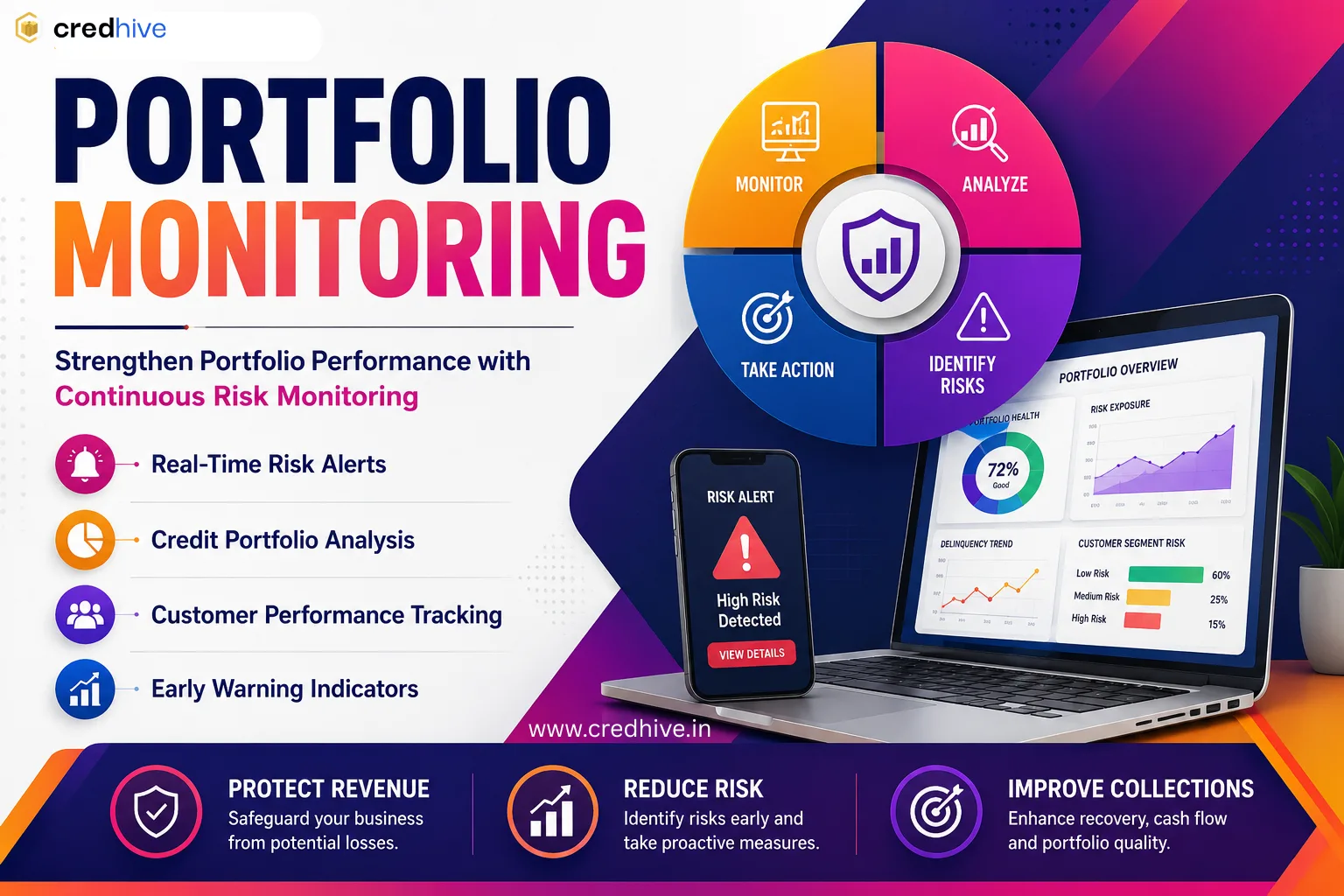
This is where Portfolio Monitoring becomes important. It provides a structured approach to tracking the financial health, risk indicators, and performance of assets or counterparties after an initial investment or credit decision.
For banks, NBFCs, fintech companies, lenders, insurers, enterprises, and financial professionals, effective Portfolio Monitoring can support earlier risk identification, better capital allocation, and more informed financial decisions.
What Is Portfolio Monitoring?
Portfolio Monitoring is the continuous process of tracking investments, borrowers, counterparties, or other exposures to identify changes that may affect their performance or risk profile.
Instead of reviewing an investment only during periodic reporting cycles, organizations can monitor relevant indicators throughout the relationship.
Depending on the portfolio, these indicators may include:
- Financial performance
- Revenue and profitability trends
- Cash flow and liquidity
- Debt and repayment behavior
- Credit risk indicators
- Legal and litigation events
- Regulatory and compliance changes
- Ownership and management changes
- Industry developments
- Business relationships
- Early warning signals
The purpose is not simply to collect information. Effective portfolio monitoring helps organizations determine when a change requires attention or action.
Why Is Portfolio Monitoring Important?
Risks Change After the Initial Decision
A company that was financially healthy when a loan was approved may experience financial stress months later. Similarly, an investment that initially appeared attractive can face new operational, market, or regulatory challenges.
Without ongoing monitoring, these changes may remain unnoticed until they become significant.
Supports Proactive Risk Management
Portfolio monitoring allows organizations to identify emerging risks rather than waiting for defaults, losses, or major disruptions.
For example, a lender monitoring an SME may observe declining revenue, rising leverage, delayed payments, and new litigation. Each signal may require further investigation, but their combination could indicate increasing credit risk.
Improves Capital Allocation
Organizations have limited capital and must continually decide where to increase, maintain, or reduce exposure.
Current portfolio intelligence can help decision-makers prioritize stronger assets and review relationships where risk is increasing.
Key Areas of Portfolio Monitoring
1. Financial Performance
Financial performance is one of the most important areas to monitor.
Organizations can track revenue, profitability, margins, cash flow, liquidity, working capital, and leverage. Comparing current performance with historical trends can reveal deterioration that may not be visible from a single reporting period.
2. Credit and Repayment Behavior
For lending portfolios, repayment behavior is a critical indicator.
Missed payments, increasing credit utilization, restructuring requests, or changes in debt-servicing capacity can indicate financial pressure.
Monitoring these indicators can help credit teams initiate early intervention.
3. Legal and Litigation Events
Legal developments can materially affect a company's financial and operational position.
Monitoring litigation, insolvency proceedings, regulatory disputes, and other relevant legal events can help organizations identify exposures requiring further assessment.
4. Ownership and Management Changes
Changes in directors, promoters, shareholders, or ownership structures can affect a company's strategic direction and risk profile.
For businesses where promoter quality is important to credit or investment decisions, monitoring management changes can provide valuable context.
5. Compliance and Regulatory Signals
A company's compliance position can change after onboarding or investment.
Regulatory actions, changes in business status, or other compliance developments may require organizations to reassess their exposure.
6. Business Relationships
A company may have significant relationships with other businesses through directors, promoters, subsidiaries, or ownership.
Relationship intelligence can help identify connected entities and concentration risks within a portfolio.
How Does Portfolio Monitoring Work?
Step 1: Define the Portfolio
Organizations first identify the assets, borrowers, investments, vendors, or counterparties that need monitoring.
Step 2: Establish Risk Indicators
Relevant indicators are selected according to the portfolio's purpose and risk profile.
For a lending portfolio, this may include repayment behavior and financial performance. For a corporate investment portfolio, management changes, legal events, and business performance may receive greater attention.
Step 3: Collect and Analyze Information
Relevant data is gathered and analyzed to identify material changes and emerging patterns.
Step 4: Set Alerts
Organizations can establish thresholds for important events. For example, a significant decline in revenue or a new insolvency proceeding may trigger an alert.
Step 5: Review and Take Action
Risk teams can investigate alerts and determine whether to maintain exposure, increase monitoring, restructure terms, or take other appropriate action.
Role of Technology in Portfolio Monitoring
Technology has made continuous monitoring more practical for organizations managing large portfolios.
A digital Portfolio Monitoring platform can centralize information across multiple entities and automate repetitive monitoring activities.
Automated alerts can notify teams about significant financial, legal, compliance, or ownership changes. Dashboards can provide a portfolio-level view, helping risk managers identify which relationships require immediate attention.
AI and analytics can also help identify patterns across large datasets, prioritize high-risk cases, and reduce manual research.
However, technology should support—not replace—professional judgment. Risk teams still need to evaluate the context and materiality of individual events.
Portfolio Monitoring for Banks and NBFCs
For banks and NBFCs, Portfolio Monitoring is particularly important after loan disbursement.
Consider an NBFC with a large SME lending portfolio. Instead of waiting for borrowers to miss repayments, the institution can monitor financial deterioration, changes in business activity, legal events, and management developments.
Borrowers showing multiple warning signals can be prioritized for review. This allows the lender to focus resources where they are most needed.
Benefits of Effective Portfolio Monitoring
A structured approach can help organizations achieve:
- Earlier risk identification
- Better credit risk management
- Improved portfolio visibility
- Faster response to emerging issues
- Reduced manual monitoring effort
- Better capital allocation
- Stronger compliance oversight
- Improved operational efficiency
- More informed investment decisions
The greatest benefit is the shift from reactive risk management to proactive portfolio management.
Best Practices for Portfolio Monitoring
Monitor Based on Risk
High-value and high-risk exposures should receive deeper and more frequent monitoring than low-risk relationships.
Focus on Material Signals
Not every change requires action. Monitoring frameworks should prioritize events that could materially affect financial or operational risk.
Combine Multiple Data Points
A single indicator may not provide enough context. Combining financial, legal, compliance, ownership, and credit information can provide a more complete picture.
Maintain an Audit Trail
Monitoring alerts, reviews, decisions, and actions should be documented to support governance and accountability.
Review the Framework Regularly
Risk indicators should evolve with the portfolio, market conditions, lending policies, and business objectives.
Frequently Asked Questions
What is Portfolio Monitoring?
Portfolio Monitoring is the ongoing process of tracking investments, borrowers, counterparties, or other exposures to identify changes in performance and risk.
Why is Portfolio Monitoring important for lenders?
It helps lenders identify early warning signals after loan approval, allowing them to investigate emerging risks before they potentially result in significant losses.
What should be monitored in an investment portfolio?
Financial performance, credit indicators, legal events, ownership changes, compliance developments, business activity, and other factors relevant to the investment should be monitored.
Can Portfolio Monitoring be automated?
Yes. Technology can automate data collection, alerts, dashboards, risk indicators, and ongoing monitoring, helping organizations manage large portfolios more efficiently.
How does Portfolio Monitoring support risk management?
It provides ongoing visibility into changing risk profiles, allowing organizations to identify emerging concerns, prioritize reviews, and take appropriate action earlier.
Conclusion
Portfolio Monitoring is an essential component of modern investment and risk management. A strong portfolio can change quickly when financial performance deteriorates, legal issues emerge, ownership changes, or market conditions shift.
By continuously monitoring relevant financial, credit, legal, compliance, and business signals, organizations can gain a clearer view of changing exposure and make decisions based on current information rather than outdated assumptions.
For banks, NBFCs, fintech companies, lenders, insurers, and enterprises, technology-enabled Portfolio Monitoring can reduce manual effort while improving visibility and response times. Ultimately, the goal is simple: identify changes early, understand their impact, and manage portfolio risk proactively.