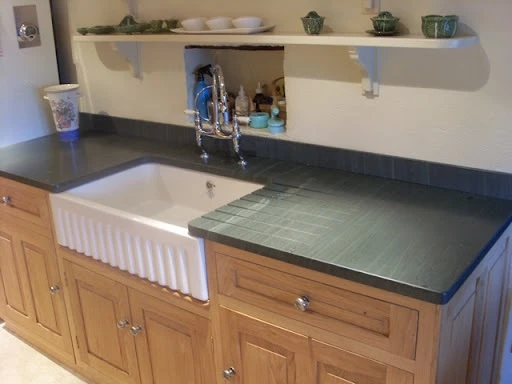
Your selection of a worktop determines how useful and how good-looking your kitchen is. People seem to love slate worktops because, unlike granite and marble, they offer good functionality and seem attractive.
Customers of slate worktops seem to appreciate them because of the low maintenance needed to take care of them. This reflects the modern feel of home decor, yet still showcases nature’s beauty. It radiates an inviting charm and warmth that complements the kitchen’s decor. But slate, like any other material, has its pros and cons. You will need to weigh both sides carefully.
Why homeowners love slate worktops
Also read:- Pros & Cons of Quartz Countertops for Kitchens: What You Need to Know
1. Fading elegance and beauty
Complementary to both rustic and modern styled kitchens, slate’s rich grey color, coupled with earthy undertones, gives off a timeless charm. With slate, the slate worktops will acquire a beautiful matte finish alongside soft touch. Unlike strong marble and granite slabs, which tend to overpower spaces with their bulkiness, slate is harmonious and offers refined elegance. Depending on the region from which the stone originates, it may also possess more greens, browns, and blues.
2. Resilient and heat resistant
The durability of slate is unique among natural materials because it does not get scratched, dented, chipped, or damaged through regular use. Slate is also heat-resistant. Although it is safe to place hot pots on a slate kitchen worktop, it's best to use trivets.
3. Low Maintenance
Slate does not require a great deal of attention, which is one of its best features. Because slate is less porous than other stones, like marble, it is less likely to be stained. Most spills can be wiped away with a moist cloth. Unlike many other natural stones, slate does not require frequent sealing. In fact, it can go untreated for years if the owner prefers it to look weathered.
4. Hygiene
As such, it serves as an effective natural barrier to bacteria. This is particularly beneficial in kitchen sinks and areas where food is handled. Slate is also easy to clean since it will not absorb oil or wine instantly, making wine or oil spill cleanup effortless.
5. Environmentally Friendly Material
Two of the best things about slate are that it has a long lifespan and it's environmentally friendly.
Slate can be trusted for decades because it does not require any processing and is locally sourced. Choosing slate is a small but stylish alteration that contributes towards protective efforts for nature.
Things to Consider Before Choosing Slate
1. Narrow Selection of Colors
Slate works best when paired with neutrals because its colors are more subdued. While dark colors can make things appear neat and tidy, they do not appeal to individuals who are looking for something vibrant.
2. Brittle and sharp edges
Rough edges can cause the surfaces of slate to chip easily. The corners may feel sharp to touch. Discussing soft edges with your installer can help prevent these issues.
3. Gradual Change in Size
Some types of slates, particularly those with rough surfaces, can exhibit slow flaking because they are layered. Though it may not perform well, it affects appearance if maintenance is neglected.
4. Cool and hard to touch
As much as the sharp contrasts in slate make it elegant, its coolness is perfect for baking but not ideal in colder months. It wood or laminate, slate’s rough texture is far more unyielding.
Final Thoughts
Slate displays ageless, effortless sophistication. It is a timeless investment for a kitchen worktop as it requires minimal maintenance, and work surfaces are well crafted, they provide a classic timeless appeal and need very little care.