
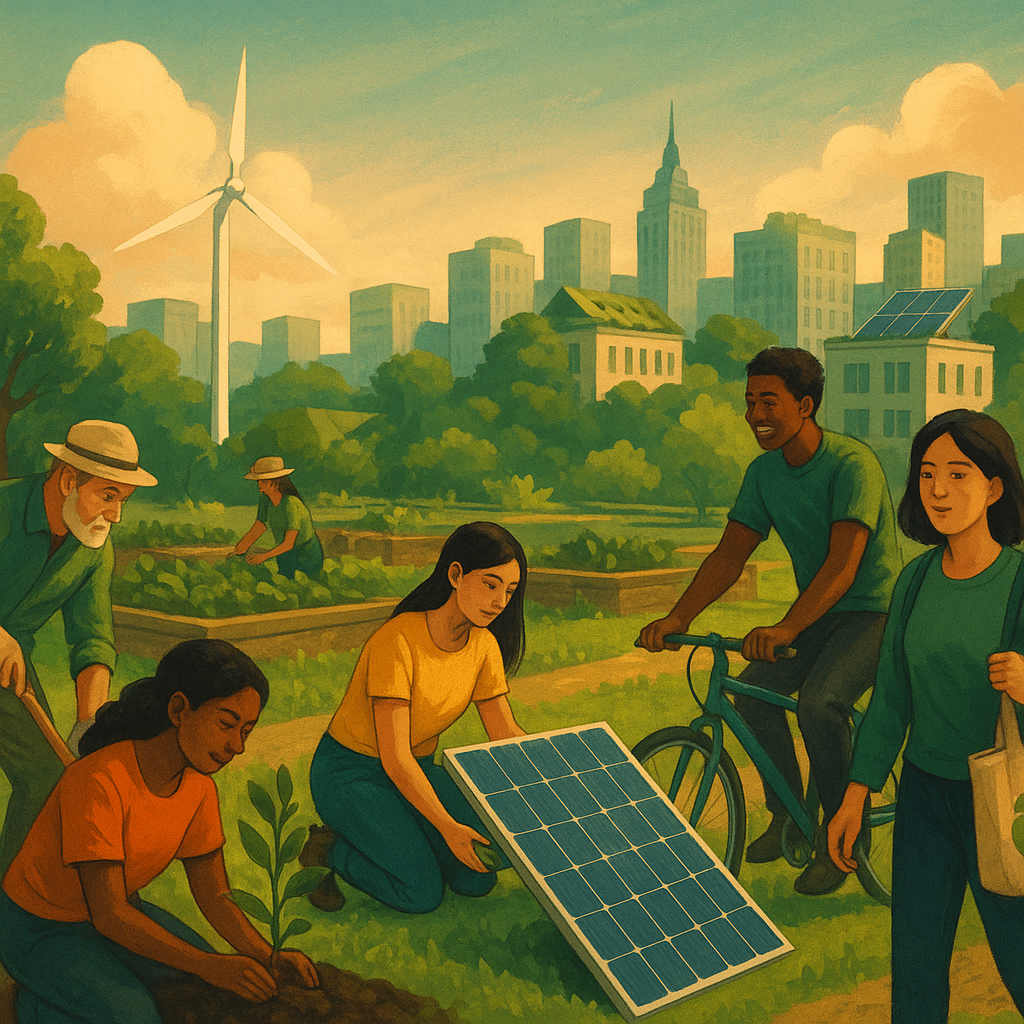
Opening Scene: The Urgency Behind Climate Action
In early 2026, global temperatures reached unprecedented highs, with the World Meteorological Organization confirming that the past five years have been the warmest on record. This escalating crisis is no longer a distant threat but a persistent reality affecting millions worldwide. From devastating wildfires in Australia and Canada to unprecedented flooding in Europe and Asia, climate change is reshaping our planet's landscape and societies. Yet, despite growing awareness, many individuals and communities struggle to translate concern into meaningful climate action.
Understanding how to get started with climate action is crucial. Too often, the enormity of the challenge leads to paralysis. However, as experts increasingly emphasize, every action counts, and starting small can build momentum toward systemic change. This article dissects the pathways to engaging with climate action effectively in 2026, blending up-to-date data, expert insights, and practical guidance.
"Climate action demands urgency beyond political promises. Real change starts with informed, persistent effort at every level." — Environmental Policy Analyst, TheOmniBuzz
How We Got Here: The Historical Context of Climate Mobilization
The framework for climate action developed over decades, beginning with the scientific consensus on global warming in the late 20th century. The 1992 Earth Summit in Rio and the Kyoto Protocol in 1997 laid foundational international commitments. However, progress has been uneven, hindered by geopolitical conflicts, economic interests, and misinformation campaigns.
By the 2015 Paris Agreement, a pivotal moment united 196 countries in pledging to limit global warming to well below 2 degrees Celsius, ideally 1.5 degrees, compared to pre-industrial levels. These targets catalyzed national policies, corporate sustainability strategies, and civil society activism. Yet, reports from the Intergovernmental Panel on Climate Change (IPCC) consistently highlighted that current efforts fell short of these goals.
Over the past decade, grassroots movements like Fridays for Future and Extinction Rebellion galvanized youth and public opinion, while technological advances in renewable energy and electric vehicles improved the feasibility of decarbonization. Despite these gains, greenhouse gas emissions continued to rise globally until recent signs in 2025 and 2026 showed a slight plateauing, reflecting intensified climate policies and innovation.
Understanding this trajectory provides essential context for individuals beginning their climate action journey today. The battle is not just scientific or political but deeply social, requiring collective engagement and sustained commitment.
Core Steps to Starting Climate Action: Data-Driven Approaches
Taking effective climate action begins with knowledge and deliberate choices. The following core steps, supported by recent data and expert recommendations, provide a roadmap for individuals and communities.
- Educate Yourself: Climate science evolves rapidly. Trusted sources like the IPCC reports, national environmental agencies, and reputable media outlets offer up-to-date information. TheOmniBuzz’s article Taking Climate Action Seriously: A Practical Guide for Beginners is an excellent starting point.
- Assess Your Carbon Footprint: Tools like the Global Carbon Atlas and emerging AI-driven apps can calculate personal and household emissions. This baseline helps target reductions where they matter most.
- Shift Energy Consumption: Transitioning to renewable energy sources is critical. According to the International Renewable Energy Agency (IRENA), renewables now account for over 35% of global electricity generation in 2026, a remarkable increase from 20% in 2020. Individuals can invest in green energy providers or install solar panels.
- Change Transportation Habits: Transportation is a leading source of emissions. Electric vehicles (EVs) sales doubled in the past two years, currently representing 15% of new car sales worldwide. Public transit, biking, or walking reduces footprints significantly.
- Adopt Sustainable Diets: Food production contributes about 25% of global emissions, with meat and dairy being major factors. Plant-based diets, reducing food waste, and supporting local agriculture are impactful.
- Engage Politically and Socially: Voting for climate-conscious leaders, participating in local initiatives, and supporting climate organizations amplify individual efforts.
"Individual actions are the seeds of systemic transformation; when millions act, policy and market shifts follow." — Climate Activist and Author, TheOmniBuzz
Current Developments in Climate Action 2026
The year 2026 marks a critical phase in climate action characterized by both accelerated innovation and persistent challenges. Governments are adopting more aggressive targets under the renewed Glasgow Pact commitments, aiming for net-zero emissions by 2050, with several countries moving their deadlines forward to the early 2040s.
Technological advances play a significant role. Carbon capture and storage (CCS) technologies have become commercially viable and are scaling, though concerns about reliance on such solutions without emission reductions remain. The rise of green hydrogen as a fuel alternative is gaining momentum, with projects in Europe and Asia expanding rapidly.
In the corporate realm, Environmental, Social, and Governance (ESG) criteria have evolved into mandatory reporting standards in many regions, increasing transparency and accountability. However, greenwashing remains a concern, necessitating rigorous verification frameworks.
Public engagement is also intensifying. The integration of climate education into school curricula worldwide and the proliferation of community-based sustainability programs empower citizens with the knowledge and tools to act. Local climate councils and citizen assemblies have become common, enhancing democratic participation in climate governance.
Despite these advances, the Global Climate Risk Index 2026 warns that vulnerable populations continue to suffer disproportionately from extreme weather events, underscoring the urgent need for climate justice in action strategies.
Expert Perspectives and Industry Impact
Leading climate experts emphasize that starting climate action requires a blend of personal responsibility and systemic advocacy. Dr. Helena Kim, a renowned climatologist, argues that "individual choices are catalysts, but the scale of impact depends on transforming energy systems, urban planning, and financial markets." She advocates for citizens to engage both at home and in policy arenas.
Industry sectors have responded variably. The energy sector is witnessing a paradigm shift, with coal-fired plants shutting down rapidly in favor of renewables. The transportation industry is investing heavily in EV infrastructure and sustainable aviation fuels.
The finance industry’s increasing integration of climate risk into investment decisions is reshaping capital flows. Sustainable bonds and climate-linked loans reached a record $2.1 trillion globally in 2025, reflecting growing investor demand for climate-resilient portfolios.
Meanwhile, the agriculture sector faces challenges in adopting climate-smart practices due to economic constraints and knowledge gaps. Innovations such as precision farming and regenerative agriculture are promising but require scaling.
Experts caution that no single sector can solve climate change alone. Cross-sector collaboration, supported by policy incentives and public engagement, is essential.
Actionable Takeaways: What to Watch and How to Move Forward
Looking ahead, the trajectory of climate action hinges on broad-based participation and innovation. Here are key takeaways for those ready to begin or deepen their climate engagement:
- Leverage Community Networks: Joining local environmental groups or online platforms fosters shared learning and collective impact.
- Stay Informed on Policy Changes: Tracking legislation at local and national levels empowers individuals to advocate effectively.
- Invest in Resilience: Supporting projects focused on climate adaptation and disaster preparedness protects vulnerable communities.
- Support Sustainable Businesses: Choosing products and services from companies with verified sustainability commitments drives market transformation.
- Practice Continuous Improvement: Climate action is an evolving journey; regularly reassessing and enhancing your efforts maximizes impact.
Incorporating these strategies aligns with the insights shared in TheOmniBuzz’s Rethinking Climate Action: Strategies for Urgent and Lasting Impact and Why Climate Action Must Accelerate: Lessons and Leadership in 2026.
"The fight against climate change is not a sprint but a marathon; persistence and adaptability are key." — Senior Climate Policy Advisor, TheOmniBuzz
Real-World Examples: Starting Small, Scaling Big
Consider the example of Freiburg, Germany, often cited as a model for urban sustainability. Since the 1990s, Freiburg’s citizens and policymakers have prioritized renewable energy, green transportation, and sustainable urban design. Today, over 70% of the city’s electricity comes from renewables, and cycling infrastructure is extensive. This transformation started with grassroots initiatives, demonstrating how local engagement catalyzes systemic change.
Another example is the grassroots organization Sunrise Movement in the United States, which began as a youth-led climate activism group and has grown into a powerful political force influencing legislation and public discourse. Their success underscores the importance of mobilizing communities around shared goals.
On an individual scale, millions have embraced lifestyle changes such as zero-waste living, vegan diets, and energy-efficient home retrofits. These incremental actions, multiplied across populations, reduce emissions and drive cultural shifts.
These case studies illustrate the multifaceted nature of climate action and the multiplicity of entry points available to those willing to engage.