Keeping children safe is every parent's top priority. While we encourage kids to explore, learn, and become independent, it's equally important to teach them how to recognize unsafe situations. Understanding stranger safety for kids helps children build confidence, make smart decisions, and respond appropriately when faced with unfamiliar people.
Instead of teaching children to fear everyone they don't know, parents should focus on helping them identify safe adults, trust their instincts, and follow practical safety rules. With the right guidance, children can stay safe without feeling anxious or afraid.
What Is Stranger Safety?
Stranger safety means teaching children how to interact safely with people they do not know. It's not about assuming every stranger is dangerous—most are not. The goal is to help kids understand when a situation feels unsafe and what actions they should take to protect themselves.
Parents should explain that even someone who appears kind or friendly can sometimes have harmful intentions. That's why children should always follow family safety rules rather than judging someone based on appearance.
Essential Stranger Safety Tips for Kids
1. Never Go Anywhere with a Stranger
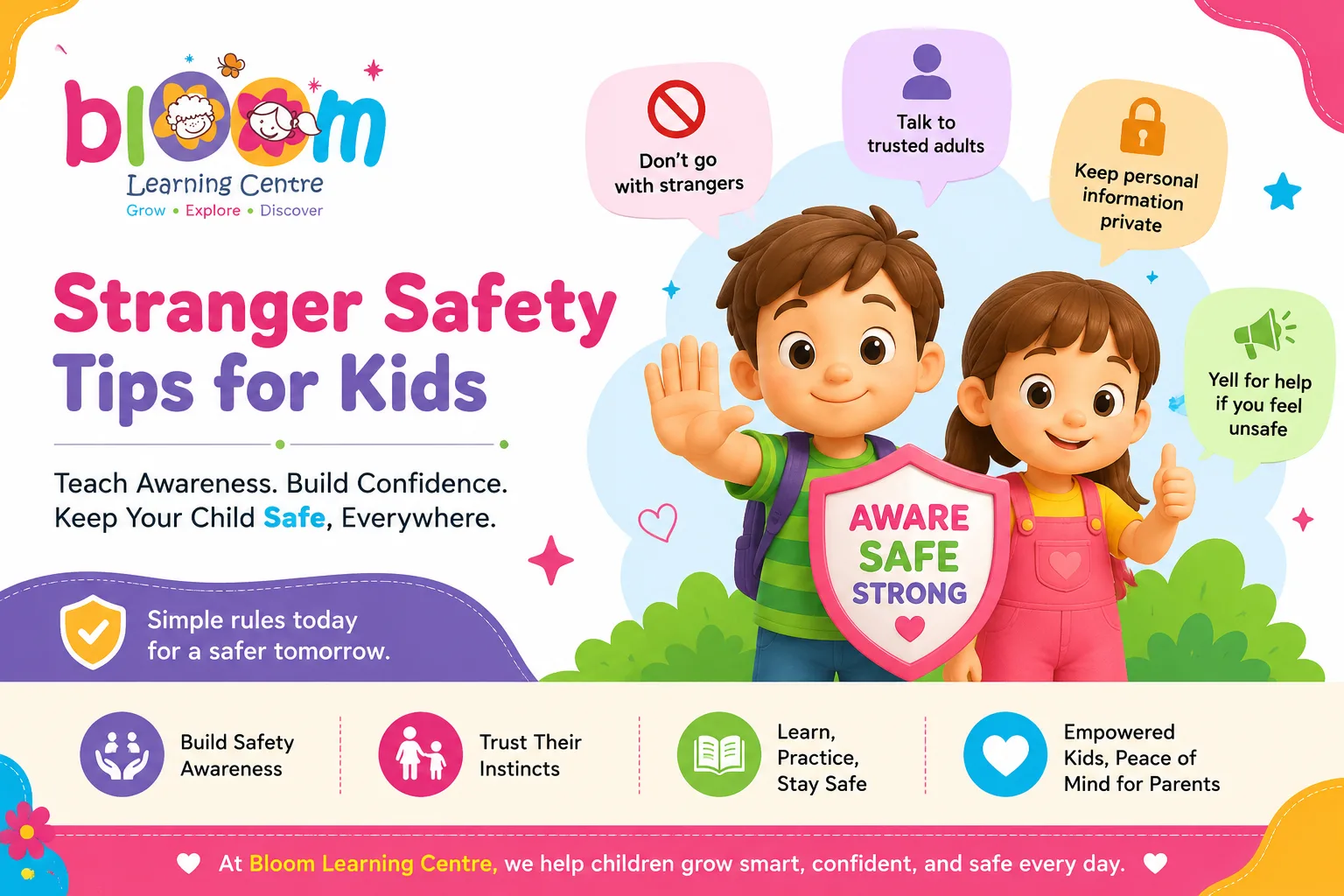
Children should know that they must never leave with someone they don't know, even if that person says their parents sent them or offers gifts, toys, or treats. If a child feels uncomfortable, they should immediately move to a safe place and seek help from a trusted adult.
2. Teach the "No, Go, Yell, Tell" Rule
One of the most effective child safety rules is the simple "No, Go, Yell, Tell" strategy:
- Say No loudly.
- Go to a safe place immediately.
- Yell for help to attract attention.
- Tell a trusted adult what happened.
Practicing this rule regularly helps children remember it during real-life situations.
3. Identify Safe Adults
Children should learn who they can trust if they ever need help. Safe adults may include teachers, police officers, school staff, security guards, or a parent with children nearby. Knowing who to approach gives children confidence in unfamiliar situations.
4. Protect Personal Information
Teach children never to share personal information such as their home address, school name, phone number, or family details with strangers. This rule also applies to online conversations and social media.
5. Trust Their Feelings
Children should understand that it's okay to walk away if something doesn't feel right. Encourage them to trust their instincts and always talk to a trusted adult if they experience anything that makes them uncomfortable.
Stranger Safety in the Digital World
Today's children spend more time online than ever before, making online safety for kids just as important as real-world safety.
Parents should remind children to:
- Never chat with unknown people online.
- Avoid sharing photos or personal information.
- Ignore suspicious messages and friend requests.
- Inform a parent immediately if someone online makes them uncomfortable.
Regular conversations about digital safety help children make smarter choices while using the internet.
How Parents Can Reinforce Safety Skills
Children learn best through repetition and practice. Parents can make stranger safety lessons engaging by using role-playing activities, storytelling, and real-life scenarios. These simple exercises help children respond calmly and confidently in unexpected situations.
Rather than creating fear, focus on building awareness, confidence, and open communication. Let your child know they can always come to you without fear of getting into trouble.
Final Thoughts
Teaching stranger safety tips for kids is one of the most valuable life skills parents can provide. By helping children recognize unsafe situations, trust their instincts, and practice simple safety rules, parents empower them to make safer decisions every day.
Safety education should be an ongoing conversation—not a one-time lesson. The earlier children learn these essential skills, the more prepared and confident they become throughout life.
Help Your Child Build Confidence with Bloom
At Bloom, we believe that children's safety begins with knowledge, confidence, and practical life skills. Through engaging activities, role-playing, interactive learning, and age-appropriate guidance, we help children understand personal safety in a positive and empowering way.
Whether it's stranger safety, communication skills, emotional development, or everyday life skills, Bloom creates a nurturing environment where children learn with confidence.
Discover how Bloom helps children grow smarter, safer, and more confident. Visit: https://www.bloom.ky