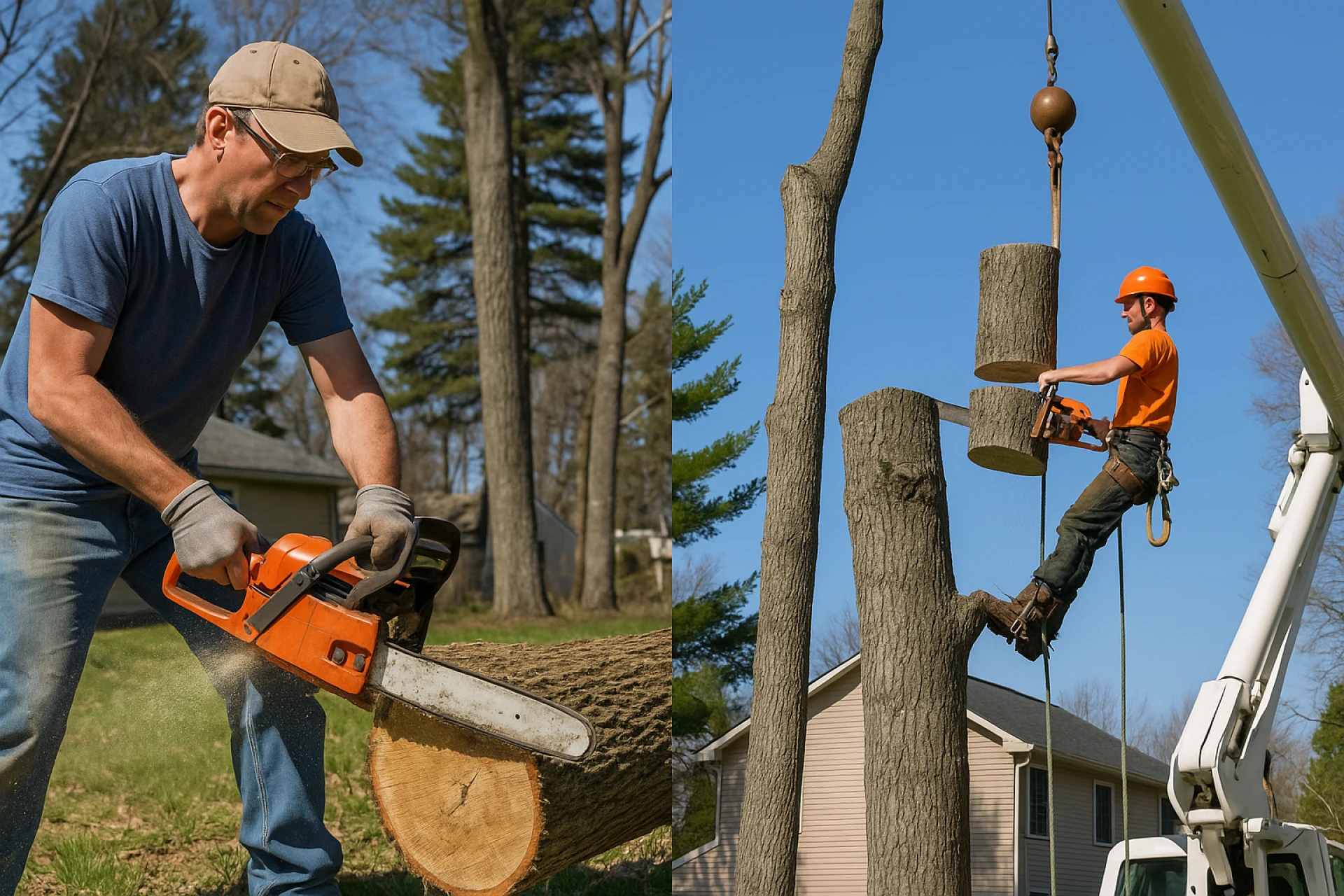
Trees are a cherished part of Connecticut’s landscape, providing beauty, shade, and value to our properties. However, there are times when tree removal becomes a necessary and responsible decision. For homeowners across the Nutmeg State—from New Haven to Hartford—this process involves much more than just cutting down a tree. It requires careful planning, an understanding of local regulations, and, in most cases, the expertise of professional arborists.
This guide will walk you through the key aspects of professional tree removal, helping you make informed decisions to protect your home and preserve Connecticut’s natural beauty safely.
When Is Tree Removal Necessary?
Recognizing the right time for removal is the first step. Key indicators include:
- Dead, Dying, or Diseased Trees: A tree that cannot be treated poses a significant safety hazard, especially during Connecticut’s storms-.
- Significant Storm Damage: A tree with a split trunk, major broken limbs, or a severe lean after a storm often cannot recover and may be unstable-
- Structural Interference: Trees growing too close to your home, garage, power lines, or other structures may need removal to prevent costly damage-
- Landscape Renovation: Removing a tree may be part of a larger project to create space or improve your yard’s design-
The Dangers of DIY Tree Removal
Many property owners consider removing a tree themselves, but this is one of the most dangerous home projects imaginable. The risks far outweigh any potential savings.
- Extreme Personal Risk: Tree removal involves working at heights with chainsaws near homes and power lines. The U.S. Bureau of Labor Statistics consistently ranks this work as one of the most hazardous professions. Professional crews use specialized safety equipment and years of training that DIYers lack
- Property Damage: An uncontrolled fall can cause catastrophic damage to your home, vehicles, fences, or your neighbor’s property. Professionals use techniques like directional felling, rigging, and cranes to lower sections safely-
.
- Hidden Hazards and Costs: A downed tree is often under immense tension. Cutting it incorrectly can cause it to snap or shift violently. Professionals are trained to identify and manage these hidden dangers-
.
- Insurance and Legal Liability: Most homeowner’s insurance will not cover injuries or damages from DIY tree work. Reputable Connecticut tree service companies carry comprehensive liability and workers’ compensation insurance, protecting you from financial risk-
What to Expect from a Professional Connecticut Tree Service
When you hire a professional company like QJF Tree Services, you can expect a systematic, safety-focused process.
Phase of ServiceWhat Professionals DoYour Benefit1. Assessment & QuoteA certified arborist inspects the tree, assesses risks, checks for permits, and provides a detailed, written estimate-
.Clear understanding of the scope, cost, and plan before work begins.2. Strategic PlanningThe crew creates a removal plan, determines fall paths, sets up safety zones, and prepares specialized equipment-
.A methodical approach that prioritizes safety for your property and the crew.3. Safe ExecutionUsing techniques like sectional removal and rigging, the tree is dismantled piece by piece, especially in tight spaces common in Connecticut neighborhoods-
.Minimized risk and zero damage to your lawn, garden, or structures.4. Cleanup & DisposalAll wood, brush, and debris are removed, chipped for mulch, or cut for firewood. The site is left clean and safe-
.A hassle-free experience with no leftover mess for you to handle.5. Stump Management (Optional)The stump is ground below ground level using a stump grinder, allowing you to replant grass or a new tree in the area-
.Complete removal of the tripping hazard and aesthetic eyesore.
The Local Connecticut Factor: Permits and Regulations
Connecticut towns and cities often have specific regulations regarding tree removal, especially for larger trees, trees in certain zones, or protected species-
- Permit Requirements: Many municipalities require a permit before a tree can be removed-
- . A reputable local tree service will be familiar with the rules in your town—whether you’re in Southbury, West Hartford, or New Haven—and can often handle the permit application process on your behalf-
.
- Utility Lines: If a tree is near power lines, coordination with the local utility company is essential. In some cases, they may handle the work themselves-
.
- Property Lines: Always confirm the tree is entirely on your property. If it straddles a boundary, you may need your neighbor’s approval-
Choosing the Right Tree Service in Connecticut
Your choice of company is critical. Look for these hallmarks of a trustworthy, professional service:
- Certification and Insurance: Always hire a company with ISA Certified Arborists on staff and ask for proof of both liability and workers’ compensation insurance-
- Local Reputation and Reviews: Choose a company with deep roots in the community. Read online reviews and ask for local references to gauge their reliability and quality of work-
- Detailed, Written Estimate: Be wary of vague verbal quotes. A professional estimate should detail the scope of work, total cost, cleanup process, and insurance information-
- Commitment to Safety: Ask about their safety protocols and equipment. Professional crews should arrive with hard hats, safety glasses, and modern, well-maintained machinery-
Partnering for a Safer, More Beautiful Property
At QJF Tree Services, we combine certified expertise with a deep understanding of Connecticut’s diverse tree species and local regulations. We treat every job with the precision and care it deserves, ensuring your property is safe, clean, and ready for its next chapter.
Don’t let a hazardous tree threaten your safety and peace of mind. If you’re considering tree removal on your Connecticut property, start with a professional assessment.
Contact QJF Tree Services today for a free, no-obligation consultation and estimate. Let our local experts provide the safe, efficient, and professional service you deserve.