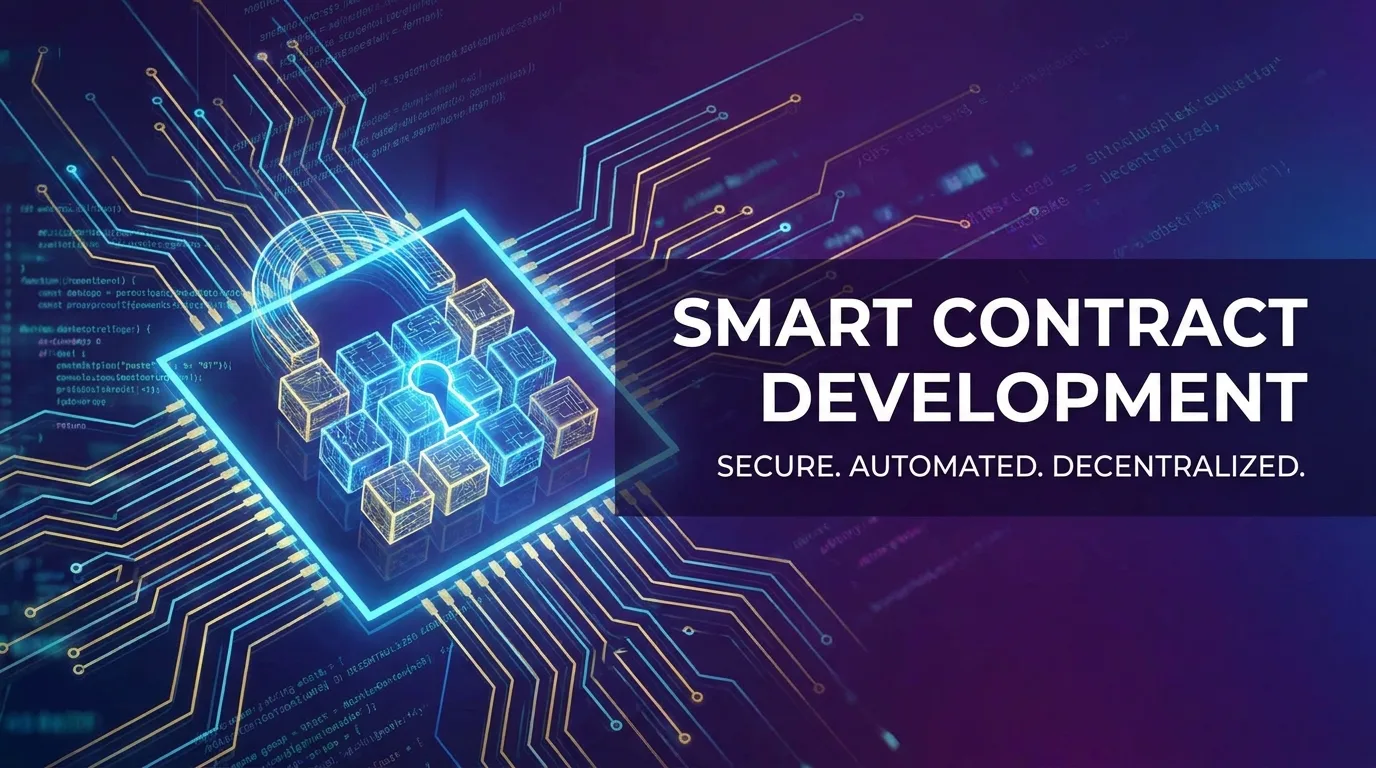
Blockchain technology has introduced a new way of creating trust, transparency, and automation in digital ecosystems. Among the most transformative innovations within blockchain networks are smart contracts self-executing programs that automatically enforce agreements when predefined conditions are met. These digital contracts have changed how businesses, financial institutions, developers, and individuals interact by eliminating the need for traditional intermediaries and enabling secure, automated transactions.
Initially popularized by the Ethereum blockchain, smart contracts have evolved into a fundamental component of decentralized applications (dApps), decentralized finance (DeFi), non-fungible tokens (NFTs), gaming platforms, supply chain systems, and enterprise blockchain solutions. Their ability to execute agreements without human intervention has opened opportunities for creating faster, more efficient, and transparent digital processes.
Unlike traditional contracts that require legal professionals, banks, or third-party organizations for verification and enforcement, smart contracts operate through blockchain networks where transactions are recorded permanently and executed according to programmed rules. This combination of automation and decentralization has made smart contracts one of the most valuable technologies driving the Web3 revolution.
Understanding how smart contracts work, their benefits, development process, and real-world applications is essential for businesses and entrepreneurs looking to leverage blockchain technology effectively.
Understanding Smart Contracts and Their Evolution
A smart contract is a computer program stored on a blockchain that automatically executes specific actions when predetermined conditions are satisfied. The concept was first introduced by computer scientist Nick Szabo in 1994, who described smart contracts as digital protocols designed to facilitate, verify, and enforce agreements without relying on traditional intermediaries.
However, smart contracts became practically achievable with the emergence of blockchain platforms capable of running programmable code. The launch of Ethereum in 2015 marked a significant milestone because it introduced a decentralized environment where developers could create and deploy smart contracts for various applications.
Today, smart contracts operate across multiple blockchain networks, including Ethereum, BNB Chain, Polygon, Solana, Avalanche, and other advanced platforms. These networks provide developers with the infrastructure needed to create decentralized applications that can serve millions of users worldwide.
The growing adoption of smart contracts has transformed blockchain from a simple digital currency technology into a programmable ecosystem capable of supporting complex financial systems, automated business processes, and decentralized digital economies.
Smart Contract Development: Building the Foundation of Decentralized Applications
The increasing demand for blockchain-based solutions has made Smart Contract Development a crucial process for businesses seeking automation, security, and transparency. Smart contract development involves designing, coding, testing, deploying, and maintaining blockchain-based programs that execute predefined operations without intermediaries.
Professional smart contract development services help organizations create customized blockchain solutions based on their specific requirements. These services typically include contract architecture design, blockchain selection, Solidity or Rust development, security testing, integration with decentralized applications, and deployment support.
A reliable smart contract development company focuses on creating secure and scalable contracts that minimize vulnerabilities and ensure efficient performance. Since smart contracts directly manage digital assets and financial transactions, even small coding errors can result in significant security risks. Therefore, experienced developers follow industry best practices, conduct extensive testing, and implement security mechanisms before deploying contracts on the blockchain.
The smart contract development process generally includes several important stages:
Requirement Analysis and Planning
The first stage involves understanding the project's objectives, business requirements, blockchain network selection, and contract functionality. Developers analyze how automation can improve existing processes and determine the most suitable technical approach.
Smart Contract Architecture Design
Developers create the structure and logic of the contract, defining functions, permissions, data storage mechanisms, and interaction methods. A well-designed architecture ensures that the contract remains efficient, secure, and scalable.
Coding and Development
Smart contracts are written using blockchain-specific programming languages such as Solidity for Ethereum-based networks, Rust for Solana, and Vyper for Ethereum-compatible applications. Developers carefully implement business logic while following secure coding practices.
Testing and Security Evaluation
Testing is one of the most critical phases of smart contract development. Developers conduct unit testing, integration testing, and vulnerability assessments to identify potential issues before deployment.
Deployment and Maintenance
Once tested, the smart contract is deployed on the blockchain network. After deployment, continuous monitoring and updates may be required to maintain security and improve functionality.
How Smart Contracts Work: A Technical Overview
Smart contracts operate through a combination of blockchain infrastructure, programming logic, and decentralized verification mechanisms.
The process begins when a user initiates a transaction that interacts with a smart contract. This transaction is submitted to the blockchain network, where nodes validate it according to consensus rules.
Once the required conditions are met, the smart contract automatically executes the programmed instructions. For example, in a decentralized lending platform, a smart contract can automatically release funds to a borrower once collateral requirements are verified.
The execution process involves several key components:
Blockchain Network
The blockchain provides the secure and decentralized environment where smart contracts are stored and executed. Since copies of the blockchain exist across multiple nodes, no single entity can manipulate contract data.
Programming Logic
Smart contracts contain predefined rules written in code. These rules determine how transactions are processed and what actions should occur when specific conditions are fulfilled.
Consensus Mechanism
Blockchain consensus ensures that all network participants agree on transaction validity. This prevents unauthorized modifications and maintains system integrity.
Digital Wallet Interaction
Users interact with smart contracts through cryptocurrency wallets. These wallets allow individuals to approve transactions and access decentralized applications securely.
This automated execution model removes dependency on intermediaries, making digital transactions faster, cheaper, and more reliable.
Major Benefits of Smart Contracts
Increased Transparency
One of the biggest advantages of smart contracts is transparency. Since contract code and transaction records are stored on a public blockchain, participants can verify operations independently.
This visibility reduces disputes and creates greater trust among users, businesses, and stakeholders.
Automation and Efficiency
Smart contracts automate processes that traditionally require manual verification and administrative involvement. Automated execution reduces delays, minimizes human errors, and improves operational efficiency.
For example, insurance companies can use smart contracts to automatically process claims when verified conditions, such as flight delays or weather events, occur.
Reduced Costs
Traditional agreements often involve lawyers, brokers, banks, and other intermediaries. Smart contracts reduce reliance on these third parties, lowering operational expenses.
Businesses can streamline workflows while maintaining secure and verifiable transactions.
Enhanced Security
Blockchain-based smart contracts benefit from cryptographic security and decentralized storage. Once deployed, contract data becomes extremely difficult to alter without network agreement.
However, security depends heavily on proper coding practices, making professional development and auditing essential.
Faster Transactions
Smart contracts execute automatically when conditions are fulfilled, eliminating lengthy approval processes. This enables near-instant transactions across financial services, supply chains, and digital platforms.
Real-World Use Cases of Smart Contracts
Decentralized Finance (DeFi)
DeFi represents one of the most significant applications of smart contracts. Platforms offering lending, borrowing, staking, decentralized exchanges, and yield farming rely heavily on automated contracts.
Smart contracts allow users to interact with financial services without banks or centralized institutions. They manage transactions, collateral requirements, interest calculations, and repayments automatically.
Non-Fungible Tokens (NFTs)
Smart contracts power NFT creation, ownership verification, transfers, and royalty distribution. Artists and creators use these contracts to maintain ownership rights and receive automated payments whenever their digital assets are resold.
Supply Chain Management
Businesses use smart contracts to improve supply chain transparency. Contracts can automatically track product movement, verify authenticity, and trigger payments once delivery conditions are satisfied.
This helps reduce fraud and improves accountability across global supply networks.
Gaming and Metaverse Applications
Blockchain gaming platforms use smart contracts to manage digital assets, rewards, ownership records, and in-game economies.
Players can truly own digital items and trade them across decentralized marketplaces.
Healthcare Systems
Smart contracts can improve healthcare data management by enabling secure sharing of medical information while maintaining privacy and access control.
Healthcare providers can automate insurance processing, patient consent management, and record verification.
Real Estate Transactions
Smart contracts can simplify property transactions by automating ownership transfers, payment verification, and documentation processes.
This reduces paperwork and improves transaction speed while maintaining secure records.
Challenges and Limitations of Smart Contracts
Despite their advantages, smart contracts also face several challenges.
Security Vulnerabilities
Smart contracts are vulnerable to coding errors, exploits, and malicious attacks. High-profile incidents in blockchain history have demonstrated the importance of security audits before deployment.
Scalability Issues
Some blockchain networks experience congestion and high transaction fees during periods of heavy usage. Developers must choose appropriate blockchain platforms to ensure scalability.
Legal and Regulatory Uncertainty
Smart contracts operate globally, but regulations surrounding blockchain-based agreements continue to evolve. Businesses must consider compliance requirements when implementing smart contract solutions.
Immutability Concerns
Once deployed, smart contracts are difficult to modify. While this provides security, it can create challenges when bugs or unexpected issues arise.
Future of Smart Contracts
The future of smart contracts is closely connected with the growth of Web3, decentralized applications, and digital economies. Emerging technologies such as artificial intelligence integration, cross-chain communication, and layer-2 scaling solutions are expected to improve smart contract capabilities.
Businesses are increasingly exploring smart contracts to automate complex processes, reduce operational costs, and create new digital business models.
As blockchain infrastructure matures, smart contracts will likely become a standard technology across industries, similar to how databases and cloud computing transformed traditional software development.
Conclusion
Smart contracts have become a cornerstone of blockchain innovation by enabling secure, automated, and transparent digital agreements without relying on intermediaries. From decentralized finance and NFTs to enterprise applications and supply chain management, their potential continues to expand across multiple industries. However, successful implementation requires secure coding practices, technical expertise, and reliable development strategies. Blockchain App Factory provides comprehensive smart contract development services, helping businesses create secure, scalable, and customized blockchain solutions through expert smart contract development, advanced blockchain technologies, and industry-focused Web3 solutions.