
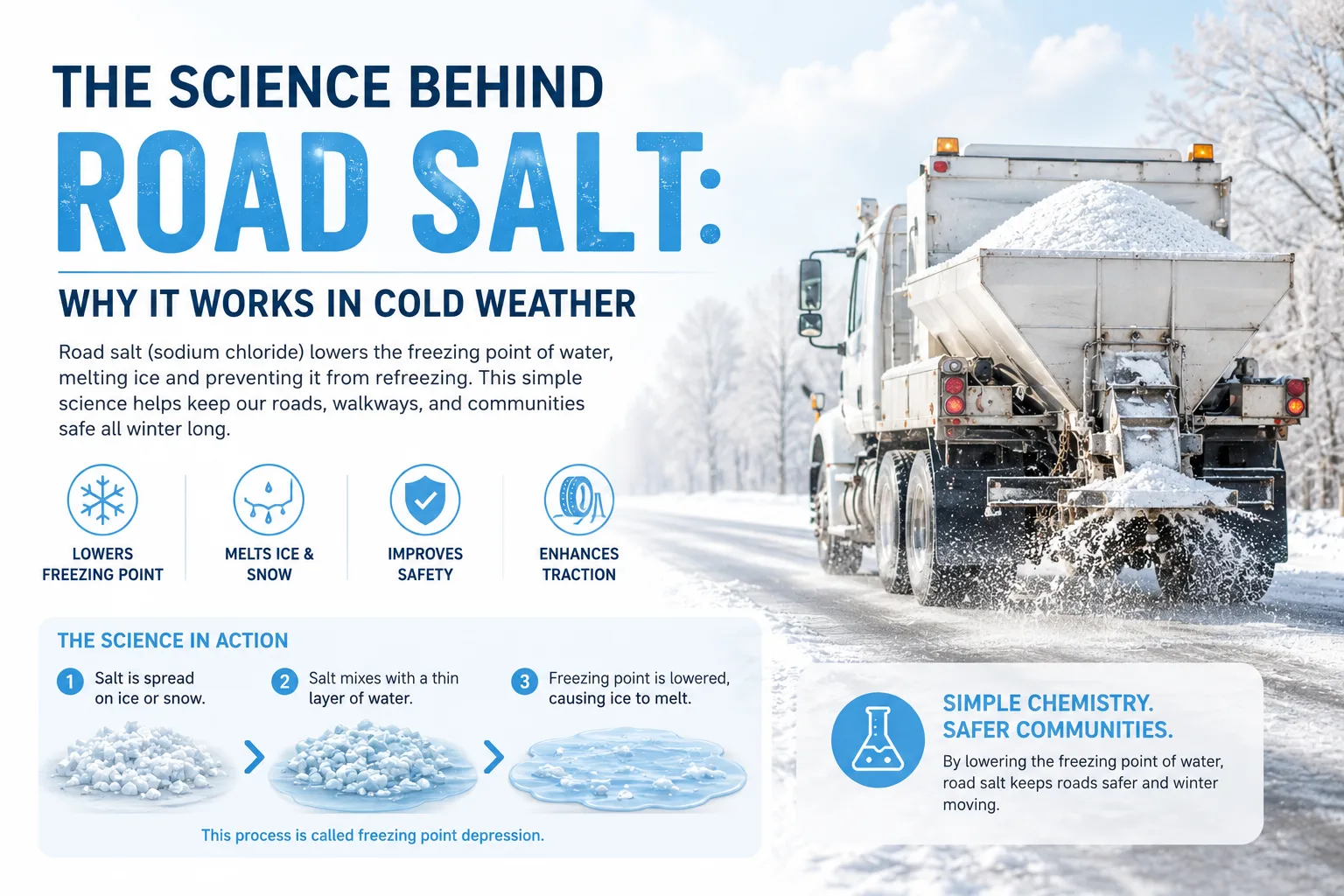
Winter weather can transform roads, parking lots, and walkways into hazardous surfaces within hours. Ice and snow accumulation not only disrupt transportation but also increase the risk of accidents and injuries. Among the many solutions available for winter maintenance, road salt remains one of the most effective and widely used options. But what makes road salt so effective in cold weather?
Understanding the science behind road salt can help municipalities, businesses, and property owners make informed decisions about winter safety and infrastructure maintenance.
What Is Road Salt?
Road salt is primarily composed of sodium chloride (NaCl), the same compound found in table salt. However, road salt is produced and distributed in larger quantities for industrial and commercial use. It is commonly applied to roads, highways, parking lots, sidewalks, and other outdoor surfaces to prevent ice formation and improve traction during winter conditions.
Municipalities and contractors often prefer bulk road salt because it can be stored and applied efficiently throughout the winter season.
How Ice Forms on Roads
To understand why road salt works, it's important to know how ice develops. Water freezes when temperatures drop to 0°C (32°F). During winter storms, moisture on road surfaces freezes and creates a layer of ice that can become extremely slippery.
Once ice forms, vehicle tires and pedestrian footwear have less direct contact with the pavement, reducing friction and increasing the likelihood of accidents.
The Science of Freezing Point Depression
Road salt works through a process known as freezing point depression. When salt is spread on ice or snow, it dissolves into the thin layer of liquid water that is naturally present on the surface.
The resulting saltwater solution has a lower freezing point than pure water. Because of this, the ice requires a colder temperature to remain frozen. As the freezing point decreases, existing ice begins to melt, and new ice formation becomes more difficult.
This simple chemical reaction is what makes road salt such an effective winter maintenance tool.
Why Road Salt Is Effective in Cold Weather
Road salt performs best when temperatures are moderately below freezing. In many winter conditions, sodium chloride can effectively melt ice and prevent accumulation. Some of the key benefits include:
- Faster ice melting on roads and walkways
- Improved vehicle traction and safety
- Reduced risk of slips and falls
- More efficient snow removal operations
- Lower maintenance costs compared to many alternative solutions
When applied proactively before a storm, road salt can also prevent ice from bonding strongly to pavement surfaces, making snow removal easier.
Factors That Influence Salt Performance
Several environmental factors affect how well road salt works:
- Temperature: As temperatures continue to drop, salt becomes less effective. Standard sodium chloride performs best above approximately -9°C to -12°C (15°F to 10°F). In extremely cold conditions, alternative de-icing products may be required.
- Traffic Volume: Vehicle movement helps break up ice and distribute salt across road surfaces, accelerating the melting process.
- Application Rate: Using the correct amount of salt is critical. Too little may not provide adequate melting power, while excessive application can increase costs and environmental impact.
- Moisture Levels: Salt needs moisture to dissolve and initiate the freezing point depression process. Dry conditions may slow its effectiveness until sufficient moisture becomes available.
The Importance of Quality Bulk Road Salt
Not all road salt products are equal. High-quality bulk road salt provides consistent particle sizing, reliable performance, and efficient spreading characteristics.
Organizations responsible for winter maintenance often work with trusted suppliers to ensure they have access to dependable salt inventories before severe weather arrives. Proper storage is equally important to preserve product quality and prevent contamination throughout the season.
The Future of Winter Road Safety
Advancements in winter maintenance technology continue to improve how road salt is stored, distributed, and applied. Smart weather monitoring systems, precision spreaders, and improved storage solutions are helping organizations optimize salt usage while maintaining safer roads.
Despite emerging technologies, road salt remains one of the most practical and cost-effective tools for combating winter hazards. Its ability to lower the freezing point of water makes it an essential component of winter infrastructure management across North America.
Conclusion
The effectiveness of road salt is rooted in simple but powerful chemistry. By lowering the freezing point of water, road salt helps melt ice, prevent hazardous conditions, and keep transportation networks functioning during winter weather.
Whether used by municipalities, contractors, or commercial property managers, road salt continues to play a vital role in improving winter safety. Understanding the science behind its performance allows organizations to use it more effectively, efficiently, and responsibly throughout the cold season.