Feeling a bit lost about picking the right Salesforce consulting partner? You’re not alone. With so many options out there, it’s tricky to know who’ll actually make your life easier and get Salesforce working for your business. But choosing the right Salesforce consulting or implementing partner can be the difference between a smooth upgrade and a total headache. Let me help you navigate it.
Why Bring a Salesforce Consulting Partner on Board?
Think of a Salesforce Consulting Partner like your personal guide through a jungle of tech and processes. They’re not just the people who switch Salesforce on and leave you to it—they’re the experts who tailor the whole thing to fit your business like a glove.
Here’s what they do for you:
- Stop you from making costly mistakes.
- Customize the platform exactly how your team works.
- Teach your people so they actually WANT to use it.
- Stay on hand when you hit bumps later on.
It’s like hiring a builder who knows your style and your block, not just any handyman off the street.
What Does a Salesforce Consulting/Implementing Partner Actually Do?
Good consultants jump in deep. They’ll:
- Listen to what’s slowing you down.
- Sketch out a plan that fits your goals.
- Build and tweak modules (like sales or service) so they work for you.
- Connect Salesforce with your other systems, like marketing or finance tools.
- Move your important data safely.
- Help train your team and be there long after launch for backup.
You get a partner who’s invested in your success, not just ticking a box.
The Real Perks of Picking the Right Partner
When you find a great one, things get easier fast:
- You get advice that actually makes sense for your business.
- Your Salesforce setup happens faster and works better.
- Your workflows smooth out with custom dashboards and automation.
- You are never left behind when you receive ongoing support.
- Working together feels like a team effort, not a transaction.
Here’s a quick story: One Aussie business worked with a local partner who really got their industry. They customized everything and trained staff properly, and boom—a 40% boost in sales productivity within half a year. That’s the power of the right partner.
How to Pick Your Perfect Salesforce Partner
Here’s how I’d do it:
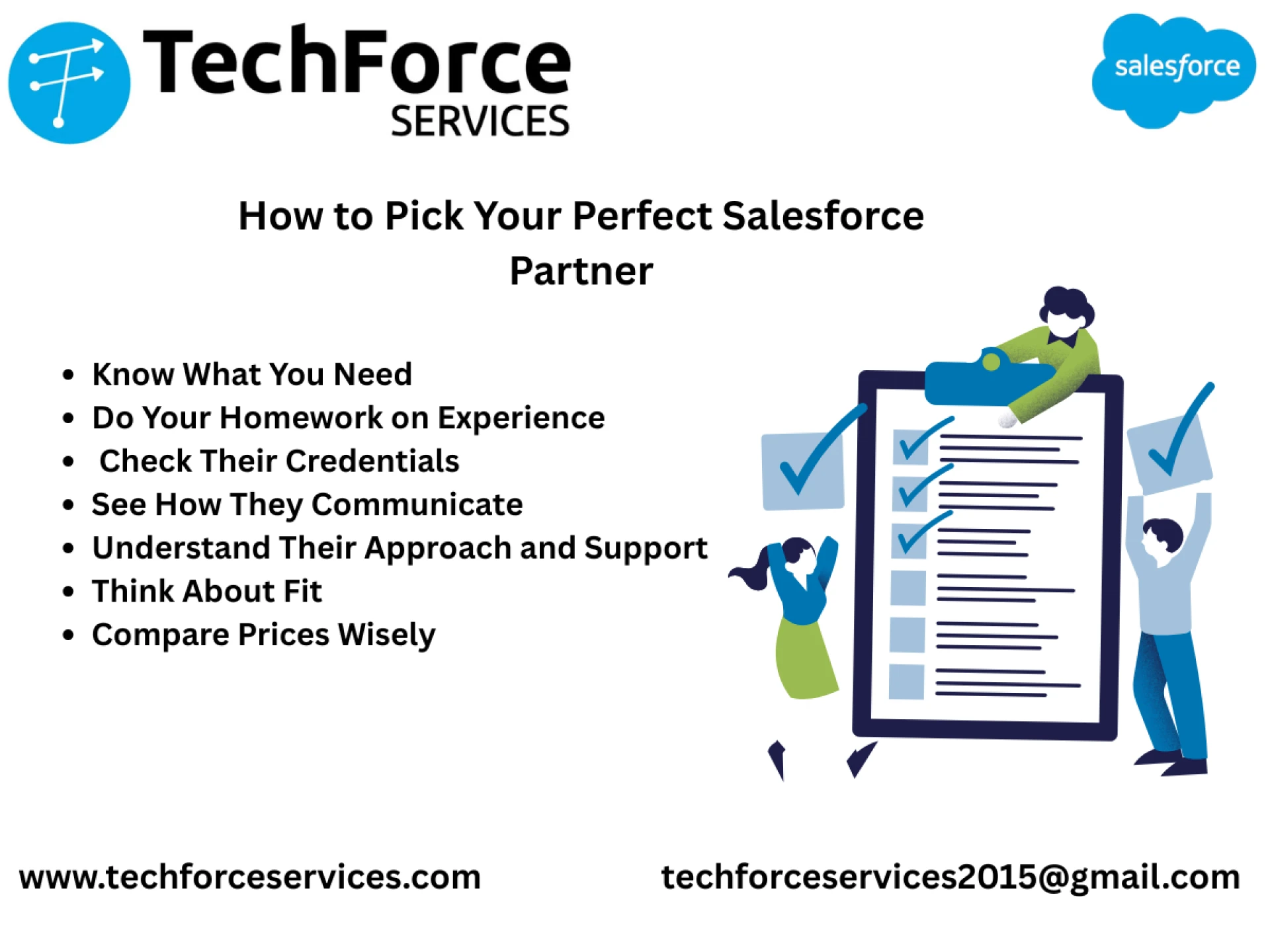
1. Know What You Need
Be clear on the challenges you want to fix with Salesforce. Are you after more customers, smoother service, and better system links? Also, think about your budget and timeline realistically.
2. Do Your Homework on Experience
Look for partners who get your industry—like healthcare, retail, or finance. Check out their Salesforce certifications and ask to see stories or references from similar companies.
3. Check Their Credentials
Salesforce certifications aren’t just badges; they show the team keeps learning and staying sharp.
4. See How They Communicate
Chat with them. Do they listen? Do they talk your language? Communication is key, so don’t settle for vague or salesy replies.
5. Understand Their Approach and Support
Ask how they run projects—agile, waterfall, or a mix? And don’t forget about post-launch support. Problems come up, so make sure they’re ready.
6. Think About Fit
This is more about vibes than paperwork. Do they get your company culture? Will they be patient and flexible? It’s a long game, so pick someone you can work with well.
7. Compare Prices Wisely
The cheapest isn’t always the best. Look at value, not just cost. A good consultant can save you heaps by getting things done right the first time.
Where to Begin Your Search?
Start local if you can—Australian partners know the market and rules better. Use tools Salesforce offers, or ask around in Salesforce groups or at events like Dreamforce. Personal recommendations go a long way.
Quick Questions to Ask Potential Partners
- Have you handled projects like mine?
- What’s your project approach?
- Who’s on my team, and what are their creds?
- What support do you offer after launch?
- How do you deal with changes or surprises?
- Can I talk to past clients?
Wrapping Up
Picking your Salesforce consulting partner doesn’t have to be scary. Take your time to find someone who listens, understands, and has the skills to back it up. The right partner means smoother projects, happier teams, and real business growth.
If you want, start by sorting out your goals and shortlisting a few partners to chat to. This way, you avoid pitfalls and get Salesforce working for you, not against you.
Remember: the best partners care about your success, not just delivering a project. When you find that, you’re golden.