Look at the front edge of any excavator or loader bucket on a construction site, quarry or mine. The row of pointed parts you see are toothpoints and adaptors. They do the hardest work on the machine, and their life depends mostly on one thing: how well they are cast.
At Sumukh Steel Cast, a steel casting manufacturer and supplier in India, we produce toothpoints and adaptors for earth moving machinery. This guide explains what these parts are, how they work and why steel casting quality matters when you buy.
What Are Toothpoints?
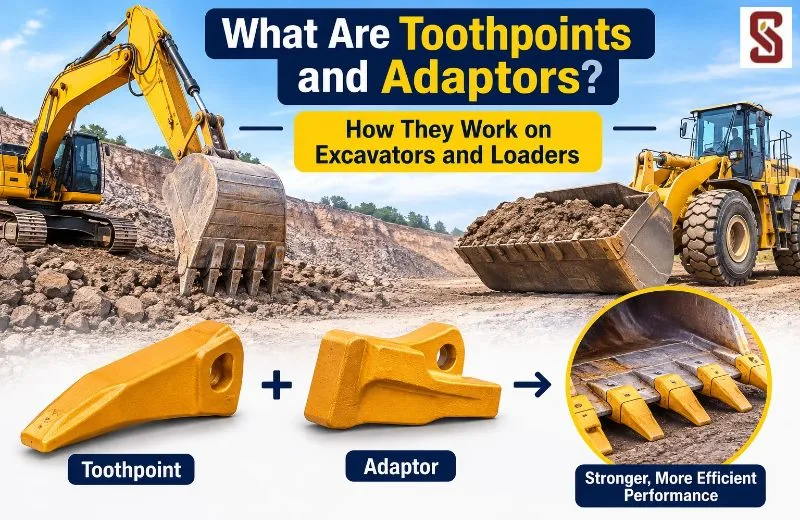
A toothpoint (also called a bucket tooth or tip) is the replaceable, pointed part that cuts into soil, rock, sand, gravel or coal. It is the first part to take impact, so it is designed to wear instead of the bucket. Toothpoints are made as alloy steel castings because the part needs to be hard on the surface and tough inside.
What Are Adaptors?
The adaptor (also called a tooth holder or nose) is fixed to the cutting edge of the bucket. The toothpoint slides over it and is locked with a pin and retainer. This lets operators swap worn tips quickly, without cutting or re-welding the bucket.
Together, they form the ground engaging tools (GET) of your machine.
How They Work Together
When the bucket digs, the load travels through a chain:
- The toothpoint penetrates and breaks the material.
- The pin and retainer hold it firmly in place.
- The adaptor passes the force into the bucket structure.
Each part must fit the others precisely. A loose or poorly cast tooth moves on every dig, wears the adaptor nose and can break, causing downtime.
Why Steel Casting Quality Matters
Many buyers compare toothpoints only on price and shape. The real difference is inside the steel, which comes from the foundry process. A good steel foundry controls four things:
1. Material and alloy composition. The right mix of carbon, manganese, chromium and other elements gives wear resistance without making the tooth brittle. Wrong chemistry means a tip that wears out fast or cracks on impact.
2. Casting process. Consistent molds, correct pouring temperature and controlled cooling reduce defects such as shrinkage, porosity and cracks. These hidden flaws are a common reason teeth fail early.
3. Heat treatment. After casting, the part is heated and cooled in a controlled cycle. This builds a hard, wear-resistant surface and a tough core that can handle shock loads. Good heat-treated steel castings last noticeably longer in tough conditions.
4. Dimensional accuracy. The tooth must match the adaptor profile exactly. A slightly off fit leads to looseness, uneven wear and damage to the adaptor.
This is why buying from a manufacturer with its own casting control gives more reliable results than buying from a trader.
Types of Toothpoints
- Rock teeth: strong, thick tips for blasted rock and hard ground
- Penetration teeth: slim, pointed tips for compact soil and trenching
- Heavy-duty teeth: extra material in the wear zones for mining and quarry work
- Flare teeth: wider tips that protect the bucket edge in abrasive, loose material
- Twin tiger teeth: two-pronged design for tough digging
Choose by material, machine size and daily working hours.
Excavators vs Loaders
Excavators dig and trench, so the tooth needs good penetration and impact strength.
Loaders scoop and carry loose or blasted material, so abrasion resistance matters more.
In both cases, well-cast teeth give you better penetration, lower fuel use, a protected bucket edge and less downtime.
When to Replace Toothpoints
Look for these signs:
- The tip is blunt or flat
- The machine needs more passes or more fuel to dig the same load
- Cracks or chipped edges are visible
- The tooth is loose on the adaptor
- The adaptor nose is worn or damaged
Replacing a tooth early costs far less than repairing an adaptor or bucket edge.
How to Get Longer Life from Your Teeth
- Match the tooth type to your working material
- Check pins and retainers regularly
- Replace teeth in sets so wear stays even
- Avoid using the bucket to pry or hammer
- Buy from a manufacturer who controls casting and heat treatment
Why Choose Sumukh Steel Cast?
As a toothpoints and adaptors manufacturer in India, Sumukh Steel Cast focuses on the things that matter to dealers, contractors and fleet owners:
- Manufacturer-direct supply with no middlemen
- Steel casting expertise from our foundry
- Custom and OEM-compatible castings for popular machine brands
- Bulk supply across India for earth moving machinery spare parts
- Consistent quality from batch to batch
Whether you need standard sizes or custom steel castings made to your drawing, our team can help you find the right fit.
Looking for a reliable toothpoints and adaptors supplier? Contact Sumukh Steel Cast today for a quote.
Frequently Asked Questions
1. What is the difference between a toothpoint and an adaptor?
The toothpoint is the replaceable tip that cuts into the ground. The adaptor is the holder fixed to the bucket that the toothpoint fits onto. The tip wears first and is replaced more often.
2. How does steel casting affect the life of toothpoints?
Casting controls the alloy composition, internal soundness and hardness of the tooth. Well-cast and properly heat-treated teeth resist wear and impact better, while poor casting leads to cracks, porosity and early failure.
3. Can toothpoints be made to custom specifications?
Yes. A steel casting manufacturer can produce toothpoints and adaptors to your drawing or sample, including OEM-compatible profiles. Share your machine model and dimensions to get started.
4. Which materials are used for toothpoints and adaptors?
They are made from alloy steel castings, heat-treated for a hard, wear-resistant surface and a tough core. The exact composition depends on whether the part is for rock, soil or abrasive loading.
5. Why buy toothpoints from a manufacturer instead of a trader?
A manufacturer controls casting, heat treatment and quality checks, so you get consistent quality, better bulk pricing, custom options and dependable supply.