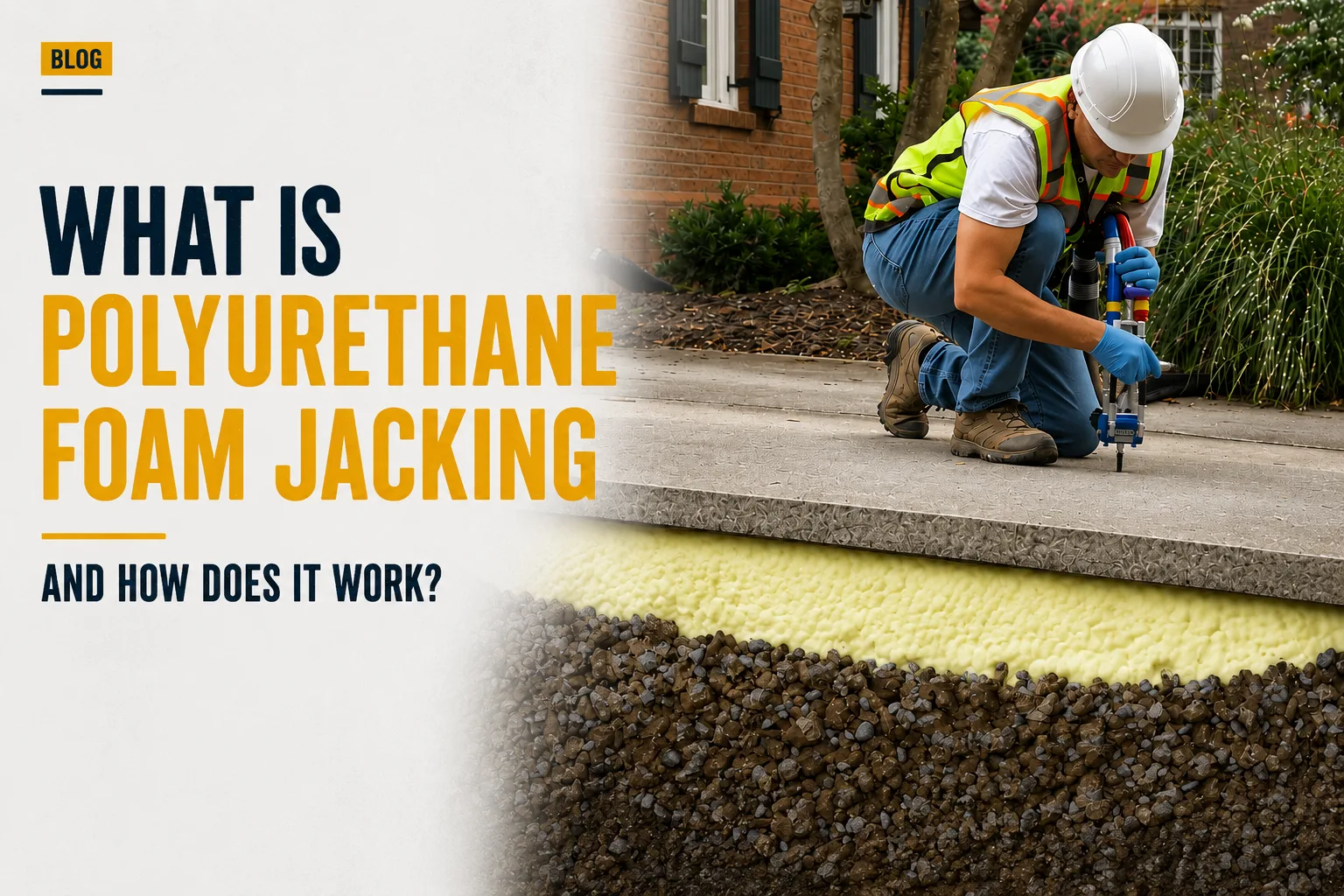
Sunken concrete is a common problem on residential and commercial properties. Driveways, sidewalks, garage floors, pool decks, and patio slabs can all shift out of level when the soil beneath them erodes, compresses, or washes away. One of the most practical ways to correct this problem without tearing out and replacing the concrete is polyurethane foam jacking. This method lifts sunken slabs back toward their original position by injecting expanding foam material beneath the concrete from above. The process is faster than full replacement, causes far less disruption, and produces results that last.
What Polyurethane Foam Jacking Is
Polyurethane foam jacking is a concrete lifting technique that uses a two-part expanding foam to fill voids beneath sunken slabs and raise them back to the correct elevation. The foam is a chemical compound that, when its two components mix, expands rapidly and cures into a rigid, water-resistant material. That expansion is what provides the lifting force.
The method goes by several names in the industry. Some contractors call it foam jacking, poly jacking, or polyurethane lifting. All of these terms refer to the same core process. What sets polyurethane foam jacking apart from older methods is the material itself. The foam is lightweight, expands precisely, and does not retain moisture, which makes it a stable and long-lasting fill beneath concrete.
The technique is used on a wide range of concrete surfaces, including residential driveways, interior garage floors, commercial parking lots, warehouse floors, sidewalks, steps, and pool decks. Any flat concrete slab that has lost support beneath it is a potential candidate for polyurethane foam jacking.
How the Process Works
Site Assessment
Before any material is injected, a trained contractor inspects the slab and the surrounding area. This assessment identifies the likely cause of the settling, the extent of the void beneath the concrete, and whether the slab is structurally sound enough to be lifted rather than replaced.
A slab that is severely fractured or deteriorated from age may not hold up through the lifting process. In those cases, replacement is the more practical option. When the slab is in reasonable condition, and the problem is soil loss rather than concrete failure, polyurethane foam jacking is generally appropriate.
Drilling Small Holes
Once the assessment is complete, the contractor drills small holes through the concrete slab at calculated points. These holes are typically about five eighths of an inch in diameter, which is considerably smaller than the one to two-inch holes required by older mudjacking methods. The smaller hole size means less disturbance to the surface and cleaner patches when the job is done.
The hole locations are chosen based on where the void is located and where the lifting force needs to be applied. Proper placement ensures the foam expands evenly and lifts the slab without creating new stress points in the concrete.
Injecting the Foam
With the holes drilled, the contractor inserts injection ports and connects them to a dual-component foam delivery system. The two parts of the polyurethane compound travel through separate lines and mix at the injection tip just before entering the slab. Once mixed, the reaction begins immediately.
The foam expands as it travels into the void beneath the slab. The contractor controls the injection in short bursts, watching the slab surface closely as the foam fills the cavity and begins to apply upward pressure. This controlled approach allows the technician to stop injecting when the slab reaches the correct height, which prevents overlifting.
Monitoring the Lift
Polyurethane foam jacking requires careful monitoring throughout the injection process. The foam expands quickly, and the slab can move in small increments with each injection burst. Experienced technicians check the elevation of the slab frequently, often using levels or laser tools, to confirm the lift is progressing correctly and evenly.
When adjacent slab sections are involved, the contractor may inject at multiple points in a specific sequence to raise the concrete in a controlled and balanced way rather than lifting one corner too high before the rest follows.
Curing and Patching
The foam reaches approximately 90 per cent of its full strength within 15 minutes of injection. This fast cure time is one of the practical advantages of polyurethane foam jacking over older slurry-based methods, which can require 24 hours or more before the area can be used again.
Once the foam has cured and the slab is confirmed at the correct elevation, the drilled holes are filled and patched with a cement-based material that is colour-matched to the existing slab as closely as possible. The surface can typically handle foot traffic within an hour and vehicle traffic within a few hours, depending on the specific conditions.
Why the Material Performs Well
Low Weight
Standard mudjacking slurry weighs between 100 and 150 pounds per cubic foot. Polyurethane foam weighs approximately two to four pounds per cubic foot. That difference matters. The soil beneath a sunken slab is already under stress. Adding a heavy fill material compounds the problem and can cause the repaired area to settle again over time. The light weight of polyurethane foam places virtually no additional load on the existing soil.
Water Resistance
Once cured, polyurethane foam does not absorb water. This is important in areas where soil moisture levels fluctuate seasonally or where drainage near the slab is poor. Traditional slurry fills can retain moisture and become susceptible to freeze-thaw movement in colder climates. Foam-filled voids remain stable regardless of water exposure.
Precise Expansion
The foam expands predictably and fills irregular void shapes thoroughly. Slurry depends on gravity and pressure to spread through a cavity, and it may not reach tight or angular spaces beneath the slab. Foam expands outward in all directions and contacts the underside of the slab more completely, which means better overall support after the repair.
Structural Stability
After curing, polyurethane foam becomes a rigid material that does not compress or shift under normal loads. It maintains the lift it provided during injection and continues to support the slab over the long term without the risk of material degradation that can affect slurry-based fills.
When Polyurethane Foam Jacking Is the Right Solution
This method works well in several specific situations. Properties with drainage problems near concrete surfaces benefit from the water-resistant properties of the foam. Surfaces in freeze and thaw climates are better candidates for foam than for slurry. Interior concrete floors in garages and warehouses, where curing time and disruption need to be kept to a minimum, are also well suited to polyurethane foam jacking.
It is also the preferred method when appearance matters. The small drill holes required for foam injection are easier to patch neatly than the larger holes left by mudjacking. On decorative concrete, pool decks, or patios where the finished look of the surface is important, the smaller patch footprint is an advantage.
Contractors who specialise in concrete lifting, such as Lift It Pro, assess each site individually before recommending a method. Site conditions, soil type, slab condition, and how the surface is used all factor into the decision. In many cases, polyurethane foam jacking is the most practical and durable option available.
Summary
Polyurethane foam jacking lifts sunken concrete slabs by injecting expanding foam through small holes drilled in the surface. The foam fills the void beneath the slab, applies upward pressure, and cures into a rigid and water-resistant fill within minutes. The process is faster than slab replacement, less disruptive than older lifting methods, and produces a stable repair that holds up well over time. It is well-suited for driveways, garage floors, sidewalks, pool decks, and other flat concrete surfaces that have settled due to soil erosion or compaction. A professional assessment confirms whether a given slab is a good candidate before work begins.