An audiovisual installation involves much more than connecting displays, speakers, and microphones. Behind every successful system is careful planning that ensures equipment, infrastructure, and technology work together as intended. Without clear technical information, even a well-designed installation can encounter delays, communication issues, and avoidable complications.
Professional AV System Documentation helps designers, installers, contractors and clients understand how an audiovisual system should be planned, configured, installed and maintained. Whether upgrading a meeting room, developing a university teaching space or integrating technology across a commercial building, accurate documentation keeps every stage organised.
What Is AV System Documentation?
AV System Documentation is a collection of technical drawings, specifications, equipment schedules, and supporting information created throughout an audiovisual project. It translates the design concept into practical instructions that project teams can follow.
Detailed AV System Design Documentation typically includes:
- AV technical drawings: Floor plans showing where displays, speakers, microphones, and other equipment are positioned.
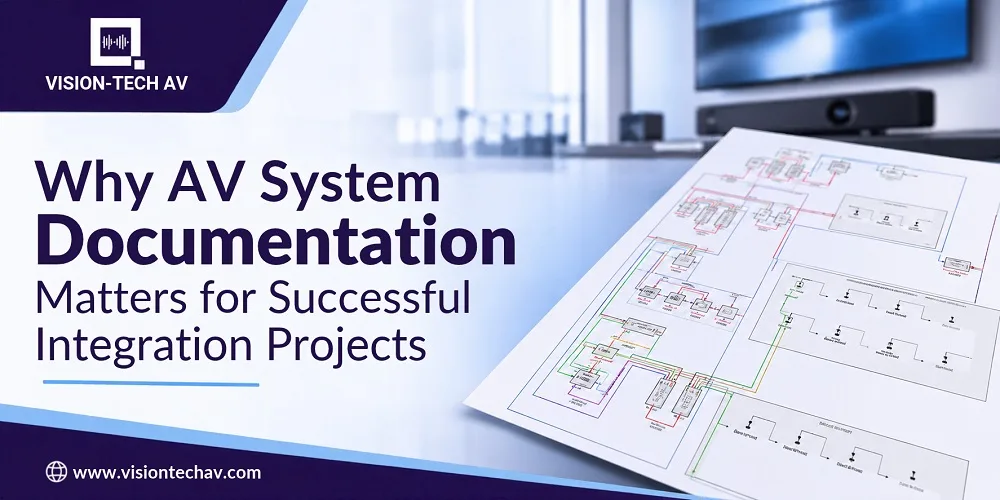
- Signal flow diagrams: Illustrations explaining how audio and video signals travel between connected devices.
- Wiring diagrams: Details of cable connections, interfaces, and equipment interconnections.
- Rack elevation drawings: Visual layouts showing how equipment is arranged within AV racks.
- Equipment schedules: Lists identifying required devices, quantities, and relevant specifications.
- As-built AV drawings: Updated records showing the system as it was actually installed.
Together, these documents provide a clear reference for everyone involved in the project, helping ensure that the intended design is translated accurately into the finished installation.
5 Reasons Accurate Documentation Matters in AV Integration Projects
1. Improves Planning and Project Coordination
AV installations often involve several professionals, including architects, electrical contractors, IT specialists, facilities managers, and installation teams.
Clear technical drawings communicate equipment locations, infrastructure requirements and connection details. This allows different teams to coordinate their work before installation begins.
For example, identifying display mounting positions, cable routes and power requirements early can help prevent conflicts with building layouts or other services.
2. Reduces Installation Errors and Delays
Missing information can lead to incorrect connections, unsuitable equipment placement or unexpected installation changes.
Detailed AV installation drawings and wiring diagrams give technicians a practical reference during implementation. They also make it easier to identify potential problems before they affect project schedules.
A well-prepared documentation package can reduce unnecessary rework, improve communication and support more efficient installation.
3. Supports Consistent System Performance
Modern audiovisual environments combine multiple technologies, including displays, video conferencing equipment, audio processors, microphones and control systems.
System specifications and signal flow diagrams help installers understand how these components should interact. This is particularly important in integrated meeting rooms, lecture theatres and collaborative workspaces.
Clear technical information also provides a reference during testing and commissioning, helping teams check whether the installed system meets the agreed design requirements.
4. Simplifies Maintenance and Troubleshooting
Documentation remains valuable long after installation is complete.
When a device stops working, or a connection needs investigating, technicians can refer to wiring diagrams, equipment schedules and system schematics rather than relying entirely on physical inspections.
Accurate records also help facilities teams identify equipment, understand system connections and plan replacements with fewer disruptions.
5. Makes Future Upgrades Easier
Business requirements change as organisations grow and technology develops. A meeting room may need additional displays, upgraded conferencing facilities or new control capabilities.
Up-to-date technical records help identify existing infrastructure and understand how proposed changes may affect the wider system.
This makes future AV integration projects easier to assess, plan and implement without unnecessarily repeating earlier design work.
Four Often-Overlooked Areas of AV Documentation
Beyond drawings and equipment schedules, several considerations can make documentation more useful throughout a project's lifecycle.
- Document Revision Control
Technical drawings should include appropriate revision numbers, dates and status information. When a design changes, relevant teams need access to the latest approved version to avoid working from outdated information.
- IT Network Coordination
Network-connected AV equipment may require information about IP addressing, connectivity, bandwidth, and network dependencies. Coordinating these requirements with the client's IT team helps prevent problems during deployment.
- User Guidance and Accessibility
Handover information should help people operate the installed technology confidently. Quick-start guides, clear control instructions and accessible operating arrangements can improve the everyday user experience.
- Documentation for Existing System Upgrades
Older installations may have incomplete drawings or undocumented connections. Site surveys, equipment identification, and verified record drawings can help establish an accurate starting point for refurbishment and upgrade projects.
What Should Businesses Look for in an AV Documentation Partner?
Choosing an experienced AV documentation partner can make a significant difference to project coordination and delivery.
Businesses should consider whether their provider can:
- Produce clear, accurate, and coordinated technical drawings.
- Understand the requirements of different commercial environments.
- Work alongside architects, contractors and IT teams.
- Maintain consistent document revisions throughout the project.
- Provide updated as-built records and relevant handover information.
It is also worth agreeing on documentation responsibilities and expected deliverables at the beginning of a project. This helps ensure that the necessary information is available when each project stage requires it.
Conclusion
Accurate documentation is an essential part of delivering reliable, manageable and well-coordinated audiovisual installations. From initial design and contractor communication to commissioning, maintenance, and future upgrades, it gives everyone involved a clear reference throughout the project lifecycle.
With more than 25 years of industry experience, Vision Tech AV understands the importance of combining technical precision with practical system design. Explore our documentation and technical drawing services or contact our team to discuss the requirements of your next AV project.
Frequently Asked Questions
Is AV documentation necessary for every installation?
The level of documentation depends on the installation. A simple setup may require basic connection information, while larger integrated environments typically need coordinated drawings, specifications and handover records.
2. What are as-built AV drawings?
These are updated technical drawings that represent the system as installed, including relevant changes made during implementation. They provide a useful reference for maintenance, troubleshooting, and future upgrades.
3. Who prepares AV technical documentation?
Depending on the project, an AV designer, consultant or integration company may prepare the documentation in coordination with other project professionals.